 Back
BackLesson 2.2: Synthetic Addition Polymers: Structure, Properties, and Applications
Study Guide - Smart Notes
 Tailored notes based on your materials, expanded with key definitions, examples, and context.
2.2 Synthetic Addition Polymers
Addition Polymers: Definition and Formation
Addition polymers are large organic molecules formed by the addition reactions of monomers containing unsaturated carbon–carbon bonds (typically double bonds). These reactions convert the double bonds into single bonds, linking the monomers into long chains. The properties of the resulting polymers depend on the nature of the monomers and any substituent groups attached to them.
Addition polymer: A very long organic molecule formed as the result of addition reactions between monomers with unsaturated carbon–carbon bonds.
Monomer: A small molecule that can join with others to form a polymer.
Common examples include polyethene (plastic bags), polytetrafluoroethene (PTFE, Teflon), and polypropene (ropes, packaging).
Example: The polymerization of ethene (C2H4) forms polyethene, while tetrafluoroethene (C2F4) forms PTFE (Teflon), known for its chemical inertness and use in non-stick cookware.
Structural Representation of Polymers
Polymers are often represented by repeating units in parentheses with a subscript 'n' to indicate the number of units. For example, polyethene is shown as .
Shorthand notation helps to simplify the depiction of very long polymer chains.
Common Addition Polymers and Their Uses
The properties of addition polymers can be tailored by varying the substituent groups on the monomer. This leads to a wide range of materials with diverse applications.
Monomer | Polymer Name | Uses |
|---|---|---|
Ethene | Polyethene (Polyethylene) | Plastic bottles, pipes, insulation, toys |
Propene | Polypropene (Polypropylene) | Rope, packaging film, carpet fibres, toys |
Chloroethene (Vinyl chloride) | Polyvinyl chloride (PVC) | Pipes, construction materials, floor tile, clothing, reusable bags |
Cyanoethene (Acrylonitrile) | Polyacrylonitrile (PAN) | Carpet fibres, synthetic fabrics |
Tetrafluoroethene | Polytetrafluoroethene (PTFE, Teflon) | Non-stick cookware, electrical insulation, ball bearings |
Vinylbenzene (Styrene) | Polystyrene | Food containers, insulation, toys |
Butane-1,3-diene (Butadiene) | Polybutadiene | Tires, industrial coatings |
Vinylbenzene + Butadiene | Styrene–butadiene rubber (copolymer) | Synthetic rubber |
Drawing Polymers and Monomers
To draw a polymer from a monomer, align the monomers so their double bonds are in a line, then connect them by converting the double bonds to single bonds. To deduce the monomer from a polymer, identify the repeating unit and reintroduce the double bond between the relevant carbon atoms.
Example: The monomer for Saran is 1,1-dichloroethene, deduced from the repeating unit CH2–CCl2 in the polymer.
Plastics: Properties and Applications
Definition and Types of Plastics
A plastic is a synthetic polymer that can be moulded into shape (often under heat and pressure) and retains its shape when cooled. Most plastics are manufactured from petrochemicals and are found in everyday items such as packaging, containers, and textiles.
Plastic: A synthetic substance that can be moulded and retains its shape.
Not all polymers are plastics, but all plastics are polymers.
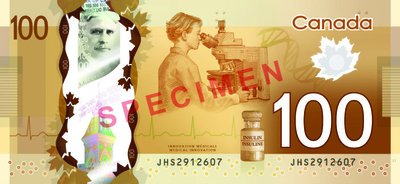
Example: Polymer Banknotes
Canada manufactures banknotes from a synthetic polymer called biaxially oriented polypropene (BOPP), which is more durable and resistant to dirt and water than traditional cotton-based notes.
Properties of Plastics
Most plastics are chemically unreactive due to their stable single bonds. They are resistant to breakage, making them suitable for containers and packaging. However, some plastics can be weakened or dissolved by non-polar organic solvents.
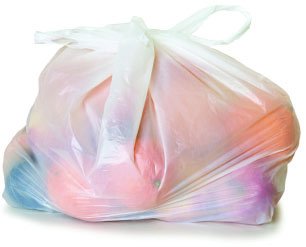
Plastics can be flexible (e.g., plastic bags) or rigid (e.g., bottles, car fenders).
Polymer chains are held together by van der Waals forces and, in some cases, electrostatic attractions from substituent groups.
Heating increases molecular motion, making plastics softer and more flexible.
Classification of Polyethene
Polyethene is classified by density:
Low-density polyethene (LDPE): Contains branched chains, making it less dense and more flexible. Used for packaging materials.
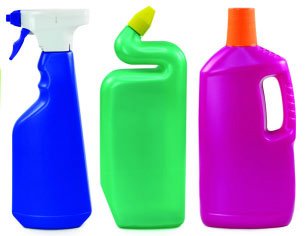
High-density polyethene (HDPE): Mostly straight chains, higher density, used for bottles and containers.
Other Common Plastics
Polypropene: Harder and less flexible than polyethene, used for moulded parts and fibres.
Polystyrene: Hard and colourless, used for cutlery and models; expanded polystyrene is used for cups and insulation.
PVC: Strong and inexpensive, used in construction and as insulation; can be made flexible with additives but may release toxic compounds when incinerated.
Plasticizers
Plasticizers are substances added to plastics to increase flexibility. They work by spacing polymer chains apart, weakening intermolecular forces. Some plasticizers, such as phthalates, have raised health concerns.
Polymer Cross-Linking
Cross-linking occurs when chemical bonds form between separate polymer chains, creating two- or three-dimensional networks. The degree of cross-linking affects the rigidity and density of the polymer.
Dienes: Alkenes with two double bonds, used to create cross-links and increase rigidity.
Example: Vulcanization of rubber involves adding sulfur to form cross-links, making the material tougher and more elastic.
Thermoplastics, Thermosets, and Elastomers
Thermoplastics: Plastics that soften when heated and can be remoulded. They have few cross-links.
Thermoset polymers: Highly cross-linked plastics that do not soften upon heating.
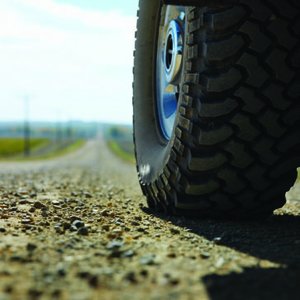
Elastomers: Polymers with limited cross-linking, allowing them to stretch and return to their original shape (e.g., rubber, Silly Putty).

Summary
Addition polymers are formed by linking monomers with unsaturated bonds.
The properties of polymers can be modified by changing monomers, adding substituents, or introducing cross-links.
Plastics are synthetic polymers that can be moulded; they are classified as thermoplastics, thermosets, or elastomers based on their response to heat and cross-linking.
