 Back
Thermochemistry and Quantum Mechanical Model of the Atom: Study Notes
Study Guide - Smart Notes
 Tailored notes based on your materials, expanded with key definitions, examples, and context.
Thermochemistry
Energy Flow: System and Surroundings
Thermochemistry examines how energy is transferred between a chemical system and its surroundings during reactions. The system is the part of the universe under study, while the surroundings are everything else.
Exothermic Reaction: Energy flows from the system to the surroundings; the system loses energy (ΔE < 0).
Endothermic Reaction: Energy flows from the surroundings into the system; the system gains energy (ΔE > 0).
Key Equations:
First Law of Thermodynamics: The total energy of the universe is constant; energy cannot be created or destroyed.
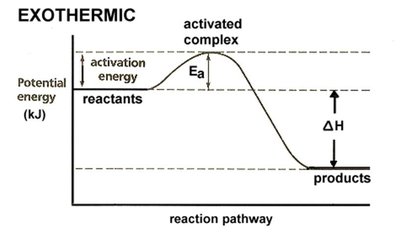

Calorimetry: Measuring Heat Flow
Calorimetry is used to measure the heat exchanged in chemical reactions. Two common types are bomb calorimeters and coffee-cup calorimeters.
Bomb Calorimeter: Measures heat at constant volume; used for combustion reactions.
Coffee-Cup Calorimeter: Measures heat at constant pressure; used for reactions in solution.
Key Equation:
Heat Capacity:

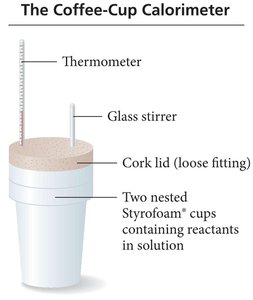
Enthalpy and Stoichiometry
Enthalpy (ΔH) is the heat content of a system at constant pressure. It is used to quantify heat changes in chemical reactions.
ΔHrxn: The enthalpy change for a reaction, based on the balanced equation.
Stoichiometry: ΔHrxn is proportional to the number of moles reacting.
Three Relationships:
If a chemical equation is multiplied by a factor, ΔHrxn is multiplied by the same factor.
If a chemical equation is reversed, ΔHrxn changes sign.
Hess’s Law: If a reaction is the sum of several steps, ΔHrxn is the sum of the ΔH for each step.
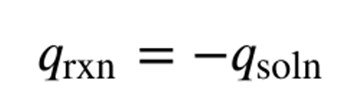

Standard Enthalpy of Formation (ΔHof)
The standard enthalpy of formation is the enthalpy change when one mole of a compound forms from its elements in their standard states.
Standard State: Pure substance at 1 atm and 25°C (for gases, liquids, solids), or 1 M concentration (for solutions).
ΔHof for Pure Elements: Always 0 kJ/mol.
Calculation:

Quantum Mechanical Model of the Atom
Nature of Light and Electromagnetic Radiation
Light is an electromagnetic wave, characterized by its frequency (ν), wavelength (λ), and energy (E). The energy of light increases with frequency and decreases with wavelength.
Key Equations:
(speed of light)
Constructive and Destructive Interference: Waves can combine to increase or decrease amplitude.
Diffraction: Waves bend around obstacles or through slits.

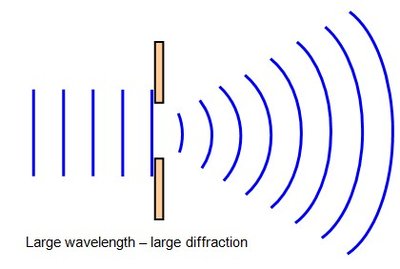
Photoelectric Effect and Atomic Spectra
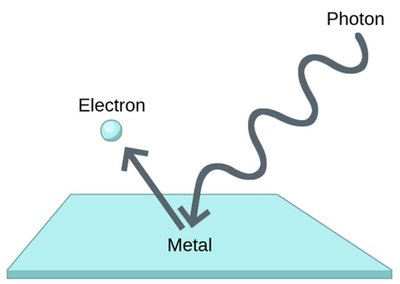
The photoelectric effect demonstrates that light energy comes in packets called photons. Electrons are ejected from metals when photon energy exceeds the work function (φ).
Key Equations:
Atomic Spectroscopy: Each element has a unique emission spectrum due to electrons transitioning between energy levels.
Energy of Electron in Orbital:
Transition Energy:

Wave-Particle Duality and Quantum Numbers
Electrons exhibit both wave and particle properties. The Heisenberg Uncertainty Principle states that position and velocity cannot be simultaneously known with precision.
de Broglie Relation: Electrons have wave-like properties.
Heisenberg Uncertainty Principle:
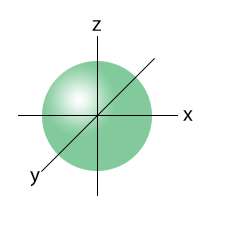
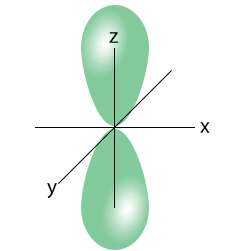
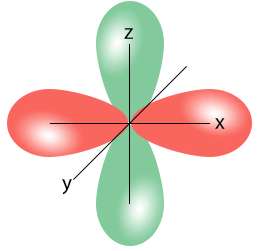
Orbitals: Probability distributions for electron location.
Quantum Numbers: Describe electron position and energy.
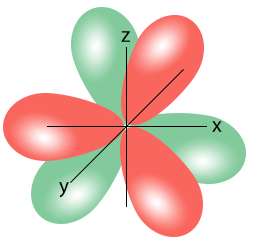
Quantum Numbers and Electron Configuration
Quantum numbers define the properties of atomic orbitals and the arrangement of electrons within them.
Principal Quantum Number (n): Overall size and energy level.
Angular Momentum Quantum Number (l): Shape of the orbital.
Magnetic Quantum Number (ml): Orientation of the orbital.
Spin Quantum Number (ms): Electron spin direction.
Electron Configuration: Describes how electrons occupy orbitals.
Pauli Exclusion Principle: No two electrons in an atom can have the same four quantum numbers.
Aufbau Principle: Electrons fill the lowest energy orbitals first.
Hund’s Rule: Electrons fill degenerate orbitals singly first, with parallel spins.

Periodic Table and Electron Configuration
The periodic table is organized by electron configurations, which determine chemical properties. Main group elements' valence electrons correspond to their group number.
Valence Electrons: Electrons in the outermost principal energy level; determine reactivity.
Core Electrons: Electrons in complete principal energy levels.
Transition Elements: d electrons count as valence electrons; irregularities occur in electron configurations.
Inner Transition Elements: f electrons count as valence electrons; principal quantum number is row minus 2.
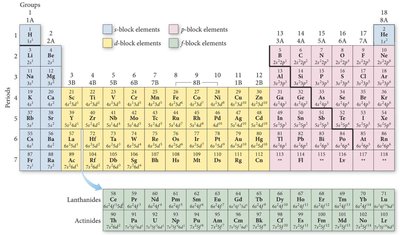
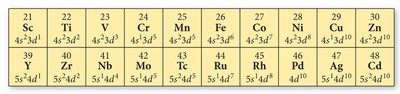

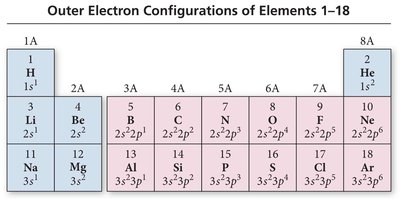
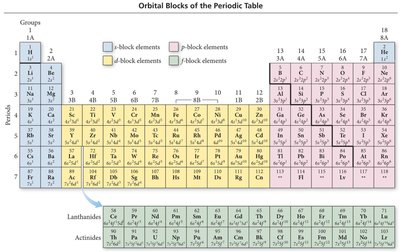
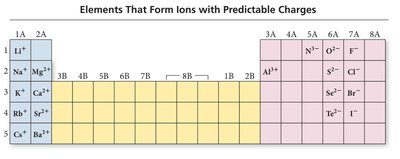
Explanatory Power of the Quantum-Mechanical Model
The quantum-mechanical model explains the chemical properties of elements based on their valence electrons. Elements with the same number of valence electrons exhibit similar chemical behavior.
Example: Noble gases have eight valence electrons, resulting in chemical inertness.
