 Back
Thermochemistry: Calorimetry, Heat Capacity, and Enthalpy Calculations
Study Guide - Smart Notes
 Tailored notes based on your materials, expanded with key definitions, examples, and context.
Chapter 5: Thermochemistry – Energy & Matter
Heat Capacity and Specific Heat
Heat capacity and specific heat are fundamental concepts in thermochemistry, describing how substances absorb and transfer energy as heat. These properties are essential for understanding calorimetry experiments and energy changes in chemical reactions.
Heat Capacity: The amount of energy required to raise the temperature of an object by 1 K (or 1°C). It is an extensive property, meaning it depends on the size or mass of the sample.
Specific Heat (Cs): The amount of heat required to raise the temperature of 1 gram of a substance by 1 K (or 1°C). It is an intensive property, independent of the sample size.
Formula for Specific Heat:
Formula for Heat Transfer:
Key Points:
Heat capacity increases with the size of the object (e.g., a block of ice has a larger heat capacity than a single ice cube).
Substances with a large specific heat require more energy to change their temperature, while those with a small specific heat change temperature more easily.
Water has a high specific heat, which helps regulate temperature in natural environments.
Mercury has a low specific heat, making it suitable for thermometers.
Example: Comparing an ice cube and a block of ice, the block has a larger heat capacity because it contains more mass, even though both are made of water.
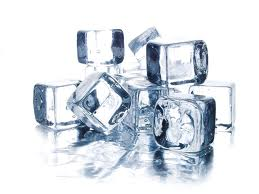
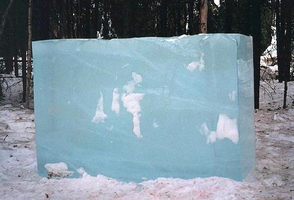
Additional info: Heat capacity is an extensive property, so the total heat required depends on the mass of the sample.
Calorimetry: Measuring Heat Changes
Calorimetry is the experimental technique used to measure heat changes in chemical reactions. It involves the use of calorimeters, devices that isolate the system and measure temperature changes in the surroundings.
Coffee Cup Calorimeter: Used for reactions in solution, such as acid-base neutralizations.
Bomb Calorimeter: Used for combustion reactions and more precise measurements.
System vs. Surroundings: The system is the reactants and products; the surroundings are everything else, typically the water in the calorimeter.
Sign Conventions: If the temperature of the surroundings increases, the reaction is exothermic and is negative. If the temperature decreases, the reaction is endothermic and $q$ is positive.
Example: Dissolving NaOH in water causes the temperature to rise, indicating an exothermic process.
Typical Calorimetry Problem
When a 6.50 g sample of NaOH(s) dissolves in 100.0 g of water, the temperature rises from 21.6°C to 37.8°C. The specific heat of the solution is assumed to be 4.18 J/g·K.
Step 1: Determine the sign for (exothermic, $q$ is negative).
Step 2: Calculate using .
Step 3: Report for the process in kJ/mol.
Calculation:
Total mass = 106.5 g
°C
Moles of NaOH =
Standard Enthalpy of Formation ()
The standard enthalpy of formation is the enthalpy change for the reaction that forms one mole of a compound from its elements in their most stable forms at 1 atm and 298 K.
Example: Formation of ethanol:
for ethanol = -277.7 kJ/mol
Calculating Enthalpy Changes Using Standard Enthalpies of Formation
To calculate the enthalpy change for a reaction:
Example: Combustion of methane:
Bond Enthalpy
Bond enthalpy is the energy required to break a specific chemical bond in one mole of gaseous molecules. It is also the energy released when a bond is formed.
Breaking bonds requires energy (endothermic).
Forming bonds releases energy (exothermic).
Bonded atoms are at lower potential energy; stronger bonds have higher bond enthalpy.
Example: For the reaction :
Summary Table: Heat Capacity vs. Specific Heat
Property | Definition | Type | Formula |
|---|---|---|---|
Heat Capacity | Energy required to raise temperature of an object by 1 K | Extensive | None (depends on mass) |
Specific Heat (Cs) | Energy required to raise temperature of 1 g of substance by 1 K | Intensive |
Additional info: These concepts are foundational for understanding energy changes in chemical reactions and are widely used in laboratory experiments.
