 Back
BackThermochemistry: Energy, Heat, and Enthalpy in Chemical Processes
Study Guide - Smart Notes
 Tailored notes based on your materials, expanded with key definitions, examples, and context.
Energy Concepts and Units
Forms of Energy
Energy is defined as the ability to do work or produce heat. In chemistry, energy is crucial for understanding how and why chemical reactions occur.
Kinetic Energy: The energy of motion. For example, thermal energy is associated with the movement of molecules and is directly related to temperature.
Potential Energy: Stored energy based on position or composition. Chemical energy is a type of potential energy stored in the bonds of substances such as food or fuel.
Energy Transformation: Energy can be converted from one form to another, such as potential energy converting to kinetic energy in a moving object.

Units of Energy
Energy is measured in several units, with the SI unit being the joule (J).
Joule (J): The energy used when a force of 1 newton moves an object 1 meter.
Calorie (cal): The energy needed to raise the temperature of 1 gram of water by 1°C.
Food Calorie (Cal): Equal to 1 kilocalorie (kcal), or 1000 calories.
Conversion factors:
1 cal = 4.184 J
1000 J = 1 kJ
1000 cal = 1 kcal
First Law of Thermodynamics
Law of Conservation of Energy
The First Law of Thermodynamics states that energy cannot be created or destroyed, only transferred or transformed. The total energy of the universe remains constant.
System: The part of the universe being studied (e.g., a chemical reaction).
Surroundings: Everything outside the system that can exchange energy with it.
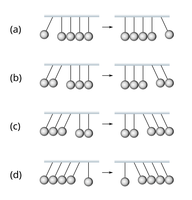
Energy gained or lost by the system must be equal to the energy lost or gained by the surroundings:
ΔEsystem = –ΔEsurroundings
Quantifying Heat and Work
Internal Energy (ΔE)
Internal energy is the total energy stored in a system, including both kinetic and potential energy. It is a state function, meaning it depends only on the current state of the system, not the path taken to reach that state.
Work (w): Energy transfer due to a force causing motion or change.
Heat (q): Energy transfer due to a temperature difference. Heat flows from hotter to cooler objects until thermal equilibrium is reached.
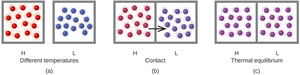
The change in internal energy is given by:
If q > 0: Heat is absorbed by the system (endothermic).
If q < 0: Heat is released by the system (exothermic).
If w > 0: Work is done on the system.
If w < 0: Work is done by the system on the surroundings.
Endothermic and Exothermic Processes
Energy Flow in Chemical Systems
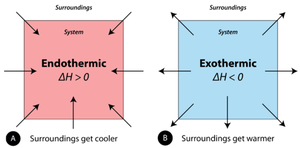
Energy can flow into or out of a system during a chemical reaction, resulting in either endothermic or exothermic processes.
Endothermic Process: The system absorbs energy from the surroundings. ΔH > 0, surroundings get cooler.
Exothermic Process: The system releases energy to the surroundings. ΔH < 0, surroundings get warmer.
Heat, Temperature, and Calorimetry
Specific Heat Capacity
The specific heat capacity (c) is the amount of heat required to raise the temperature of 1 gram of a substance by 1°C.
The heat absorbed or released is calculated by:
q = heat (J)
m = mass (g)
c = specific heat capacity (J/g·°C)
ΔT = change in temperature (°C)
Heating and Cooling Curves
Heating and cooling curves show how temperature changes as heat is added or removed from a substance.
Sloped regions: Temperature changes, kinetic energy changes.
Flat regions (plateaus): Temperature remains constant, phase change occurs, potential energy changes.
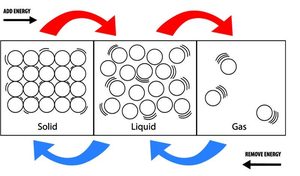
During a phase change, added or removed heat does not change temperature but changes the state of the substance (e.g., melting, boiling).
Enthalpy and Thermochemical Equations
Enthalpy (H)
Enthalpy is a measure of the heat content of a system at constant pressure. The change in enthalpy (ΔH) represents the heat absorbed or released during a chemical or physical process at constant pressure.
ΔH > 0: Endothermic (heat absorbed)
ΔH < 0: Exothermic (heat released)
Enthalpy in Physical and Chemical Changes
Physical changes: Melting, evaporation (endothermic); condensation, freezing (exothermic).
Chemical changes: Combustion, neutralization, etc.
Stoichiometry with Enthalpy (ΔH)
Relating Mass, Moles, and Enthalpy
Enthalpy change is an extensive property, meaning it depends on the amount of substance involved. Stoichiometry can be used to relate the mass of reactants or products to the heat absorbed or released.
General steps:
Convert grams to moles using molar mass.
Use the coefficients in the balanced equation to relate moles to ΔH.
Convert the enthalpy change to the desired units (e.g., kJ).
Hess’s Law
Calculating Enthalpy Changes for Multi-Step Reactions
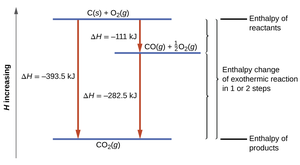
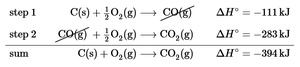
Hess’s Law states that the total enthalpy change for a reaction is the same, no matter how many steps the reaction takes. This allows chemists to determine ΔH for reactions that are difficult to measure directly by using known enthalpies of related reactions.
Reverse a reaction: Change the sign of ΔH.
Multiply a reaction: Multiply ΔH by the same factor.
Add equations: Add their ΔH values to get the overall ΔH.
Summary Table: Key Thermochemistry Concepts
Concept | Definition | Key Equation |
|---|---|---|
Internal Energy (ΔE) | Total energy in a system (kinetic + potential) | |
Enthalpy (ΔH) | Heat change at constant pressure | |
Specific Heat (c) | Heat needed to raise 1 g by 1°C | |
Hess’s Law | ΔH for overall reaction is sum of ΔH for steps | Sum of equations and ΔH values |
