Back
BackTransition Metals and Coordination Compounds: Structure, Properties, and Applications
Study Guide - Smart Notes
 Tailored notes based on your materials, expanded with key definitions, examples, and context.
Transition Metals and Coordination Compounds
Introduction to Transition Metals
Transition metals are elements found in the d-block of the periodic table and are characterized by their partially filled d orbitals. They exhibit unique properties such as variable oxidation states, formation of colored compounds, and the ability to form complex ions with ligands.
Electron Configuration of Transition Metals
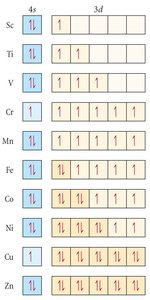
The electron configuration of transition metals is essential for understanding their chemical behavior. For the first and second transition series, electrons fill the (n-1)d orbitals after the ns orbital. When forming ions, transition metals lose ns electrons before (n-1)d electrons.
Irregular Configurations: Chromium (Cr) and Copper (Cu) have irregular electron configurations due to extra stability associated with half-filled or fully filled d subshells.
Example: The electron configuration for Mn2+ is [Ar] 3d5.
Physical Properties of Transition Metals
Atomic Radii
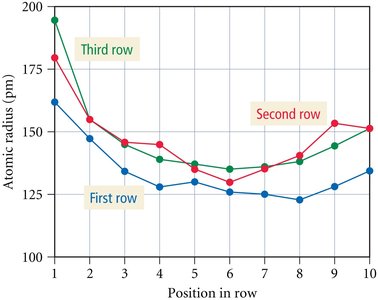
The atomic radii of transition metals are relatively similar across a period, with only a small increase down a group. The third-row transition metals are about the same size as the second row due to the lanthanide contraction.
Ionization Energies
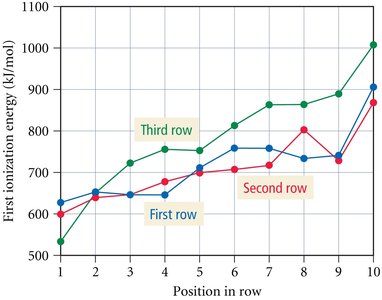
First ionization energy (IE1) generally increases across a row, but the increase is less pronounced than in main group elements. The third-row transition metals have higher IE1 values than the first and second rows.
Electronegativity
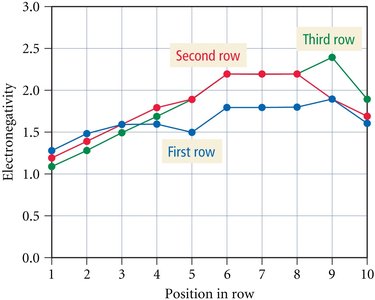
Electronegativity increases across a row and from the first to the second row, with little difference between the second and third rows.
Oxidation States
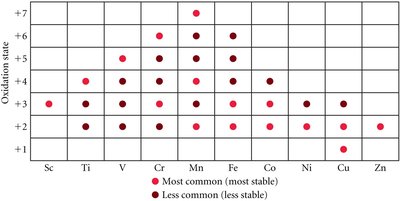
Transition metals exhibit a wide range of oxidation states, often more than main group elements. This versatility is due to the similar energies of their ns and (n-1)d electrons.
Coordination Compounds
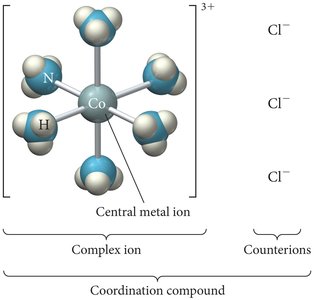
Coordination compounds consist of a central metal ion bonded to surrounding molecules or ions called ligands. These compounds are important in both biological and industrial chemistry.
Complex Ion: The central metal ion plus its attached ligands.
Counterions: Ions that balance the charge of the complex ion in the overall compound.
Ligands: Types and Structures
Ligands are Lewis bases that donate electron pairs to the metal ion (Lewis acid) to form coordinate covalent bonds. Ligands can be classified by the number of donor atoms they possess:
Monodentate: Bind through one atom (e.g., H2O, NH3, Cl-).
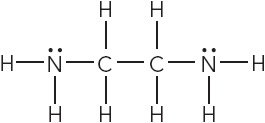
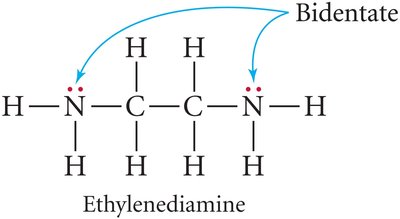
Bidentate: Bind through two atoms (e.g., ethylenediamine, oxalate).
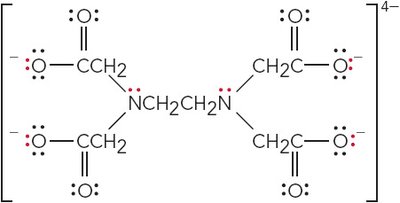
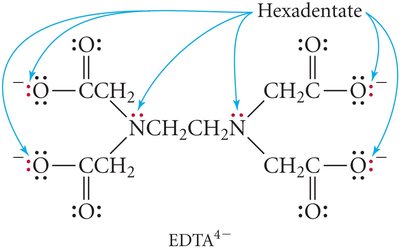
Polydentate: Bind through more than two atoms (e.g., EDTA).
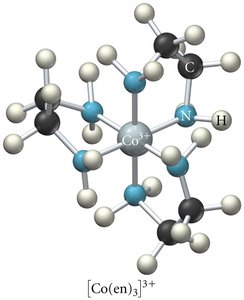
Chelates and Chelating Agents
A chelate is a complex ion containing a bidentate or polydentate ligand. Chelating agents are ligands that can form multiple bonds to a single metal ion, increasing the stability of the complex.
![Chelate complex of [Co(en)3]3+](https://static.studychannel.pearsonprd.tech/study_guide_files/general-chemistry/sub_images/96fcda11_image_15.png)
![Chelate complex of [Co(EDTA)]-](https://static.studychannel.pearsonprd.tech/study_guide_files/general-chemistry/sub_images/96fcda11_image_16.png)
Naming Coordination Compounds
Naming coordination compounds follows specific rules:
Name the cation before the anion.
Name ligands alphabetically, using prefixes (di-, tri-, etc.) to indicate quantity.
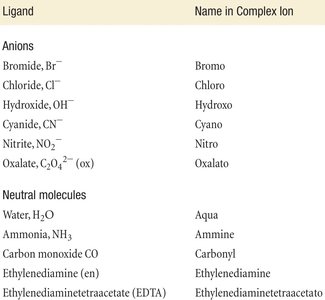
Neutral ligands use their molecule name, except H2O (aqua), NH3 (ammine), CO (carbonyl).
Anionic ligands change their ending: -ide → -o, -ate → -ato, -ite → -ito.
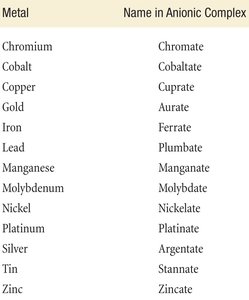
For anionic complexes, the metal name ends in -ate (sometimes using the Latin root).
The oxidation state of the metal is given in Roman numerals in parentheses.
Isomerism in Coordination Compounds
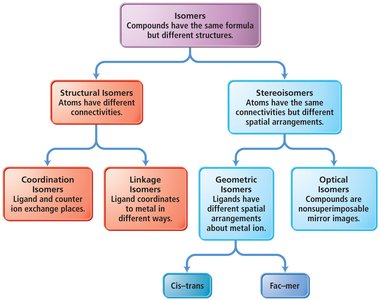
Isomerism occurs when compounds have the same formula but different structures or spatial arrangements. Types include:
Structural Isomers: Different connectivity of atoms (coordination and linkage isomers).
Stereoisomers: Same connectivity, different spatial arrangement (geometric and optical isomers).
Linkage Isomerism
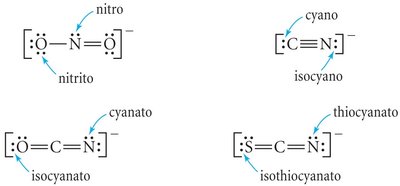
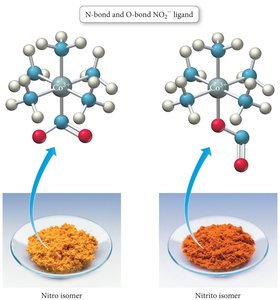
Occurs when a ligand can coordinate to the metal through different atoms (e.g., NO2- can bind through N or O).
Geometric Isomerism
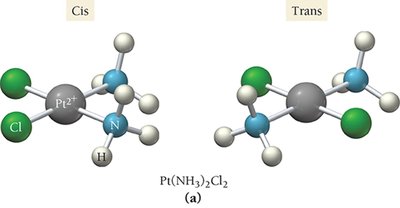
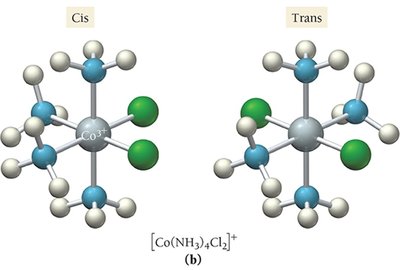
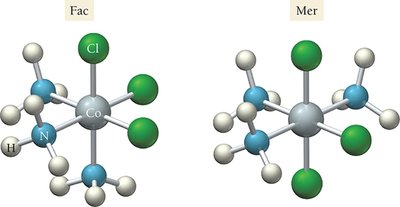
Geometric isomers differ in the spatial arrangement of ligands around the metal ion. Common types include cis–trans and fac–mer isomerism.
Cis–trans: Identical ligands are adjacent (cis) or opposite (trans).
Fac–mer: In octahedral complexes, three identical ligands are either on one face (fac) or form a meridian (mer).
Optical Isomerism
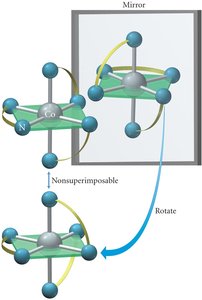
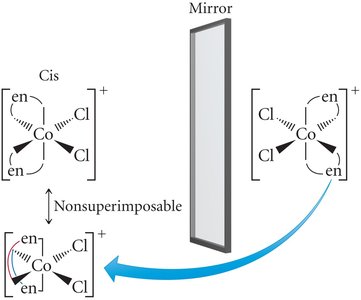
Optical isomers (enantiomers) are non-superimposable mirror images. They have identical physical properties except for their effect on plane-polarized light. Chirality is common in complexes with bidentate ligands in cis arrangements.
Bonding in Coordination Compounds
Valence Bond Theory
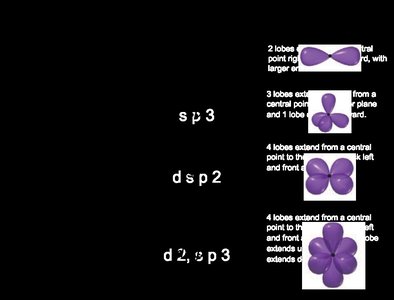
Valence Bond Theory explains the geometry of coordination compounds based on the hybridization of metal orbitals (e.g., sp3, dsp2, d2sp3).
Crystal Field Theory (CFT)
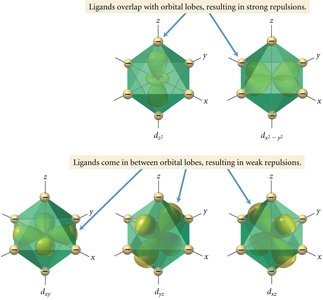
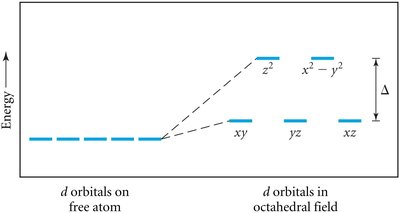
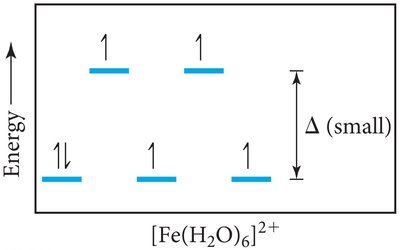
Crystal Field Theory describes the splitting of d orbitals in the presence of ligands, which leads to the characteristic colors and magnetic properties of transition metal complexes. In an octahedral field, the d orbitals split into two energy levels separated by the crystal field splitting energy (Δ).
Color and Crystal Field Strength
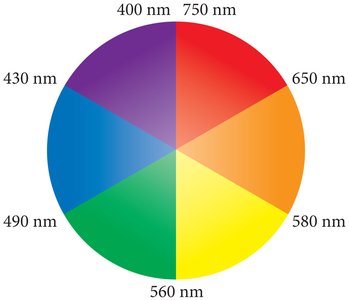
The color of a complex ion arises from electronic transitions between split d orbitals. The energy gap (Δ) determines the wavelength of light absorbed, and thus the observed color. Strong-field ligands cause a larger Δ, leading to absorption of higher-energy (shorter wavelength) light.
Ligand Field Strength
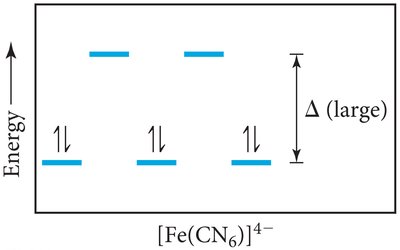
The magnitude of Δ depends on the ligand and the metal ion's charge. Strong-field ligands (e.g., CN-, NO2-, en) produce a larger Δ, while weak-field ligands (e.g., H2O, OH-, F-) produce a smaller Δ.
Magnetic Properties
The number of unpaired electrons in a complex depends on the size of Δ. Strong-field ligands can lead to low-spin (diamagnetic) complexes, while weak-field ligands result in high-spin (paramagnetic) complexes.
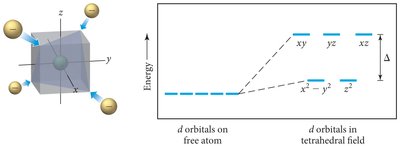
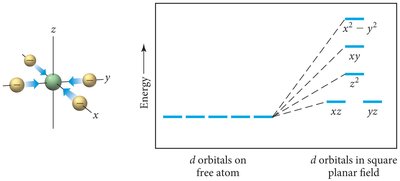
Crystal Field Splitting in Other Geometries
Tetrahedral and square planar complexes have different patterns of d orbital splitting, affecting their color and magnetic properties.
Applications of Coordination Compounds
Extraction of Metals: Coordination chemistry is used in extracting metals from ores (e.g., silver and gold as cyanide complexes).
Chelating Agents: Used in treating heavy-metal poisoning (e.g., EDTA for lead poisoning).
Chemical Analysis: Selective ligands are used for qualitative analysis of metal ions (e.g., dimethylglyoxime for Ni2+).
Coloring Agents: Coordination compounds are used as pigments in inks, paints, and cosmetics (e.g., iron blue).
Biomolecules: Many biological molecules are coordination compounds, such as hemoglobin (carries O2), chlorophyll (photosynthesis), and carbonic anhydrase (CO2 regulation).
Drugs: Some drugs, such as cisplatin, are coordination compounds used in cancer therapy.