 Back
BackLesson 4.1: Types of Chemical Bonds and Lewis Structures
Study Guide - Smart Notes
 Tailored notes based on your materials, expanded with key definitions, examples, and context.
Types of Chemical Bonds
Introduction to Chemical Bonds
Chemical bonds are the forces that hold atoms or ions together in molecules and compounds. These bonds are fundamental to the structure and stability of matter, enabling the formation of molecular elements, molecular compounds, and ionic compounds.
Chemical bond: The electrical attraction that holds atoms or ions together.
Molecular element: Molecules consisting of atoms of the same element (e.g., N2).
Molecular compound: Molecules consisting of atoms of two or more different elements.
Ionic compound: Pure substances composed of two or more ions combined in a fixed ratio.

Ionic Compounds and Ionic Bonding
Formation and Properties of Ionic Bonds
Ionic bonds form when electrons are transferred from one atom to another, typically between a metal and a non-metal. The resulting ions are held together by electrostatic attraction.
Ionic bond: The electrostatic attraction between oppositely charged ions.
Example: Sodium (Na) reacts with chlorine (Cl2) to form sodium chloride (NaCl), where Na loses an electron to become Na+ and Cl gains an electron to become Cl-.
The ions arrange in a crystal lattice, maximizing attractions and minimizing repulsions.
Formula unit: The smallest quantity of an ionic compound that has its chemical formula (e.g., NaCl).
Electron configurations help predict ionic compound formation. Atoms tend to become isoelectronic with the nearest noble gas for stability.
Isoelectronic: Having the same number of electrons as a noble gas.
Example: Calcium (Ca) loses two electrons to become Ca2+, and oxygen (O) gains two electrons to become O2-, forming CaO.
Molecular Elements, Compounds, and Covalent Bonding
Formation and Properties of Covalent Bonds
Covalent bonds form when atoms share electrons, typically between non-metal elements. The shared electrons are called bonding electron pairs.
Covalent bond: A chemical bond in which atoms share bonding electrons.
Bonding electron pair: An electron pair involved in bonding, found between two atoms.
Example: Two hydrogen atoms share electrons to form H2, achieving greater stability.
Atoms form covalent bonds to achieve a full valence shell, often following the duet rule (for hydrogen) or the octet rule (for period 2 non-metals).
Lewis Theory of Bonding
Lewis Structures and Rules
Gilbert Lewis developed a theory to explain chemical bonding based on valence electrons. Lewis structures visually represent the arrangement of electrons and bonds in molecules or polyatomic ions.
Atoms and ions are stable with a full valence shell.
Electrons are most stable when paired.
Atoms form bonds to achieve a full valence shell, either by exchanging or sharing electrons.
Lewis structure: A diagram showing the arrangement of covalent electrons and bonds.
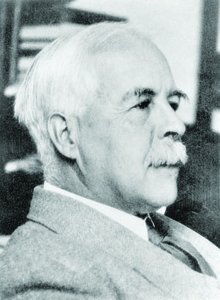
Duet and Octet Rules
The duet rule applies to hydrogen, which forms stable configurations with two electrons. The octet rule applies to period 2 non-metals, which form stable substances when surrounded by eight valence electrons.
Duet rule: Hydrogen forms stable configurations with two electrons.
Octet rule: Many atoms form stable substances when surrounded by eight electrons in their valence shells.
Example: Fluorine (F2) shares electrons to become isoelectronic with neon.
Lone electron pair: A pair of valence electrons not involved in bonding.
Steps for Drawing Lewis Structures
Identify the central atom (usually the one with the highest bonding capacity).
Add up the number of valence electrons for all atoms.
Place one pair of electrons between each adjacent pair of atoms (bonding pairs).
Place remaining valence electrons as lone pairs on surrounding atoms, following duet/octet rules.
Subtract used electrons from the total to determine remaining electrons.
Place remaining electrons on the central atom in pairs.
If the central atom does not have a full octet, move lone pairs from surrounding atoms to form multiple bonds.
If electrons remain after octets are complete, add them as lone pairs to the central atom.
For polyatomic ions, use brackets and indicate the charge.
Sample Problems: Lewis Structures
Methanal (Formaldehyde) Lewis Structure
Methanal (H2CO) is a gas used in cosmetics, pharmaceuticals, and textiles. The Lewis structure is drawn by following the steps above, resulting in a structural formula with carbon as the central atom, bonded to two hydrogens and one oxygen.

Nitrate Ion (NO3-) Lewis Structure
Nitrate ion is found in sodium nitrate, used in fireworks, pottery enamel, and as a preservative. The Lewis structure involves nitrogen as the central atom, bonded to three oxygens, with one negative charge.

Exceptions to the Octet Rule
Underfilled and Overfilled Octets
Some molecules have central atoms with fewer or more than eight electrons. Boron trifluoride (BF3) has an underfilled octet, making it highly reactive. Sulfur hexafluoride (SF6) has an overfilled octet, using vacant d orbitals to accommodate extra electrons.

Underfilled octet: Central atom has fewer than eight electrons (e.g., BF3, BeCl2).
Overfilled octet: Central atom has more than eight electrons (e.g., SF6, PCl5).
Third-period elements can use d orbitals to exceed the octet rule.
Coordinate Covalent Bonding
Definition and Examples
A coordinate covalent bond occurs when both electrons in a shared pair come from one atom. This is seen in the ammonium ion (NH4+) and in the formation of Al2Cl6 from AlCl3.
Coordinate covalent bond: A covalent bond where both bonding electrons come from one atom.
Example: Nitrogen donates a lone pair to bond with a hydrogen ion, forming NH4+.
Summary of Key Points
Chemical bonds hold atoms together to form molecules and ionic compounds.
Bonds form when a group of atoms has lower total energy.
Noble gas configurations are generally the most stable.
The two main types of chemical bonds are ionic and covalent.
Lewis structures represent molecules and polyatomic ions.
Most Lewis structures obey the octet or duet rule, but exceptions exist.
Coordinate covalent bonds involve both electrons from one atom.
