 Back
VSEPR Theory: Molecular Shapes and the Effect of Lone Pairs
Study Guide - Smart Notes
 Tailored notes based on your materials, expanded with key definitions, examples, and context.
VSEPR Theory and Molecular Geometry
Introduction to VSEPR Theory
The Valence Shell Electron Pair Repulsion (VSEPR) theory is a model used to predict the geometry of individual molecules based on the number of electron groups surrounding their central atoms. The theory is based on the idea that electron groups (bonding pairs and lone pairs) repel each other and will arrange themselves as far apart as possible to minimize repulsion, thus determining the molecular shape.
The Five Basic Electron Geometries
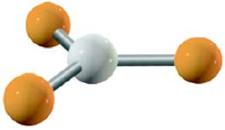
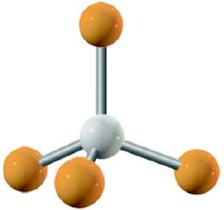
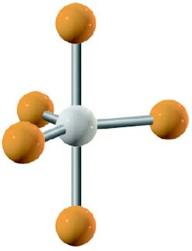
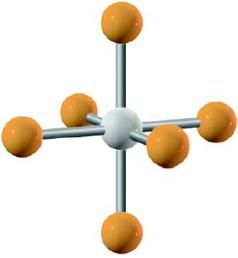
There are five fundamental electron geometries according to VSEPR theory, each corresponding to a different number of electron groups around the central atom:
Linear: 2 electron groups, 180° bond angle
Trigonal Planar: 3 electron groups, 120° bond angle
Tetrahedral: 4 electron groups, 109.5° bond angle
Trigonal Bipyramidal: 5 electron groups, 90°, 120°, and 180° bond angles
Octahedral: 6 electron groups, 90° and 180° bond angles
Electron Groups, Lone Pairs, and Molecular Geometry
The arrangement of electron groups determines the electron geometry, while the arrangement of atoms (excluding lone pairs) determines the molecular geometry. Lone pairs occupy more space than bonding pairs, leading to deviations from ideal bond angles and affecting the molecular shape.
Electron groups | Lone pairs | Electron Geometry | Molecular Geometry |
|---|---|---|---|
2 | 0 | Linear | Linear |
3 | 0 | Trigonal planar | Trigonal planar |
3 | 1 | Trigonal planar | Bent |
4 | 0 | Tetrahedral | Tetrahedral |
4 | 1 | Tetrahedral | Trigonal pyramidal |
4 | 2 | Tetrahedral | Bent |
5 | 0 | Trigonal bipyramidal | Trigonal bipyramidal |
5 | 1 | Trigonal bipyramidal | See-saw |
5 | 2 | Trigonal bipyramidal | T-shaped |
5 | 3 | Trigonal bipyramidal | Linear |
6 | 0 | Octahedral | Octahedral |
6 | 1 | Octahedral | Square pyramidal |
6 | 2 | Octahedral | Square planar |
6 | 3 | Octahedral | T-shaped |
6 | 4 | Octahedral | Linear |
The Effect of Lone Pairs on Molecular Geometry
Lone pairs exert greater repulsive forces than bonding pairs, which leads to distortions in bond angles and molecular shapes. The order of repulsion strength is:
Lone pair–lone pair repulsion > Lone pair–bonding pair repulsion > Bonding pair–bonding pair repulsion
This hierarchy explains why, for example, the bond angle in water (H2O, bent geometry) is less than the ideal tetrahedral angle due to the presence of two lone pairs on oxygen.
Examples of Molecular Geometries
Linear: CO2 (O=C=O)
Trigonal Planar: BF3
Tetrahedral: CH4
Trigonal Bipyramidal: PCl5
Octahedral: SF6
Summary Table: Electron Groups, Lone Pairs, and Geometries
The following table summarizes the relationship between the number of electron groups, lone pairs, electron geometry, and molecular geometry:
Electron groups | Lone pairs | Electron Geometry | Molecular Geometry |
|---|---|---|---|
2 | 0 | Linear | Linear |
3 | 0 | Trigonal planar | Trigonal planar |
3 | 1 | Trigonal planar | Bent |
4 | 0 | Tetrahedral | Tetrahedral |
4 | 1 | Tetrahedral | Trigonal pyramidal |
4 | 2 | Tetrahedral | Bent |
5 | 0 | Trigonal bipyramidal | Trigonal bipyramidal |
5 | 1 | Trigonal bipyramidal | See-saw |
5 | 2 | Trigonal bipyramidal | T-shaped |
5 | 3 | Trigonal bipyramidal | Linear |
6 | 0 | Octahedral | Octahedral |
6 | 1 | Octahedral | Square pyramidal |
6 | 2 | Octahedral | Square planar |
6 | 3 | Octahedral | T-shaped |
6 | 4 | Octahedral | Linear |
Additional info: The images included above represent the idealized geometries for linear, tetrahedral, trigonal bipyramidal, and octahedral arrangements. The table provides a comprehensive reference for predicting molecular shapes using VSEPR theory.
