Ch.2 - Atoms & Elements
Tro - Chemistry: A Molecular Approach 4th Edition
Tro4th EditionChemistry: A Molecular ApproachISBN: 9780134112831Not the one you use?Change textbook
Chapter 2, Problem 60a,b,d

Predict the charge of the ion formed by each element. a. Mg b. N d. Na

Verified step by step guidance
1
Step 1: Identify the position of the element in the periodic table. Magnesium (Mg) is in the second group (alkaline earth metals) of the periodic table.
Step 2: Determine the number of valence electrons. Elements in the second group have two valence electrons.
Step 3: Remember that atoms tend to gain, lose, or share electrons to achieve a stable electron configuration, usually that of the nearest noble gas. For Magnesium, the nearest noble gas is Neon (Ne).
Step 4: Determine the easiest way for the atom to achieve a stable electron configuration. In the case of Magnesium, it's easier to lose two electrons than to gain six.
Step 5: The charge of the ion is determined by the number of electrons gained or lost. Since Magnesium loses two electrons, it forms a +2 ion.

Verified video answer for a similar problem:

This video solution was recommended by our tutors as helpful for the problem above.
Video duration:
1m

Key Concepts

Here are the essential concepts you must grasp in order to answer the question correctly.

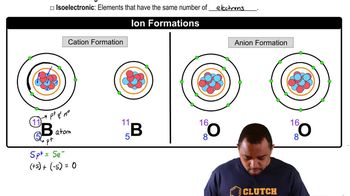
Ion Formation

Ion formation occurs when atoms gain or lose electrons to achieve a stable electron configuration, often resembling the nearest noble gas. Metals typically lose electrons to form positively charged cations, while nonmetals gain electrons to form negatively charged anions.
Recommended video:
Guided course
06:17
Ion Formation

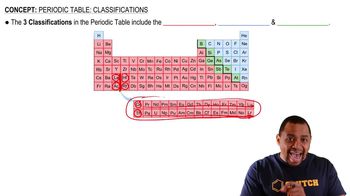
Magnesium's Position in the Periodic Table

Magnesium (Mg) is located in Group 2 of the periodic table, which consists of alkaline earth metals. These elements have two valence electrons, and they tend to lose these electrons during chemical reactions, resulting in a +2 charge for the ion formed.
Recommended video:
Guided course
02:40
Periodic Table Classifications

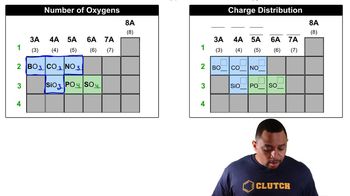
Charge of Ions

The charge of an ion is determined by the difference between the number of protons and electrons. For magnesium, losing two electrons results in a net positive charge of +2, leading to the formation of the Mg²⁺ ion, which is common in various compounds.
Recommended video:
Guided course
01:39
Polyatomic Ion Charges