Back

Chromosomal Mutations: Aberrant Euploidy definitions

Control buttons has been changed to "navigation" mode.
1/15
  • Chromosomal Mutation

    Alteration involving the structure or number of entire chromosome sets, not just individual genes.
  • Aberrant Euploidy

    Condition where the whole set of chromosomes is changed, resulting in extra or missing copies in all chromosomes.
  • Aneuploidy

    Presence of an abnormal number of chromosomes affecting only part of a set, such as a single chromosome.
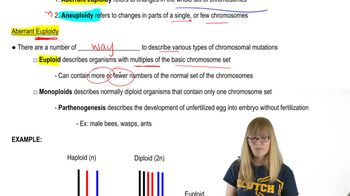
  • Euploid

    Organism with chromosome numbers that are exact multiples of the basic set, like diploid or triploid.
  • Monoploid

    Individual with only one chromosome set, though the species is typically diploid.
  • Haploid

    Cell or organism with a single set of chromosomes, which is the normal state for gametes.
  • Polyploid

    Organism with more than two complete sets of chromosomes, such as triploid or tetraploid.
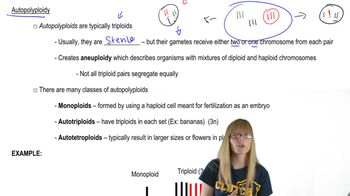
  • Autopolyploid

    Multiple chromosome sets originating from a single species, often leading to sterility due to irregular gametes.
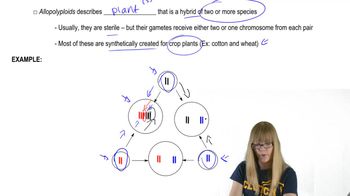
  • Allopolyploid

    Chromosome sets derived from two different, but closely related, species, commonly seen in hybrid plants.
  • Homeologous Chromosome

    Chromosomes from different species that are similar but not identical, found in allopolyploids.
  • Homologous Chromosome

    Chromosomes from the same species that are identical in structure and gene content.
  • Parthenogenesis

    Development of an organism from an unfertilized egg, resulting in individuals with half the normal chromosome set.
  • Endopolyploidy

    Condition where certain cells within an organism have extra chromosome sets, while the rest remain diploid.
  • Nondisjunction

    Failure of chromosomes to separate properly during meiosis, leading to abnormal chromosome numbers in gametes.
  • Colchicine

    Chemical used in labs to induce nondisjunction by preventing proper chromosome separation during cell division.