Skip to main content
Genetics
My Course
Learn
Exam Prep
AI Tutor
Study Guides
Textbook Solutions
Flashcards
Explore
Try the app
My Course
Learn
Exam Prep
AI Tutor
Study Guides
Textbook Solutions
Flashcards
Explore
Try the app
Back
Comparative Genomics definitions
You can tap to flip the card.
Comparative Genomics
You can tap to flip the card.
👆
Comparative Genomics
Field analyzing genomes from an evolutionary perspective to uncover gene origins, relationships, and evolutionary changes across species.
Track progress
Control buttons has been changed to "navigation" mode.
1/15
Related flashcards
Related practice
Recommended videos
Comparative Genomics quiz #1
Comparative Genomics
10 Terms
Comparative Genomics
15. Genomes and Genomics
7 problems
Topic
Kylia
Genomics and Human Medicine
15. Genomes and Genomics
7 problems
Topic
Kylia
15. Genomes and Genomics - Part 1 of 2
5 topics
10 problems
Chapter
Kylia
15. Genomes and Genomics - Part 2 of 2
4 topics
10 problems
Chapter
Kylia
Guided course
04:55
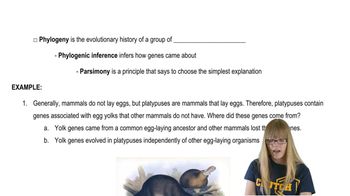
Overview
885
views
3
rank
Guided course
01:49
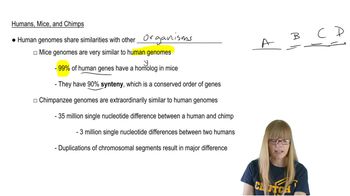
Humans, Mice, and Chimps
711
views
2
rank
Terms in this set (15)
Hide definitions
Comparative Genomics
Field analyzing genomes from an evolutionary perspective to uncover gene origins, relationships, and evolutionary changes across species.
Homolog
Gene sharing similar DNA sequence and evolutionary origin with another, regardless of whether it's in the same or different species.
Ortholog
Gene in different species derived from a common ancestral gene, typically retaining similar function across organisms.
Paralog
Gene related to another by duplication within the same organism, often diverging in function over time.
Phylogeny
Evolutionary history and relationships among groups of organisms, often depicted as branching diagrams.
Parsimony
Principle favoring the simplest evolutionary explanation when inferring relationships or gene origins.
Gene Duplication
Process resulting in multiple copies of a gene within a genome, providing raw material for evolutionary innovation.
Synteny
Conserved order of genes on chromosomes between different species, indicating evolutionary conservation.
Single Nucleotide Difference
Variation at a single base pair position in DNA, contributing to genetic diversity between individuals or species.
Chromosomal Segment Duplication
Repetition of large DNA regions within a genome, leading to structural variation between species.
Yolk Gene
Genetic element essential for egg development, present in egg-laying mammals like platypuses but absent in most others.
Evolutionary Biologist
Scientist investigating how genes and organisms change over time, often using comparative genomics and phylogenetic methods.
Egg-Laying Ancestor
Hypothetical organism from which both egg-laying and non-egg-laying descendants evolved, inferred through genomic analysis.
Genomic Similarity
Degree of resemblance in DNA sequences or gene content between different organisms, reflecting shared ancestry.
Conserved Gene Order
Maintenance of the same sequence of genes across species, indicating evolutionary stability in genome structure.
 BackBack
 04:55
04:55