Back

Pleiotropy definitions

Control buttons has been changed to "navigation" mode.
1/13
  • Pleiotropy

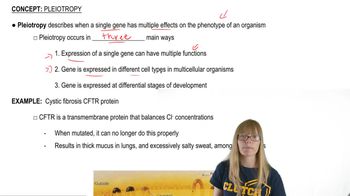
    A phenomenon where a single gene impacts multiple, seemingly unrelated phenotypic traits in an organism.
  • Phenotype

    The observable characteristics or traits of an organism resulting from gene expression and environmental influences.
  • Mutation

    A change in the DNA sequence of a gene that can alter its function and lead to diverse physical effects.
  • Gene Expression

    The process by which information from a gene is used to synthesize functional products, influencing traits.
  • Developmental Stage

    A specific period in an organism's life when certain genes are active, affecting traits at different ages.
  • Cell Type

    A distinct kind of cell in an organism where specific genes may be active, leading to tissue-specific effects.
  • Cystic Fibrosis

    A genetic disorder caused by a single gene mutation, resulting in multiple symptoms like thick lung mucus and salty sweat.
  • CFTR

    A transmembrane protein crucial for regulating chloride ion concentration, whose mutation leads to diverse symptoms.
  • Transmembrane Protein

    A protein embedded in the cell membrane, often involved in transporting substances like ions across the membrane.
  • Chloride Concentration

    The level of chloride ions within cells or tissues, essential for fluid balance and affected in certain genetic disorders.
  • Pathway

    A series of molecular interactions within a cell that lead to a specific function or response.
  • Salt Regulation

    The control of salt levels in body fluids, which can be disrupted by gene mutations, leading to symptoms like salty sweat.
  • Lung Mucus

    A fluid in the respiratory system that can become abnormally thick due to disrupted ion regulation from genetic mutations.