Pearson+ LogoPearson+ Logo
Ch. 19 - The Genetics of Cancer
Klug - Essentials of Genetics 10th Edition
Klug10th EditionEssentials of GeneticsISBN: 9780135588789Not the one you use?Change textbook
Chapter 19, Problem 3

What is the relationship between signal transduction and cellular proliferation?

Verified step by step guidance
1
Understand the concept of signal transduction: it is the process by which a cell converts an external signal into a functional response through a series of molecular events, often involving receptors, secondary messengers, and protein kinases.
Recognize that cellular proliferation refers to the process by which cells grow and divide to produce new cells, which is tightly regulated to maintain tissue homeostasis.
Identify that signal transduction pathways often regulate cellular proliferation by transmitting growth signals from outside the cell to the nucleus, influencing gene expression related to the cell cycle.
Explore common signaling pathways involved in proliferation, such as the MAPK/ERK pathway or the PI3K/AKT pathway, which promote progression through the cell cycle when activated.
Conclude that the relationship is that signal transduction mechanisms control cellular proliferation by modulating the activity of proteins and genes that drive cell division, ensuring cells proliferate in response to appropriate signals.

Key Concepts

Here are the essential concepts you must grasp in order to answer the question correctly.

Signal Transduction

Signal transduction is the process by which cells convert external signals, such as hormones or growth factors, into internal biochemical responses. This involves a series of molecular events, including receptor activation, second messenger generation, and protein phosphorylation, ultimately leading to changes in gene expression or cellular behavior.
Recommended video:

Cellular Proliferation

Cellular proliferation refers to the process by which cells grow and divide to produce new cells. It is tightly regulated to maintain tissue homeostasis and involves progression through the cell cycle phases, including DNA replication and mitosis, ensuring proper cell number and function.
Recommended video:
Guided course
04:46
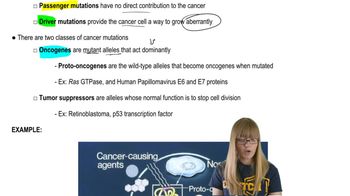
Cancer Mutations

Link Between Signal Transduction and Cellular Proliferation

Signal transduction pathways regulate cellular proliferation by transmitting growth signals that activate cell cycle machinery. For example, growth factors bind to receptors triggering cascades like the MAPK or PI3K pathways, which promote gene expression necessary for cell cycle progression and division.
Recommended video: