 Back
Atoms and Elements: Structure, Properties, and the Periodic Table
Study Guide - Smart Notes
 Tailored notes based on your materials, expanded with key definitions, examples, and context.
Atoms and Elements
Introduction to Atoms and Elements
Atoms and elements are fundamental concepts in chemistry, forming the basis for understanding matter and its transformations. Elements are pure substances that cannot be broken down into simpler substances and are the building blocks for all other materials.
Element: A pure substance consisting of only one type of atom.
Atom: The smallest unit of an element that retains its chemical properties.
Application: Farmers use chemical knowledge to apply fertilizers and pesticides effectively.

Elements and Symbols
Chemical Symbols and Naming
Each element is represented by a unique chemical symbol, typically one or two letters. The first letter is always capitalized, and the second letter, if present, is lowercase. Some symbols are derived from Latin or Greek names.
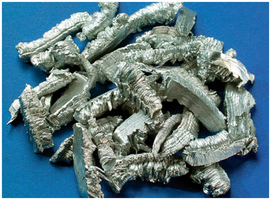
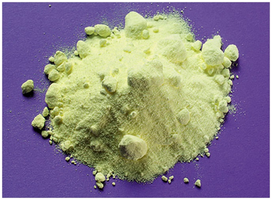
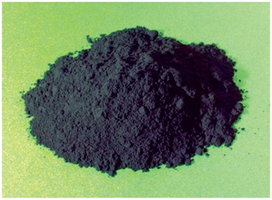
Example: Aluminum (Al), Cobalt (Co), Gold (Au from aurum), Silver (Ag from argentum).
Key Point: Chemical symbols are not the same as chemical formulas; "CO" represents carbon and oxygen, not cobalt.
The Periodic Table
Organization and Structure
The periodic table arranges elements in order of increasing atomic number and groups them by similar properties. Vertical columns are called groups, and horizontal rows are called periods.
Groups: Elements with similar chemical properties (e.g., Group 1A: Alkali metals, Group 2A: Alkaline earth metals, Group 7A: Halogens, Group 8A: Noble gases).
Periods: Horizontal rows numbered from 1 to 7.
Representative Elements: Groups 1A–8A.
Transition Elements: Groups labeled with the letter B.
Example: Lithium (Li), sodium (Na), and potassium (K) are alkali metals; chlorine (Cl), bromine (Br), and iodine (I) are halogens.
Classification of Elements
Metals, Nonmetals, and Metalloids
Elements are classified based on their physical and chemical properties:
Metals: Shiny, ductile, malleable, good conductors, mostly solids at room temperature (except mercury).
Nonmetals: Dull, brittle, poor conductors, often gases or solids with low melting points.
Metalloids: Exhibit properties of both metals and nonmetals; semiconductors.
Example: Boron (B), silicon (Si), and germanium (Ge) are metalloids.
Atomic Structure
Subatomic Particles
Atoms consist of three main subatomic particles:
Proton: Positive charge, located in the nucleus, mass ≈ 1 amu.
Neutron: No charge, located in the nucleus, mass ≈ 1 amu.
Electron: Negative charge, located outside the nucleus, mass ≈ 0.00055 amu.
Key Point: Atoms are electrically neutral, with equal numbers of protons and electrons.
Atomic Number and Mass Number
Definitions and Calculations
The atomic number is the number of protons in an atom and defines the element. The mass number is the sum of protons and neutrons in the nucleus.
Atomic Number (Z): Number of protons.
Mass Number (A): Number of protons + number of neutrons.
Number of Neutrons:
Example: Lead (Pb) with atomic number 82 and mass number 207 has 82 protons, 125 neutrons, and 82 electrons.
Isotopes and Atomic Mass
Isotopes
Isotopes are atoms of the same element with different numbers of neutrons and thus different mass numbers. The atomic mass listed on the periodic table is a weighted average of all naturally occurring isotopes.
Example: Carbon has isotopes C-12, C-13, and C-14.
Atomic Mass: Calculated as a weighted average based on isotope abundance.
Key Point: The most abundant isotope is the one whose mass is closest to the atomic mass listed on the periodic table.
Electron Energy Levels
Arrangement and Changes
Electrons occupy specific energy levels around the nucleus, described by principal quantum numbers (n). Energy levels increase as n increases and are farther from the nucleus.
Electron Arrangement: Electrons fill energy levels in order of increasing energy.
Energy Changes: Electrons absorb energy to move to higher levels and emit energy when moving to lower levels.
Example: Carbon (atomic number 6): 2 electrons in level 1, 4 in level 2 (2,4).
Formula: Electron arrangement for the first 20 elements follows the pattern: 2 in level 1, 8 in level 2, 8 in level 3, remaining in level 4.
Elements Essential to Health
Macrominerals and Microminerals
About 20 elements are essential for human health. Four elements—oxygen, carbon, hydrogen, and nitrogen—make up 96% of body mass. Macrominerals and microminerals are required for various physiological functions.
Macrominerals: Ca, P, K, Cl, S, Na, Mg (bone formation, heart function, nerve impulses).
Microminerals (Trace Elements): Present in small amounts, often transition elements.
Sample Problems and Study Checks
Application and Practice
Sample problems and study checks reinforce understanding of atomic structure, periodic table classification, and electron arrangements.
Example: Zinc (Zn) with mass number 68: 30 protons, 38 neutrons, 30 electrons.
Electron Arrangement: Oxygen (atomic number 8): 2,6; Chlorine (atomic number 17): 2,8,7.
Group and Period Identification: Strontium (Sr): Group 2A, Period 5, alkaline earth metal.
Summary Table: Subatomic Particles
Particle | Charge | Location | Approximate Mass (amu) |
|---|---|---|---|
Proton | +1 | Nucleus | 1.007 |
Neutron | 0 | Nucleus | 1.008 |
Electron | -1 | Outside nucleus | 0.00055 |
Summary Table: Classification of Elements
Type | Properties | Examples |
|---|---|---|
Metal | Shiny, ductile, malleable, good conductor | Cu, Au, Ag, Na |
Nonmetal | Dull, brittle, poor conductor | H, C, N, O, Cl, S |
Metalloid | Properties of both metals and nonmetals, semiconductor | B, Si, Ge, As |
