 Back
Chemical Reactions: Energy, Thermodynamics, and Reaction Types
Study Guide - Smart Notes
 Tailored notes based on your materials, expanded with key definitions, examples, and context.
Chapter 5: Chemical Reactions
Introduction to Chemical Reactions
Chemical reactions are fundamental processes in chemistry, especially those with biological relevance. Understanding the energy changes and types of reactions is essential for interpreting biochemical processes.
Chemical reactions involve the transformation of substances, often accompanied by energy changes.
Biological relevance will be explored in later chapters.
Energy Concepts in Chemistry
Energy is a central concept in chemical reactions, dictating whether reactions occur spontaneously and how much work can be done.
Work: Any activity that requires energy.
Energy: The ability to do work.
Kinetic energy: Energy of motion.
Potential energy: Energy due to position or chemical composition.
Heat (thermal energy): Energy associated with the motion of particles.
Units of energy: Joule (J) and calorie (cal); .
Energy in Nutrition
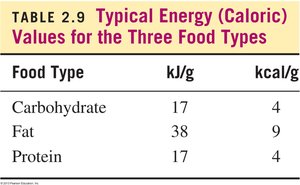
The energy content of food is measured in Calories (Cal), which are used to quantify the energy available from carbohydrates, fats, and proteins.
Nutritional unit Calorie (Cal): .
Energy values are determined by burning 1 gram of each food type in a calorimeter.
Food Type | kJ/g | kcal/g |
|---|---|---|
Carbohydrate | 17 | 4 |
Fat | 38 | 9 |
Protein | 17 | 4 |
Example Calculation
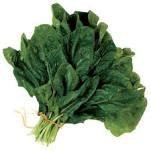
To calculate the energy content from protein in one cup of spinach (0.90 g protein):
Energy (kcal) = grams of protein × kcal/g = kcal
Practice Problem
Five strawberries contain 4.5 g carbohydrates and 0.1 g protein. Energy per strawberry:
Carbohydrate: g × 4 kcal/g = 3.6 kcal
Protein: g × 4 kcal/g = 0.08 kcal
Total energy ≈ 3.7 kcal per strawberry (rounded to nearest tenth).
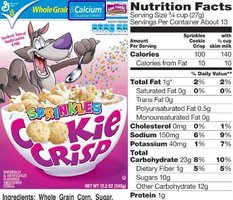
Practice Problem: Cookie Crisp
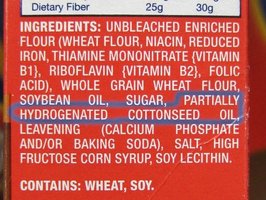
Calculate energy (J) from total fat in 2.5 cups of Cookie Crisp using nutrition label and conversion factors.
Thermodynamics in Chemical Reactions
Thermodynamics studies the heat and energy exchanged during chemical reactions.
Heat of reaction: The energy change during a reaction.
Free energy changes: Determines spontaneity.
Spontaneity: Whether a reaction occurs without external energy input.
Exothermic and Endothermic Reactions
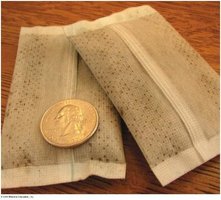
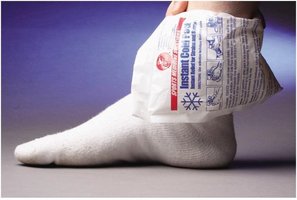
Exothermic: Reaction releases heat (heat is a product).
Endothermic: Reaction absorbs heat (heat is a reactant).
Free Energy and Reaction Spontaneity
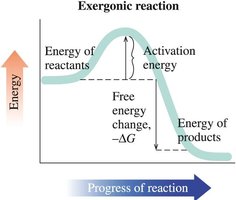
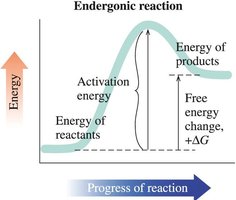
Free energy (G) is the energy available to do work. The change in free energy () determines if a reaction is spontaneous.
Free energy (G): Energy in molecules available for work.
Free energy change (): Difference in free energy between reactants and products.
Exergonic: Reaction releases energy ().
Endergonic: Reaction requires energy ().
Activation Energy
Activation energy is the energy required to align reactants and cause productive collisions.
Spontaneity of Reactions
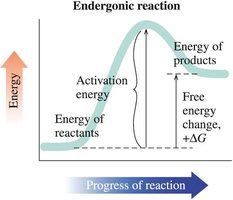
is measured from the energy difference between reactants and products.
Negative indicates a spontaneous process.
Positive indicates a nonspontaneous process.

Reaction Rate and Kinetics
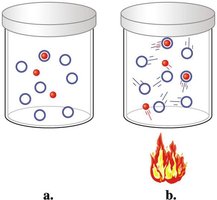
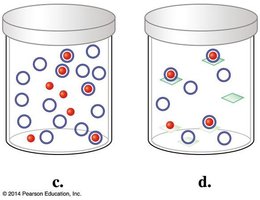
The rate of a reaction is determined by the amount of reactant used or product formed over time. Several factors affect reaction rate.
Temperature: Higher temperature increases reaction rate.
Amount of reactant: More reactant increases rate.
Catalyst: Speeds up reaction; can be chemical or biological (enzyme).
Combustion Reactions
Combustion is a type of decomposition reaction where a molecule reacts with oxygen to produce carbon dioxide, water, and energy.
General equation:
Example: Combustion of octane powers vehicles.
Biological example: Combustion of glucose produces energy in the body.
Combustion reactions are always balanced for atoms.
Addition Reactions to Alkenes and Alkynes
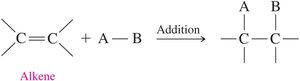
Addition reactions involve adding atoms or groups to the carbons in an alkene or alkyne.
Two main types: Hydrogenation and Hydration.
Hydrogenation
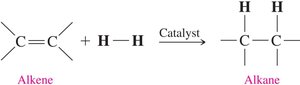
Hydrogenation adds hydrogen to an alkene, converting it to an alkane.
Requires a catalyst (often Pt).
Number of H-H molecules needed depends on the degree of unsaturation.
Hydration
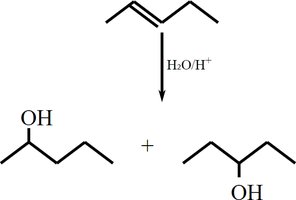
Hydration adds water to an alkene, forming an alcohol.
Usually requires an acid catalyst (H+).
Markovnikov's Rule for Hydration
When H2O adds to a double bond, the H attaches to the carbon with more hydrogen atoms, and the OH attaches to the carbon with fewer hydrogen atoms.
If there is no difference, both products are formed.
Summary Table: Energy Values for Food Types
Food Type | kJ/g | kcal/g |
|---|---|---|
Carbohydrate | 17 | 4 |
Fat | 38 | 9 |
Protein | 17 | 4 |
Additional info: This chapter covers key GOB Chemistry topics: energy, thermodynamics, reaction types, and biological relevance. All images included are directly relevant to the explanations provided.
