 Back
Energy Metabolism and Nutrition: Human Biology Study Notes
Study Guide - Smart Notes
 Tailored notes based on your materials, expanded with key definitions, examples, and context.
Energy Metabolism in Human Biology
Introduction to Energy Metabolism
Energy metabolism refers to the series of chemical reactions by which the body converts food into energy to sustain life processes. This chapter explores how carbohydrates, fats, and proteins are metabolized to yield ATP, the universal energy currency of cells.
Metabolism is the sum of all chemical reactions in the body, including both anabolism (building up) and catabolism (breaking down).
Energy is released from nutrients through metabolic pathways, producing ATP, water, and carbon dioxide.
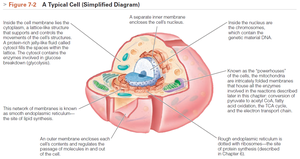
Cells are the primary sites of metabolic reactions.
Metabolic Pathways: Overview
The body digests carbohydrates, fats, and proteins into absorbable molecules:
Carbohydrates → Glucose (and other monosaccharides)
Fats → Glycerol and fatty acids
Proteins → Amino acids
These molecules enter metabolic pathways to produce energy. 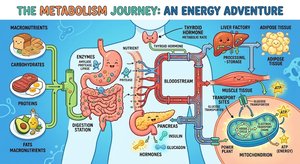
Key Concepts in Metabolism
Anabolism and Catabolism
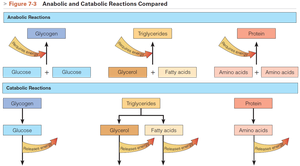
Anabolism: Building reactions that synthesize complex molecules from simpler ones (e.g., protein synthesis, glycogen formation).
Catabolism: Breakdown reactions that degrade complex molecules into simpler ones, releasing energy.
ATP: The Energy Currency
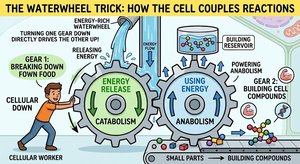
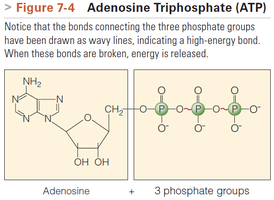
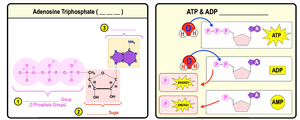
Most energy released during catabolism is captured in adenosine triphosphate (ATP). ATP consists of adenosine and three phosphate groups; breaking the bonds between phosphates releases energy.
ATP hydrolysis powers cellular work.
Coupled reactions link energy release from catabolism to energy use in anabolism.
Enzymes and Coenzymes in Metabolism
Enzymes
Enzymes are biological catalysts that accelerate metabolic reactions.
Most metabolic reactions require enzymes to proceed efficiently.
Coenzymes
Coenzymes are organic molecules (often derived from B vitamins) that assist enzymes in metabolic reactions.
They are essential for the metabolism of glucose, fatty acids, glycerol, and amino acids.
Carbohydrate Metabolism
Glycolysis: Glucose to Pyruvate
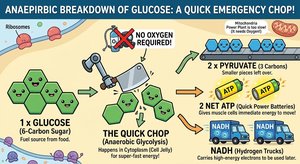
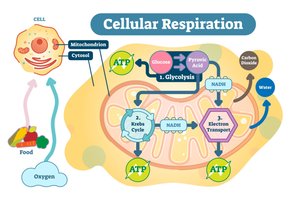
Glycolysis is the first pathway for glucose metabolism, occurring in the cytoplasm.
Glucose is split into two molecules of pyruvate.
Hydrogen atoms and electrons are transferred to coenzymes (NADH).
Glycolysis can proceed with or without oxygen.
Pyruvate Pathways: Aerobic and Anaerobic
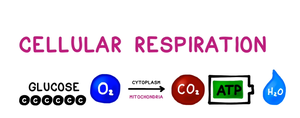
Aerobic: With oxygen, pyruvate enters mitochondria and is converted to Acetyl CoA.
Anaerobic: Without oxygen, pyruvate is converted to lactate.
The Cori cycle allows lactate produced in muscles to be converted back to glucose in the liver.

Fat Metabolism
Glycerol and Fatty Acids
Glycerol can be converted to pyruvate, which may yield glucose or energy.
Fatty acids undergo beta-oxidation to produce Acetyl CoA, which enters the TCA cycle.
Excess dietary fat is efficiently stored in adipose tissue.
Ketone Bodies
During fasting, Acetyl CoA from fatty acids forms ketone bodies.
Accumulation of ketone bodies leads to ketosis, lowering blood pH.
Protein Metabolism
Amino Acid Pathways
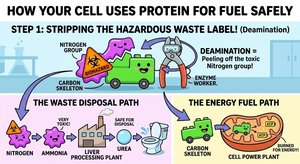
Deamination removes the amino group, producing ammonia.
Amino acids are classified as glucogenic (can form glucose) or ketogenic (can form Acetyl CoA).
Excess protein is deaminated and may contribute to body fat.
Gluconeogenesis, Glycogenesis, and Glucogenesis
Definitions and Sites
Gluconeogenesis: Creation of glucose from non-carbohydrate sources (amino acids, glycerol); mainly occurs in the liver.
Glycogenesis: Storage of excess glucose as glycogen.
Glucogenesis: Broad term for any pathway generating glucose, often synonymous with gluconeogenesis.
Energy Pathways: Acetyl CoA, TCA Cycle, and Electron Transport Chain
Acetyl CoA to ATP
Acetyl CoA is a central metabolite that cannot be converted back to glucose.
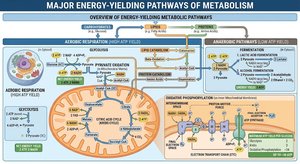
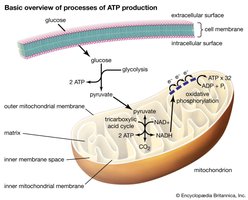
It enters the TCA cycle (Krebs cycle) in the mitochondria, releasing electrons.
Electrons are transferred to the electron transport chain, generating ATP.
Metabolic Imbalance: Feasting and Fasting
Feasting (Excess Energy)
Excess carbohydrates are stored as glycogen or converted to fat.
Excess fat and protein are stored as body fat.
Prolonged excess can lead to metabolic disorders (e.g., diabetes).
Fasting (Inadequate Energy)
Glycogen stores are depleted; the body breaks down fat and protein for energy.
Adaptations include hormone changes and reduced metabolism to conserve tissue.
Prolonged fasting leads to increased ketone production and tissue breakdown.
Intermittent Fasting and Ketogenic Diets
Intermittent fasting may improve body composition and metabolic health.
Ketogenic diets (<50g carbs/day) promote fatty acid oxidation and ketone production.
Alcohol and Metabolism
Alcohol Metabolism
Alcohol (ethanol) is rapidly absorbed and metabolized, primarily in the liver.
Alcohol dehydrogenase in the stomach initiates breakdown.
Alcohol disrupts metabolism, depresses antidiuretic hormone, and can cause malnutrition.
Health Impacts of Alcohol
Short-term: Dehydration, poisoning, increased risk of accidents.
Long-term: Chronic diseases, fetal alcohol syndrome, malnutrition, psychological disturbances.
Summary Table: Energy-Yielding Nutrient End Points
Nutrient | Metabolic Pathway | End Product |
|---|---|---|
Carbohydrates | Glycolysis → Pyruvate → Acetyl CoA → TCA Cycle | ATP, CO2, H2O |
Fats | Beta-oxidation → Acetyl CoA → TCA Cycle | ATP, CO2, H2O, Ketone bodies (if fasting) |
Proteins | Deamination → Carbon skeleton → Pyruvate/Acetyl CoA → TCA Cycle | ATP, CO2, H2O, Urea |
Key Terms and Concepts
Metabolism: All chemical reactions in the body
Anabolism: Building up molecules
Catabolism: Breaking down molecules
ATP: Universal energy currency
Glycolysis: Glucose breakdown
Gluconeogenesis: New glucose synthesis
TCA Cycle: Final common pathway for energy nutrients
Electron Transport Chain: ATP generation
Ketone Bodies: Alternative fuel during fasting
Alcohol Dehydrogenase: Enzyme for alcohol breakdown
