 Back
Cell Structure, Membrane Transport, Energy, and Photosynthesis: Study Notes for Introductory Biology
Study Guide - Smart Notes
 Tailored notes based on your materials, expanded with key definitions, examples, and context.
Plant and Animal Cells
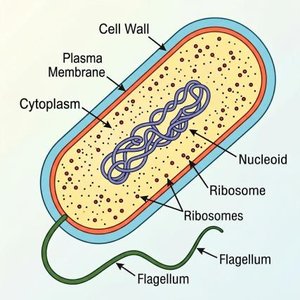
Prokaryotic vs. Eukaryotic Cells
Cells are classified as either prokaryotic or eukaryotic based on their internal structure. Understanding these differences is fundamental to cell biology.
Prokaryotic cells: Lack a nucleus and membrane-bound organelles. Their DNA is located in the cytoplasm region called the nucleoid. Example: bacteria.
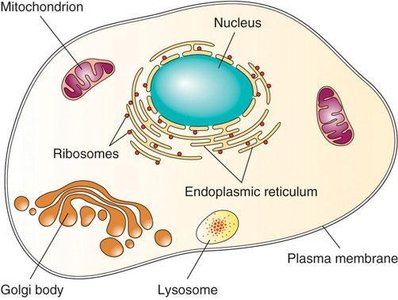
Eukaryotic cells: Have a nucleus and membrane-bound organelles. Their DNA is primarily inside the nucleus. Examples: plant and animal cells.
Memory trick: Prokaryotes = no nucleus. Eukaryotes = nucleus.
Shared and Unique Cell Structures
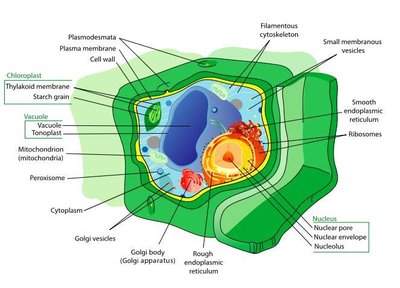
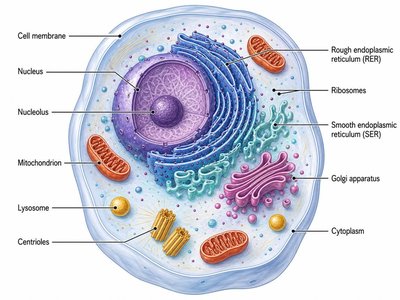
Both plant and animal cells are eukaryotic and share many structures, but some are unique to each type. Knowing the function of each structure is essential.
Cell membrane: Controls what enters and leaves the cell.
Cytoplasm: Fluid-like material where many cellular reactions occur.
Nucleus: Stores DNA and directs cell activities.
Nucleolus: Makes ribosomal components.
Nuclear envelope: Surrounds and protects the nucleus.
Nuclear pores: Control movement into and out of the nucleus.
Ribosomes: Make proteins.
Rough ER: Makes and processes proteins; has ribosomes.
Smooth ER: Makes lipids and helps detoxify substances.
Golgi apparatus: Modifies, sorts, and packages proteins and lipids.
Mitochondria: Produce most ATP during aerobic cellular respiration.
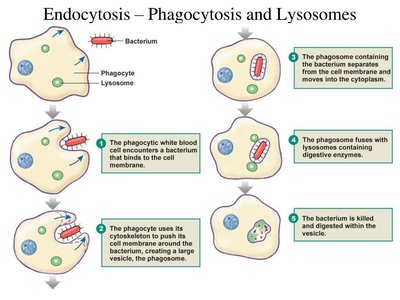
Lysosomes: Digest and recycle materials inside the cell.
Peroxisomes: Break down fatty acids and harmful substances such as hydrogen peroxide.
Vesicles: Small membrane-bound sacs that transport or store materials.
Cytoskeleton: Provides shape, support, and movement.
Centrioles: Help organize microtubules during animal cell division (animal cells only).
Cell wall: Supports and protects plant cells (plant cells only).
Chloroplasts: Carry out photosynthesis in plants (plant cells only).
Central vacuole: Stores water and other substances; helps maintain plant cell pressure (plant cells only).
Plasmodesmata: Channels allowing communication and transport between plant cells (plant cells only).
Important Definitions
Organelle: A specialized structure inside a cell that performs a particular job.
Endosymbiosis: Theory that mitochondria and chloroplasts originated from bacteria that lived inside an ancestral cell and became permanent partners.
Vesicle: A small membrane-bound sac that transports, stores, or releases substances.
Prokaryotic: A cell that lacks a nucleus and membrane-bound organelles.
Eukaryotic: A cell that contains a nucleus and membrane-bound organelles.
Why is endosymbiosis believed to have happened? Mitochondria and chloroplasts have their own DNA, bacterial-like ribosomes, and the ability to divide independently within the cell.
Cell Membrane and Transport
Structure of the Phospholipid Bilayer
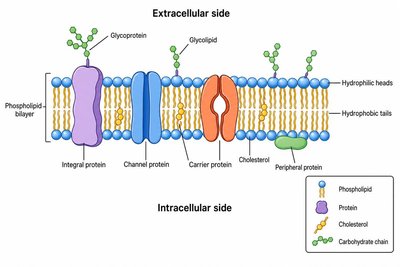
The cell membrane is primarily composed of a phospholipid bilayer, which forms a flexible boundary between the cell and its environment.
Hydrophilic heads: Attracted to water; face the watery fluid outside and inside the cell.
Hydrophobic tails: Repelled by water; point toward each other in the middle of the membrane.
Integral proteins: Embedded in the membrane; may act as channels, carriers, or receptors.
Cholesterol: Helps regulate membrane fluidity in animal cells.
Carbohydrate chains: Help with cell recognition and communication.
Fluid Mosaic Model: Describes the cell membrane as a flexible layer where lipids and proteins can move sideways.
Fluid: Many components move within the membrane.
Mosaic: Different proteins and other molecules are arranged throughout it.
Types of Transport
Substances move across the cell membrane by different mechanisms, depending on their properties and the cell's needs.
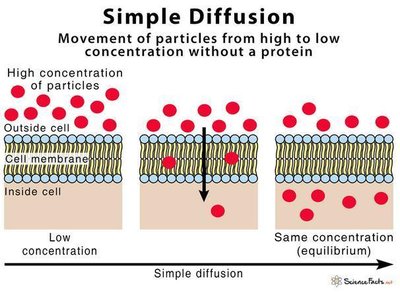
Passive transport: Does not require the cell to spend ATP directly.
Diffusion: Particles move from high to low concentration until equilibrium is reached.
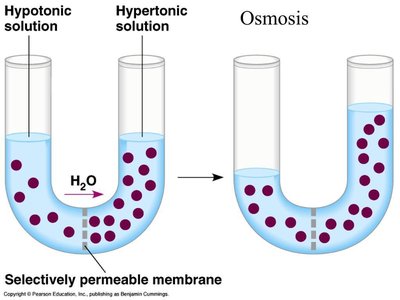
Osmosis: Net movement of water across a selectively permeable membrane toward the side with higher solute concentration.
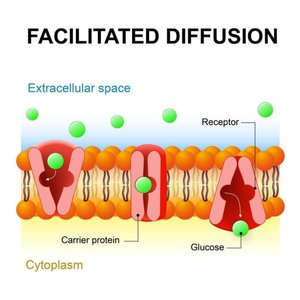
Facilitated diffusion: Substances move from high to low concentration through channel or carrier proteins without directly using ATP.
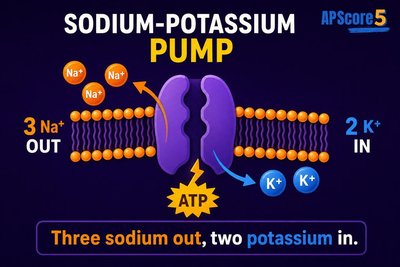
Active transport: Requires energy (ATP) to move substances against their concentration or electrochemical gradient.
Endocytosis and Exocytosis
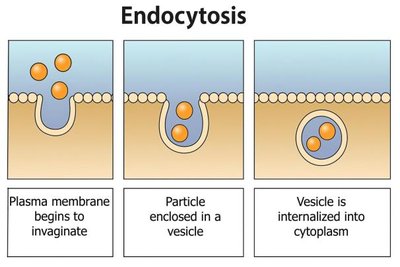
Cells use bulk transport mechanisms to move large particles or volumes of substances across the membrane.
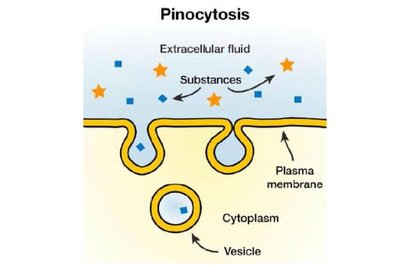
Endocytosis: The cell membrane folds inward to bring material into the cell inside a vesicle.
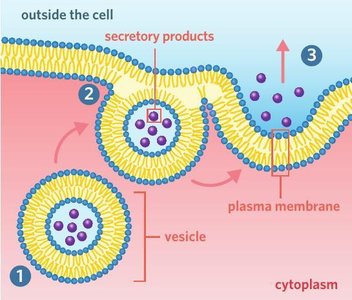
Exocytosis: A vesicle fuses with the cell membrane and releases its contents outside the cell.
Phagocytosis: Type of endocytosis that engulfs large particles, such as bacteria (cell eating).
Pinocytosis: Type of endocytosis that brings in extracellular fluid and dissolved substances (cell drinking).
Isotonic, Hypotonic, and Hypertonic Solutions
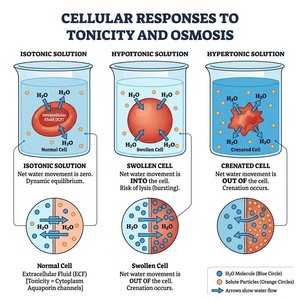
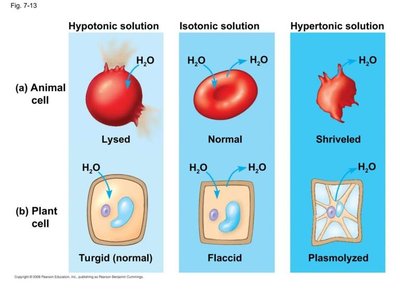
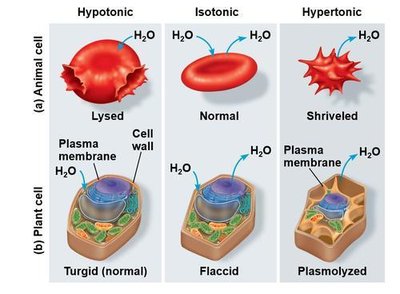
These terms compare the solution outside the cell with the inside of the cell and describe how water moves across the membrane.
Isotonic: Equal effective solute concentration. Water moves both ways at equal rates; no net water movement. Animal cell stays about the same size.
Hypotonic: Outside solution has lower solute concentration. Water enters the cell; animal cell may swell and burst.
Hypertonic: Outside solution has higher solute concentration. Water leaves the cell, causing an animal cell to shrink (crenation).
Energy, ATP, and Enzymes
What is Energy?
Energy is the capacity to do work or cause change. In living cells, energy is needed for building molecules, moving substances, growth, repair, and other life processes.
Kinetic energy: Energy of motion.
Potential energy: Stored energy due to position or structure. Chemical energy in glucose and ATP is a form of potential energy.
The two laws of thermodynamics:
First law: Energy cannot be created or destroyed; it can only be transferred or transformed.
Second law: Every energy transfer or transformation increases the total entropy (disorder or energy dispersal) of the universe.
Entropy: A measure of how dispersed energy is or how many microscopic arrangements are possible in a system.
ATP and ADP
ATP (adenosine triphosphate) is the main energy currency of the cell. It can be hydrolyzed to ADP (adenosine diphosphate) and inorganic phosphate, releasing energy for cellular work.
Molecule | Main Point |
|---|---|
ATP | Has three phosphate groups; powers cellular work |
ADP | Has two phosphate groups; can be converted back to ATP |
Why must energy from food be converted to ATP? Food contains chemical energy, but cells need a usable way to couple that energy to specific jobs. ATP is continually used and regenerated.
Three Types of Cellular Work
Chemical work: Building molecules, such as joining amino acids to make proteins.
Transport work: Moving substances across a membrane against their gradients, such as with the sodium-potassium pump.
Mechanical work: Producing movement, such as muscle contraction or movement of cilia.
Enzymes and How They Work
Enzymes are biological catalysts that speed up chemical reactions without being consumed. Most enzymes are proteins, though some RNA molecules also act as catalysts.
A substrate binds to the enzyme's active site.
The enzyme may change shape slightly to fit the substrate (induced-fit model).
The enzyme lowers the activation energy needed for the reaction.
Products form and are released.
The enzyme can be used again.
Activation energy: The minimum energy needed to start a chemical reaction.
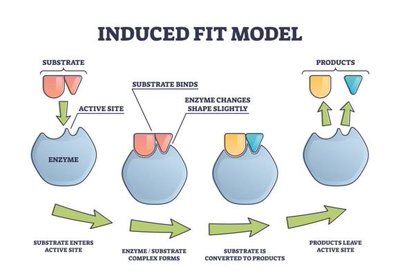
Very important: Enzymes lower activation energy, but do not change the overall energy released or required by the reaction, nor the reaction's equilibrium.
Important Enzyme Terms
Term | Definition |
|---|---|
Substrate | The substance an enzyme acts on |
Active site | The region where the substrate binds and the reaction occurs |
Induced fit | The enzyme changes shape slightly when the substrate binds |
Denaturation | Loss of a protein's normal shape, often causing loss of function |
Cofactor | A nonprotein helper required by some enzymes, often a metal ion |
Coenzyme | An organic helper molecule, often derived from a vitamin |
Vitamins | Organic nutrients needed in small amounts; some are used to make coenzymes |
Competitive inhibition | An inhibitor competes with the substrate for the active site |
Noncompetitive inhibition | An inhibitor binds elsewhere and reduces enzyme activity; adding more substrate does not overcome the inhibition |
Ribozymes | RNA molecules that catalyze chemical reactions |
Environmental Factors Affecting Enzymes
Temperature: Increasing temperature usually speeds reactions up to an optimum. Excessive heat can denature an enzyme.
pH: Each enzyme has an optimal pH. Very high or low pH can disrupt its shape and activity.
Substrate concentration: Increasing substrate concentration generally increases reaction rate until the enzymes become saturated.
Inhibitors: Reduce enzyme activity.
Photosynthesis
What is Photosynthesis?
Photosynthesis converts light energy into chemical energy stored in sugars. Plants use carbon dioxide and water to make sugar and release oxygen.
The equation you must know:
Carbon dioxide + water + light → glucose + oxygen
Reactants: Carbon dioxide, water, and light energy.
Products: Sugar (glucose) and oxygen.
Purpose: Capture light energy and store it in chemical bonds.
Chloroplast Structure
Chloroplasts are the site of photosynthesis in plant cells. Their structure is specialized for capturing light and converting it to chemical energy.
Structure | Function |
|---|---|
Outer membrane | Outer boundary of the chloroplast |
Inner membrane | Helps regulate what enters and leaves the chloroplast interior |
Stroma | Fluid where the Calvin cycle occurs |
Thylakoid | Flattened membrane sac containing chlorophyll and other photosynthetic machinery |
Granum (grana) | Stack of thylakoids |
Thylakoid membrane | Contains photosystems, electron transport components, and ATP synthase |
Thylakoid lumen | Space inside a thylakoid where protons accumulate during light reactions |
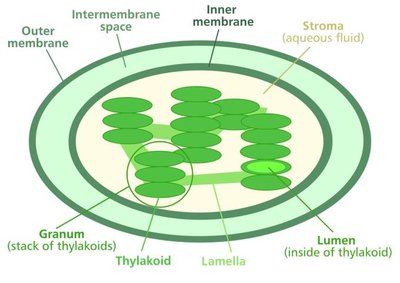
Memory trick: Light reactions happen in the thylakoid membrane. The Calvin cycle happens in the stroma.
The Two Main Stages of Photosynthesis
Stage 1: Light-dependent reactions (thylakoid membrane): Require light, split water to release oxygen, produce ATP and NADPH, transfer energy to molecules used in the Calvin cycle.
Stage 2: Calvin cycle (stroma): Uses ATP and NADPH from light reactions, incorporates carbon dioxide into organic molecules, produces G3P (a three-carbon sugar), does not directly require light but depends on products of the light reactions.
The Three Stages of the Calvin Cycle
Carbon fixation: The enzyme Rubisco attaches CO2 to RuBP, producing molecules that become 3-PGA.
Reduction: ATP and NADPH help convert 3-PGA into G3P, a higher-energy three-carbon molecule.
Regeneration: ATP helps regenerate RuBP so the cycle can continue fixing more CO2.
For every three CO2 molecules fixed, the cycle uses 9 ATP and 6 NADPH to produce one net G3P molecule.
Oxidation-Reduction (Redox) Reactions
Oxidation: Loss of electrons.
Reduction: Gain of electrons.
Memory trick: OIL RIG — Oxidation Is Loss; Reduction Is Gain (of electrons).
In photosynthesis, water is oxidized and releases electrons; carbon dioxide is reduced as its carbon becomes part of sugar. In cellular respiration, glucose is oxidized and oxygen is reduced to form water. These electron transfers help cells move energy from one molecule to another.
Cellular Respiration
What is Cellular Respiration?
Cellular respiration breaks down glucose and transfers its chemical energy into ATP, which cells use for work.
Balanced cellular respiration equation:
Glucose + oxygen → carbon dioxide + water + energy (captured partly in ATP)
Photosynthesis: Uses CO2 and water to build sugar and releases oxygen.
Cellular respiration: Uses sugar and oxygen to produce CO2 and water, transferring energy into ATP.
Where is ATP Made?
Cytoplasm (cytosol): Glycolysis produces a net of 2 ATP per glucose.
Mitochondrion: The citric acid cycle and oxidative phosphorylation contribute to ATP production. Most ATP from aerobic respiration is made through oxidative phosphorylation at the inner mitochondrial membrane.
Plant cells: Also have chloroplasts, which produce ATP during the light reactions of photosynthesis; that ATP is mainly used inside the chloroplast for the Calvin cycle.
Three Main Stages of Cellular Respiration
Stage | Location in a Eukaryotic Cell | Main Result |
|---|---|---|
Glycolysis | Cytoplasm | Glucose is split into two pyruvate molecules; net 2 ATP and NADH are produced |
Citric acid cycle (Krebs cycle) | Mitochondrial matrix | CO2 is released; electron carriers NADH and FADH2 are produced, along with a small amount of ATP or GTP |
Oxidative phosphorylation (electron transport chain and chemiosmosis) | Inner mitochondrial membrane | Electron transfers create a proton gradient that drives ATP synthase; oxygen is the final electron acceptor |
Under typical aerobic conditions, eukaryotic cells often obtain around 30–32 ATP per glucose, though the yield varies.
Mitochondria vs. Chloroplasts
Similarity | Explanation |
|---|---|
Double membranes | Both have outer and inner membranes |
Own DNA | Both contain their own genetic material |
Own ribosomes | Both can make some of their own proteins |
These similarities support the endosymbiotic theory.
