 Back
BackIntroduction to Chemistry: Foundations, Methods, and Measurement
Study Guide - Smart Notes
 Tailored notes based on your materials, expanded with key definitions, examples, and context.
Chapter 1: Introduction to Chemistry
Chemistry and the Nature of Science
Chemistry is the study of the properties and behavior of matter. It is a central science that connects and informs many other scientific fields. Science, including chemistry, seeks to understand and explain natural phenomena through observation, rational thinking, and experimentation.
Science: The systematic search for understanding and explanation of natural phenomena.
Technology: The application of scientific knowledge to solve practical problems.
Chemistry: Involves everything we do, from cooking to industrial processes.

Example: The composition of a soft drink, the ink in a pen, and the structure of DNA are all explained by chemistry.
Chemicals Compose Ordinary Things
People often associate chemicals with danger, but all matter is made of chemicals, including food, water, and air. Chemistry helps us understand the composition and transformation of these substances.

Example: Cooking involves chemical changes as ingredients are transformed into new substances.
Science and Technology
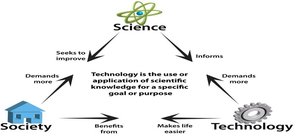
Science and technology are closely linked. Science seeks to understand nature, while technology applies this knowledge for practical purposes. Both have profound impacts on society.
Alchemy: The Roots of Chemistry
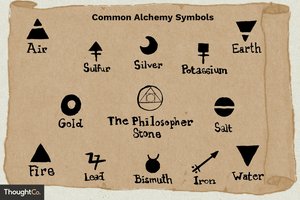
Alchemy was a precursor to modern chemistry, originating in the Arab world and spreading to Europe. Alchemists discovered new substances and techniques such as distillation, and their work laid the foundation for modern chemical science.
Philosopher's Stone: A legendary substance in alchemy believed to turn base metals into gold.
Contributions: Discovery of new substances, development of laboratory techniques, and early interest in health and medicine.
Green and Sustainable Chemistry
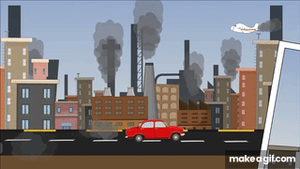
Green chemistry focuses on designing products and processes that minimize environmental impact by reducing or preventing pollution at its source. Sustainable chemistry aims to meet current needs without compromising future generations.

Environmental Impact: The Case of DDT
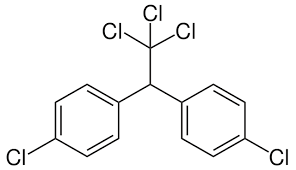
Rachel Carson's book Silent Spring (1962) highlighted the dangers of pesticides like DDT, which caused widespread environmental damage. Her work led to greater awareness of chemical risks and the importance of environmental protection.

The Scientific Method
The scientific method is an empirical approach to acquiring knowledge. It involves making observations, formulating hypotheses, conducting experiments, and developing laws and theories.
Observation: Gathering data, either qualitative (descriptions) or quantitative (measurements).
Hypothesis: A tentative explanation for observations, which must be testable and falsifiable.
Experimentation: Testing hypotheses through controlled experiments.
Theory: A well-substantiated explanation of some aspect of nature.
Law: A concise statement that summarizes observed phenomena and predicts future events.
Law of Conservation of Mass
Formulated by Antoine Lavoisier, this law states that the total mass of substances remains constant during a chemical reaction.
Equation:
Scientific Models and Molecular Modeling
Scientific models are representations (physical or conceptual) used to explain and predict the behavior of systems that are not directly observable. Molecular models help visualize the structure and interactions of molecules.
Limitations of Science
Science is limited to studying observable phenomena and processes where variables can be controlled. It cannot address questions outside the realm of empirical observation.
Mass vs. Weight
Mass: The amount of matter in an object (measured in kilograms or grams).
Weight: The force exerted by gravity on an object’s mass (measured in newtons or pounds).
Key Point: Mass remains constant regardless of location, while weight changes with gravitational force.
Physical and Chemical Properties
Physical Properties: Can be observed without changing the substance (e.g., boiling point, density, mass, volume).
Chemical Properties: Can only be observed when a substance undergoes a chemical change (e.g., flammability, reactivity).
Physical and Chemical Changes
Physical Change: Does not alter the chemical identity (e.g., melting, freezing, cutting wood).
Chemical Change: Produces new substances (e.g., rusting, burning, souring milk).
States of Matter
Matter exists in three primary states: solid, liquid, and gas. The kinetic molecular theory describes the properties of these states.
Solid: Definite shape and volume; particles are closely packed and vibrate in place.
Liquid: Definite volume but takes the shape of its container; particles are close but can move past each other.
Gas: No definite shape or volume; particles are far apart and move rapidly.
Classification of Matter
All matter is composed of atoms. Elements consist of one type of atom, while compounds are made of two or more different elements chemically combined. Mixtures are physical blends of substances and can be homogeneous (uniform) or heterogeneous (non-uniform).
Chapter 2: The Metric System and Measurement
Units of Measurement
The metric system (SI units) is a standardized system based on powers of ten. It is used worldwide in science for consistency and ease of conversion.
Base Units: Meter (length), kilogram (mass), second (time), liter (volume), etc.
Prefixes: Used to indicate multiples or fractions of units (e.g., kilo-, centi-, milli-).
Volume and Mass
Volume: The amount of space an object occupies. Common units are liter (L) and milliliter (mL).
Mass: The amount of matter in an object, measured in grams (g) or kilograms (kg).
Density
Density is a physical property defined as mass per unit volume. It is used to identify substances and predict whether they will float or sink in a fluid.
Formula:
where is density, is mass, and is volume.
Units: Commonly g/mL or g/cm3. Note: 1 mL = 1 cm3.
Dimensional Analysis (Unit Conversions)
Dimensional analysis is a method for converting between units using conversion factors. It ensures that calculations are consistent and accurate.
Write the given and needed units.
Set up conversion factors so units cancel appropriately.
Multiply through to obtain the desired unit.
Example: To convert 2.5 hours to minutes:
Temperature Scales
Temperature is a measure of the average kinetic energy of particles. The Celsius and Kelvin scales are most commonly used in science.
Celsius (°C): 0°C is the freezing point, 100°C is the boiling point of water.
Kelvin (K): SI unit of temperature.
Fahrenheit (°F): Used mainly in the United States.
Absolute Zero: 0 K is the lowest possible temperature, where particles have minimum kinetic energy.
Energy and Unit Conversions
Energy can be measured in calories (cal), kilocalories (kcal), or joules (J). Conversion between units is often necessary in chemical calculations.
Example: 1.00 g of gasoline yields about 10.3 kcal of energy. To convert to kilojoules:
Additional info: Some images and content were omitted for brevity and clarity. All key concepts from the provided material are included and expanded with academic context for introductory chemistry students.
