 Back
BackIntroductory Chemistry Study Guide: Chapter 1 and Metric System
Study Guide - Smart Notes
 Tailored notes based on your materials, expanded with key definitions, examples, and context.
Chemistry and the Nature of Science
What is Chemistry?
Chemistry is the study of the properties and behavior of matter. It is central to understanding many science-related fields and impacts everyday life, from the food we eat to the products we use.
Matter: Anything that has mass and volume.
Chemicals: Substances with a defined composition; not all chemicals are dangerous.
Applications: Chemistry is involved in medicine, environmental science, industry, and more.
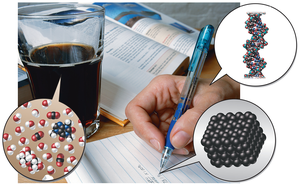
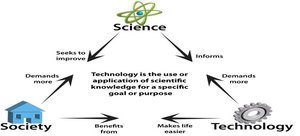
Science and Technology
Science seeks to understand the principles of nature through observation and experimentation. Technology applies scientific knowledge to solve practical problems.
Science: The process of seeking understanding of natural phenomena.
Technology: The application of scientific knowledge for specific goals.
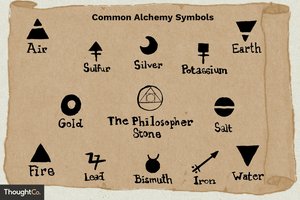
Alchemy: The Roots of Chemistry
Alchemy was a precursor to modern chemistry, originating in the Arab world and spreading to Europe. Alchemists discovered new substances and techniques, such as distillation, and contributed to medicine and health.
Philosopher's Stone: A legendary substance in alchemy.
Alchemy Symbols: Used to represent elements and processes.
Green and Sustainable Chemistry
Green chemistry aims to prevent or reduce pollution at its source, while sustainable chemistry focuses on meeting current needs without compromising future generations.
Green Chemistry: Uses environmentally friendly materials and processes.
Sustainable Chemistry: Balances present and future needs.


Environmental Impact of Chemicals
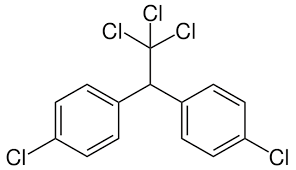
The use of chemicals, such as pesticides, can cause environmental damage. Rachel Carson's book Silent Spring highlighted the dangers of chemical pollution.
DDT: A pesticide once used widely, now known to cause harm to health and the environment.
Carsonian Nightmare: The irreversible damage to nature from chemical misuse.

The Scientific Method
Scientific Approach to Knowledge
The scientific method is a systematic process for understanding nature, based on observation, hypothesis, experimentation, and formulation of laws and theories.
Observation: Gathering data, both qualitative (descriptions) and quantitative (measurements).
Hypothesis: A tentative explanation that is testable and falsifiable.
Experimentation: Testing hypotheses through controlled experiments.
Scientific Law: A concise statement summarizing past observations and predicting future ones.
Scientific Theory: A model explaining why or how nature behaves as it does.
Law of Conservation of Mass
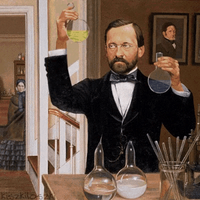
The law of conservation of mass states that the total mass of substances remains unchanged during a chemical process.
Formulated by: Antoine Lavoisier
Equation:
Scientific Models and Molecular Modeling
Scientific models are tangible representations of invisible processes. Molecular models show the arrangement of atoms in molecules.
Molecule: Two or more atoms held together by chemical bonds.
Molecular Model: 3D representation of a molecule.
Properties and Changes of Matter
Physical vs. Chemical Properties
Physical properties can be observed without changing the substance, while chemical properties require a change in composition.
Physical Properties: Boiling point, density, mass, volume.
Chemical Properties: Flammability, reactivity, corrosiveness.
Physical vs. Chemical Changes
Physical changes do not alter the chemical identity, while chemical changes result in new substances.
Physical Change Example: Melting, freezing, sawing wood.
Chemical Change Example: Rusting, burning, reacting with acid.
States of Matter
Solids, Liquids, and Gases
Matter exists in three main states: solid, liquid, and gas. The kinetic molecular theory describes their properties.
Solids: Definite shape and volume; particles are close and fixed.
Liquids: Definite volume, shape of container; particles are close but mobile.
Gases: Shape and volume of container; particles are far apart and move fast.
Classification of Matter
Elements, Compounds, and Mixtures
Matter can be classified as elements, compounds, or mixtures.
Element: Made of one kind of atom.
Compound: Made of two or more different elements chemically combined.
Mixture: Physical blend of substances; can be homogeneous (uniform) or heterogeneous (non-uniform).
The Metric System and Measurement
Metric Units and Prefixes
The metric system is a decimal-based system used worldwide for scientific measurements. Prefixes indicate multiples or fractions of base units.
Base Units: Meter (length), liter (volume), gram (mass).
Common Prefixes: kilo- (1000), centi- (0.01), milli- (0.001), micro- (0.000001).
Volume and Mass
Volume is measured in liters (L) and milliliters (mL); mass is measured in grams (g) and kilograms (kg).
1 L = 1000 mL
1 kg = 1000 g
Density
Density is a physical property defined as mass per unit volume.
Formula:
Units: g/mL or g/cm3
Example: If 156 g of iron occupies a certain volume, use the formula to calculate density.
Dimensional Analysis (Unit Conversions)
Dimensional analysis is used to convert between units using conversion factors.
Steps: Write the given and needed units, plan the conversion, use conversion factors, and check unit cancellation.
Example: To convert 2.5 hours to minutes:
Temperature and Energy
Temperature Scales
Temperature is a measure of average kinetic energy. The Celsius and Kelvin scales are commonly used in science.
Celsius: Freezing point of water is 0°C, boiling point is 100°C.
Kelvin: SI unit; 0 K is absolute zero.
Fahrenheit:
Energy Conversions
Energy can be measured in calories or joules. Conversion between units is often required in chemistry.
Example: 1.00 g of gasoline yields 10.3 kcal; convert to kilojoules as needed.
Summary Table: Physical vs. Chemical Properties
Property Type | Examples |
|---|---|
Physical | Boiling point, density, mass, volume |
Chemical | Flammability, reactivity, corrosiveness |
Summary Table: Metric Prefixes
Prefix | Symbol | Value |
|---|---|---|
Kilo | k | 1000 |
Centi | c | 0.01 |
Milli | m | 0.001 |
Micro | μ | 0.000001 |
Additional info: Some context and examples were expanded for clarity and completeness.
