Ch. 3 The Cell
Amerman- Human Anatomy & Physiology 3e
Amerman3rd EditionHuman Anatomy & PhysiologyISBN: 9780138247201, 9780138247928, 9780138201814Non è quello che usi tu?Cambia libro di testo
Capitolo 3, Problema 3

What are the two fluid compartments in the body, and how are they kept separate?

Guida verificata passo dopo passo
1
The two main fluid compartments in the body are the intracellular fluid (ICF) and the extracellular fluid (ECF). The intracellular fluid is the fluid inside cells, while the extracellular fluid is the fluid outside cells, which includes interstitial fluid (fluid between cells) and plasma (fluid in the blood).
The separation between these compartments is maintained by cellular membranes. The plasma membrane of cells acts as a selective barrier, allowing certain substances to pass while restricting others.
The plasma membrane is composed of a phospholipid bilayer with embedded proteins. This structure allows the membrane to be selectively permeable, meaning it permits the movement of small, nonpolar molecules (like oxygen and carbon dioxide) while restricting larger or charged molecules.
Transport mechanisms such as diffusion, osmosis, and active transport help regulate the movement of substances between the intracellular and extracellular compartments, ensuring proper balance and function.
Additionally, the extracellular fluid is further divided by the capillary walls, which separate the plasma from the interstitial fluid. These walls allow selective exchange of nutrients, gases, and waste products between the blood and tissues.

Risposta video verificata per un problema simile:

Questa soluzione video è stata consigliata dai nostri tutor come utile per risolvere questo problema.

Concetti chiave

Ecco i concetti essenziali che devi comprendere per rispondere correttamente alla domanda.

Fluid Compartments

The human body is divided into two primary fluid compartments: the intracellular fluid (ICF) and the extracellular fluid (ECF). The ICF is the fluid within cells, making up about two-thirds of total body water, while the ECF includes all fluid outside the cells, such as interstitial fluid and plasma. Understanding these compartments is crucial for grasping how fluids are distributed and function within the body.
Video consigliato:
3:33
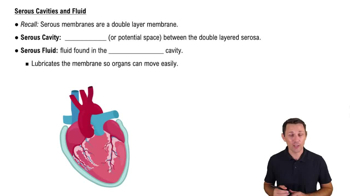
Serous Cavity and Fluid

Cell Membrane

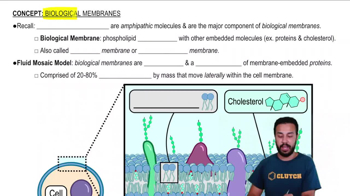
The cell membrane is a selectively permeable barrier that separates the intracellular fluid from the extracellular fluid. It is composed of a phospholipid bilayer with embedded proteins that regulate the movement of substances in and out of the cell. This selective permeability is essential for maintaining homeostasis and allowing cells to control their internal environment.
Video consigliato:
Percorso guidato
06:49
Biological Membranes

Osmosis and Diffusion

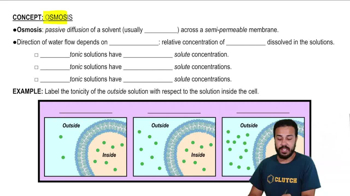
Osmosis and diffusion are key processes that govern the movement of water and solutes between the ICF and ECF. Osmosis refers specifically to the movement of water across a semipermeable membrane from an area of lower solute concentration to an area of higher concentration. Diffusion involves the movement of solutes from an area of higher concentration to an area of lower concentration, both of which help maintain the balance of fluids in the body.
Video consigliato: