Ch. 10 Blood
Marieb - Essentials of Human Anatomy & Physiology 13th Edition
Marieb13th EditionEssentials of Human Anatomy & PhysiologyISBN: 9780135624340Non è quello che usi tu?Cambia libro di testo
Capitolo 10, Problema 7

More than one choice may apply.
Which of the following formed elements are phagocytic?
a. Erythrocytes
b. Neutrophils
c. Monocytes
d. Lymphocytes

Guida verificata passo dopo passo
1
Understand the term 'phagocytic': Phagocytic cells are those that can engulf and digest pathogens, debris, or other particles through a process called phagocytosis. This is a key function in the immune system.
Review the function of erythrocytes (red blood cells): Erythrocytes are primarily responsible for transporting oxygen and carbon dioxide in the blood. They do not have phagocytic capabilities.
Examine neutrophils: Neutrophils are a type of white blood cell and are highly phagocytic. They are part of the innate immune system and are often the first responders to infection, engulfing and destroying pathogens.
Analyze monocytes: Monocytes are another type of white blood cell that can differentiate into macrophages or dendritic cells, both of which are phagocytic. Monocytes themselves also exhibit phagocytic activity.
Consider lymphocytes: Lymphocytes, including T cells, B cells, and natural killer cells, are primarily involved in adaptive immunity and do not perform phagocytosis. Their role is more focused on recognizing and responding to specific antigens.

Risposta video verificata per un problema simile:

Questa soluzione video è stata consigliata dai nostri tutor come utile per risolvere questo problema.

Concetti chiave

Ecco i concetti essenziali che devi comprendere per rispondere correttamente alla domanda.

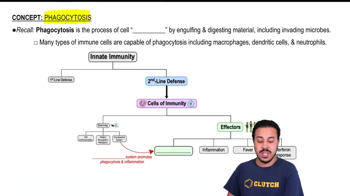
Phagocytosis

Phagocytosis is a cellular process in which certain cells, known as phagocytes, engulf and digest foreign particles, bacteria, and dead or dying cells. This process is crucial for the immune response, as it helps to eliminate pathogens and debris from the body. Phagocytic cells play a vital role in both innate and adaptive immunity.
Video consigliato:

Types of White Blood Cells

White blood cells, or leukocytes, are essential components of the immune system, and they can be categorized into different types based on their functions. Neutrophils and monocytes are key phagocytic cells, while lymphocytes are primarily involved in adaptive immunity. Understanding the roles of these cells helps in identifying which formed elements are phagocytic.
Video consigliato:
Percorso guidato
5:34
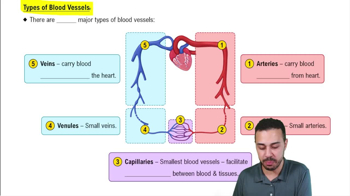
Types of Blood Vessels

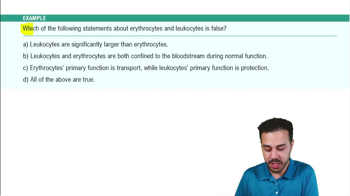
Erythrocytes vs. Leukocytes

Erythrocytes, or red blood cells, are responsible for transporting oxygen throughout the body and do not have a role in phagocytosis. In contrast, leukocytes, or white blood cells, include various types that are involved in immune responses, including phagocytosis. Recognizing the differences between these cell types is essential for answering questions about immune functions.
Video consigliato:
Percorso guidato
2:33
Leukocytes Example 1