Ch. 10 Blood
Marieb - Essentials of Human Anatomy & Physiology 13th Edition
Marieb13th EditionEssentials of Human Anatomy & PhysiologyISBN: 9780135624340Non è quello che usi tu?Cambia libro di testo
Capitolo 10, Problema 5

More than one choice may apply.
Which of the following is not typical of leukocytes?
a. Amoeboid movement
b. Phagocytic (some)
c. Nucleated cells
d. The most numerous cells in the bloodstream

Guida verificata passo dopo passo
1
Step 1: Begin by understanding the term 'leukocytes.' Leukocytes, also known as white blood cells, are a crucial part of the immune system and are involved in protecting the body against infections and foreign invaders.
Step 2: Analyze each option provided in the question. Option (a) 'Amoeboid movement' refers to the ability of leukocytes to move by extending their cytoplasm, which is typical of leukocytes as they navigate through tissues.
Step 3: Evaluate option (b) 'Phagocytic (some).' Some leukocytes, such as neutrophils and macrophages, are phagocytic, meaning they engulf and digest pathogens or debris. This is a characteristic of certain leukocytes.
Step 4: Consider option (c) 'Nucleated cells.' Leukocytes are nucleated cells, meaning they contain a nucleus, unlike red blood cells which lack a nucleus. This is typical of leukocytes.
Step 5: Examine option (d) 'The most numerous cells in the bloodstream.' This is not typical of leukocytes, as red blood cells are far more numerous in the bloodstream compared to leukocytes. This makes option (d) the correct answer to the question.

Risposta video verificata per un problema simile:

Questa soluzione video è stata consigliata dai nostri tutor come utile per risolvere questo problema.

Concetti chiave

Ecco i concetti essenziali che devi comprendere per rispondere correttamente alla domanda.

Leukocytes

Leukocytes, or white blood cells, are a crucial component of the immune system, responsible for defending the body against infections and foreign invaders. They are produced in the bone marrow and can be classified into various types, including lymphocytes, neutrophils, and monocytes, each with specific functions in immune response.
Video consigliato:
Percorso guidato
2:33
Leukocytes Example 1

Amoeboid Movement

Amoeboid movement is a type of locomotion used by certain cells, including some leukocytes, allowing them to move through tissues by extending and retracting their cytoplasm. This movement is essential for leukocytes to navigate towards sites of infection or inflammation, enabling them to perform their immune functions effectively.
Video consigliato:
Percorso guidato
08:43
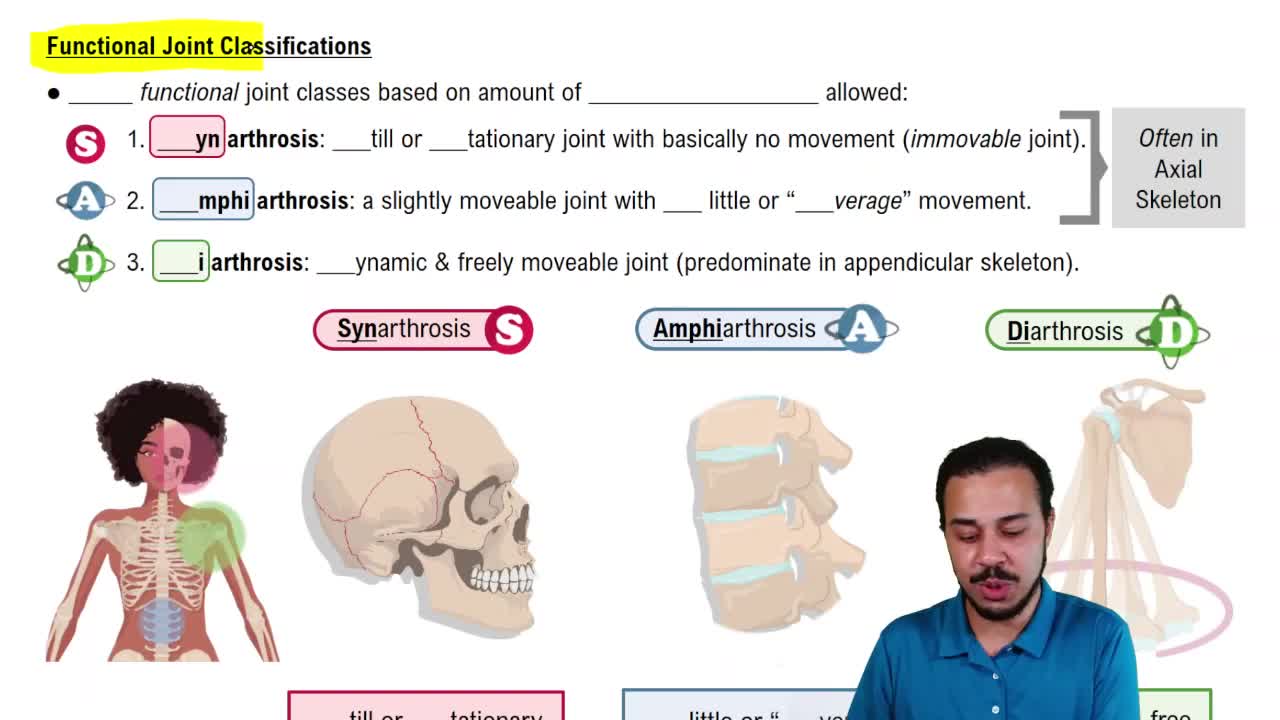
Functional Joint Classifications

Nucleated Cells

Nucleated cells are cells that contain a nucleus, which houses the cell's genetic material. Unlike red blood cells, which lose their nucleus during maturation, leukocytes retain their nuclei, allowing them to carry out complex functions such as protein synthesis and cell division, which are vital for their role in the immune system.
Video consigliato: