
Domanda del libro di testo
More than one choice may apply.
Which of the following is not typical of leukocytes?
a. Amoeboid movement
b. Phagocytic (some)
c. Nucleated cells
d. The most numerous cells in the bloodstream
936
views

 Guida verificata passo dopo passo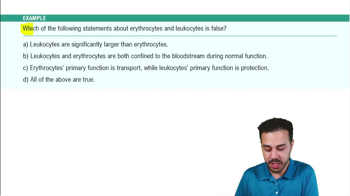
 2:33
2:33
 3:10
3:10 2:10
2:10More than one choice may apply.
Which of the following is not typical of leukocytes?
a. Amoeboid movement
b. Phagocytic (some)
c. Nucleated cells
d. The most numerous cells in the bloodstream
More than one choice may apply.
Polycythemia vera will result in
a. Overproduction of WBCs
b. Exceptionally high blood volume
c. Abnormally high blood viscosity
d. Abnormally low hematocrit
More than one choice may apply.
If an Rh ⁻ mother becomes pregnant, when can hemolytic disease of the newborn not possibly occur in the child?
a. If the child is Rh ⁻
b. If the child is Rh⁺
c. If the father is Rh⁺
d. If the father is Rh ⁻
More than one choice may apply.
A condition resulting from thrombocytopenia is
a. Thrombus formation
b. Embolus formation
c. Petechiae
d. Hemophilia
More than one choice may apply. A child is diagnosed with sickle cell anemia. This means that
a. One parent had sickle cell anemia.
b. One parent carried the sickle cell gene.
c. Both parents had sickle cell anemia.
d. Both parents carried the sickle cell gene.
More than one choice may apply.
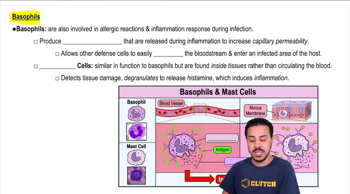
Which of the following formed elements are phagocytic?
a. Erythrocytes
b. Neutrophils
c. Monocytes
d. Lymphocytes