Ch. 13 The Respiratory System
Marieb - Essentials of Human Anatomy & Physiology 13th Edition
Marieb13th EditionEssentials of Human Anatomy & PhysiologyISBN: 9780135624340Non è quello che usi tu?Cambia libro di testo
Capitolo 13, Problema 3

More than one choice may apply.
During inspiration, intrapulmonary pressure is
a. Greater than atmospheric pressure
b. Less than atmospheric pressure
c. Greater than intrapleural pressure
d. Less than intrapleural pressure

Guida verificata passo dopo passo
1
Understand the concept of inspiration: During inspiration, the diaphragm and external intercostal muscles contract, increasing the thoracic cavity's volume and decreasing the pressure inside the lungs (intrapulmonary pressure). This allows air to flow into the lungs due to the pressure gradient.
Compare intrapulmonary pressure to atmospheric pressure: During inspiration, intrapulmonary pressure becomes less than atmospheric pressure, creating a pressure gradient that drives air into the lungs.
Compare intrapulmonary pressure to intrapleural pressure: Intrapleural pressure is always lower than intrapulmonary pressure during normal breathing. This pressure difference prevents lung collapse and maintains the negative pressure in the pleural cavity.
Analyze the options: Based on the physiological principles, determine which statements correctly describe the pressure relationships during inspiration.
Review the correct answers: Ensure that the selected answers align with the mechanics of breathing and the pressure gradients involved during inspiration.

Risposta video verificata per un problema simile:

Questa soluzione video è stata consigliata dai nostri tutor come utile per risolvere questo problema.
Durata del video:
2m

Concetti chiave

Ecco i concetti essenziali che devi comprendere per rispondere correttamente alla domanda.

Intrapulmonary Pressure

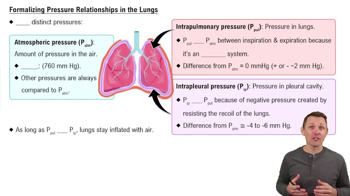
Intrapulmonary pressure, also known as alveolar pressure, is the pressure within the lungs. During inspiration, this pressure decreases as the diaphragm contracts and the thoracic cavity expands, allowing air to flow into the lungs. Understanding this concept is crucial for grasping how air moves in and out of the respiratory system.
Video consigliato:
5:46
Formalizing Pressure Relationships in the Lungs

Atmospheric Pressure

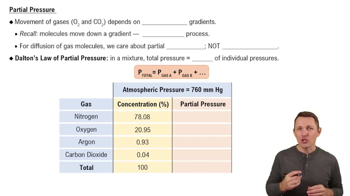
Atmospheric pressure is the pressure exerted by the weight of the air in the atmosphere surrounding the Earth. It is typically measured at sea level and is approximately 760 mmHg. During inspiration, intrapulmonary pressure must drop below atmospheric pressure to facilitate airflow into the lungs, making this concept essential for understanding respiratory mechanics.
Video consigliato:
6:12
Partial Pressure

Intrapleural Pressure

Intrapleural pressure is the pressure within the pleural cavity, which is the space between the lungs and the chest wall. This pressure is always negative relative to intrapulmonary pressure, which helps keep the lungs inflated. During inspiration, intrapleural pressure decreases further, enhancing the pressure gradient that allows air to flow into the lungs.
Video consigliato:
5:46
Formalizing Pressure Relationships in the Lungs