Ch. 13 The Respiratory System
Marieb - Essentials of Human Anatomy & Physiology 13th Edition
Marieb13th EditionEssentials of Human Anatomy & PhysiologyISBN: 9780135624340Non è quello che usi tu?Cambia libro di testo
Capitolo 13, Problema 9

Clearly explain the difference between external and internal respiration.

Guida verificata passo dopo passo
1
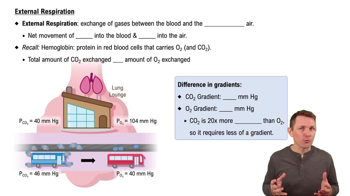
External respiration refers to the exchange of gases between the air in the alveoli and the blood in the pulmonary capillaries.
During external respiration, oxygen from the inhaled air diffuses into the blood, while carbon dioxide from the blood diffuses into the alveoli to be exhaled.
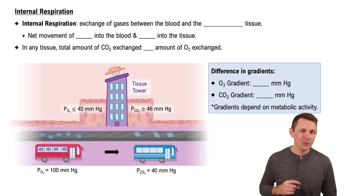
Internal respiration involves the exchange of gases between the blood in systemic capillaries and the body's cells.
In internal respiration, oxygen diffuses from the blood into the cells, and carbon dioxide produced by cellular metabolism diffuses from the cells into the blood.
Both processes are crucial for maintaining the body's oxygen supply and removing carbon dioxide, but they occur in different locations and involve different exchanges.

Risposta video verificata per un problema simile:

Questa soluzione video è stata consigliata dai nostri tutor come utile per risolvere questo problema.
Durata del video:
1m

Concetti chiave

Ecco i concetti essenziali che devi comprendere per rispondere correttamente alla domanda.

External Respiration

External respiration refers to the process of gas exchange that occurs in the lungs. It involves the inhalation of oxygen from the atmosphere into the alveoli, where it diffuses into the blood, while carbon dioxide from the blood is expelled into the alveoli to be exhaled. This process is crucial for oxygenating the blood and removing waste gases.
Video consigliato:
6:41
External Respiration

Internal Respiration

Internal respiration is the exchange of gases that occurs at the cellular level within the tissues of the body. It involves the delivery of oxygen from the blood to the cells and the uptake of carbon dioxide produced by cellular metabolism back into the blood. This process is essential for cellular respiration, which generates energy for cellular functions.
Video consigliato:
5:20
Internal Respiration

Gas Exchange Mechanism

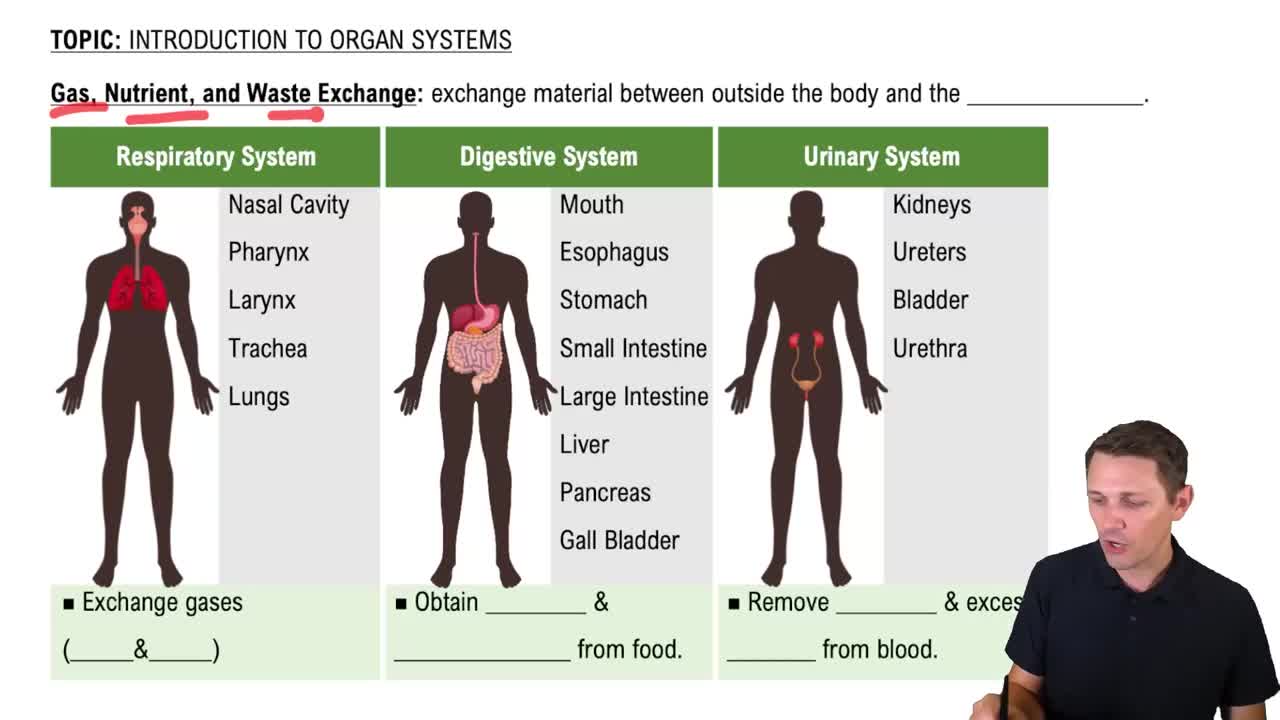
The gas exchange mechanism is the physiological process that facilitates the transfer of oxygen and carbon dioxide between the lungs and the bloodstream, as well as between the blood and body tissues. This mechanism relies on diffusion, where gases move from areas of higher concentration to lower concentration, ensuring that oxygen is delivered to cells and carbon dioxide is removed efficiently.
Video consigliato:
03:59
Gas, Nutrient and Waste Exchange