Ch. 13 The Respiratory System
Marieb - Essentials of Human Anatomy & Physiology 13th Edition
Marieb13th EditionEssentials of Human Anatomy & PhysiologyISBN: 9780135624340Non è quello che usi tu?Cambia libro di testo
Capitolo 13, Problema 8

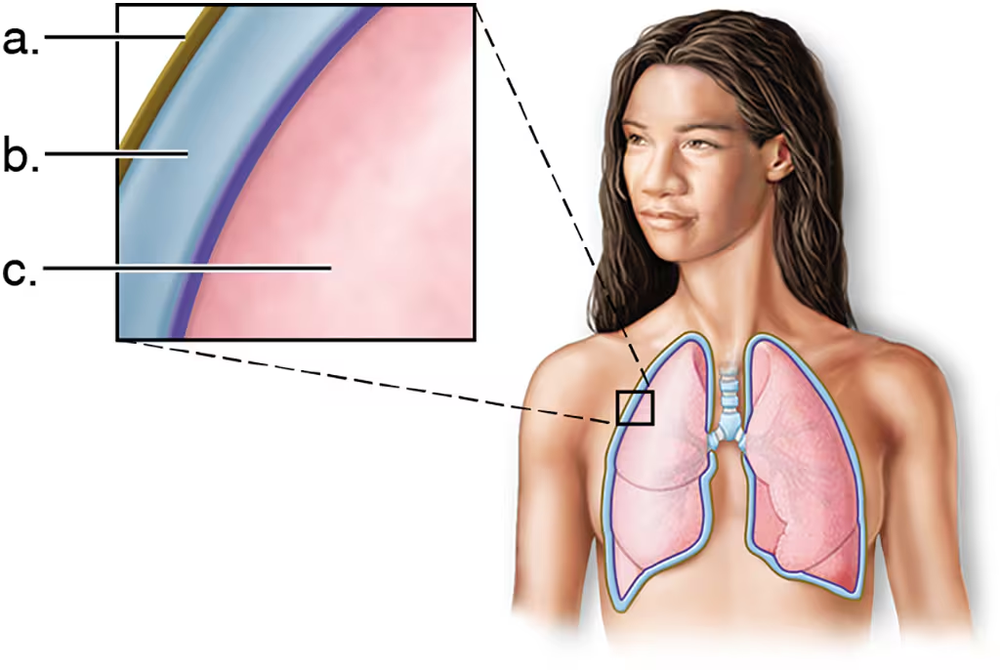
Which of the following represents intrapleural pressure?
Illustration of human lungs with labels indicating intrapleural pressure and surrounding structures.

Guida verificata passo dopo passo
1
Understand the concept of intrapleural pressure: Intrapleural pressure is the pressure within the pleural cavity, the space between the visceral and parietal pleurae surrounding the lungs. It is typically negative relative to atmospheric pressure, which helps keep the lungs inflated.
Review the physiological mechanism: The negative intrapleural pressure is created by the opposing forces of the lungs' elastic recoil (which pulls inward) and the chest wall's tendency to expand outward. This balance maintains the negative pressure.
Analyze the options provided: Carefully examine the choices (a, b, c) to determine which ones describe or represent intrapleural pressure. Look for descriptions or values that align with the concept of a pressure that is negative relative to atmospheric pressure.
Eliminate incorrect options: Discard any choices that describe pressures unrelated to the pleural cavity, such as atmospheric pressure, alveolar pressure, or pressures that are positive rather than negative.
Select the correct answers: Identify all options that accurately represent intrapleural pressure based on your understanding of its definition and physiological role.

Risposta video verificata per un problema simile:

Questa soluzione video è stata consigliata dai nostri tutor come utile per risolvere questo problema.
Durata del video:
2m

Concetti chiave

Ecco i concetti essenziali che devi comprendere per rispondere correttamente alla domanda.

Intrapleural Pressure

Intrapleural pressure is the pressure within the pleural cavity, the thin fluid-filled space between the two pleurae of the lungs. It is typically negative relative to atmospheric pressure, which helps keep the lungs inflated and facilitates breathing. This pressure is crucial for maintaining lung expansion and preventing lung collapse.
Video consigliato:
5:46
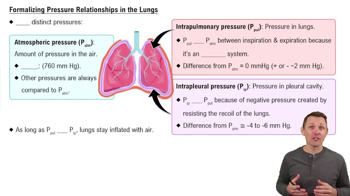
Formalizing Pressure Relationships in the Lungs

Pleural Cavity

The pleural cavity is the space between the visceral pleura (which covers the lungs) and the parietal pleura (which lines the chest wall). This cavity contains pleural fluid, which reduces friction during breathing and helps maintain the negative pressure necessary for lung inflation. Understanding the anatomy and function of the pleural cavity is essential for grasping intrapleural pressure.
Video consigliato:
4:01
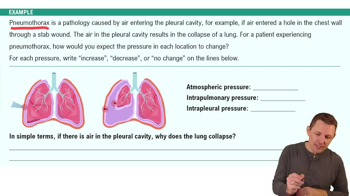
Pressure in the Lungs and Pleural Cavity Example 2

Respiratory Mechanics

Respiratory mechanics refers to the physical principles governing the movement of air into and out of the lungs. It includes concepts such as pressure gradients, lung compliance, and airway resistance. A solid understanding of respiratory mechanics is vital for interpreting how intrapleural pressure influences ventilation and overall respiratory function.
Video consigliato:
3:02
Internal Regulation - The Myogenic Mechanism