Ch. 3 Cells and Tissues
Marieb - Essentials of Human Anatomy & Physiology 13th Edition
Marieb13th EditionEssentials of Human Anatomy & PhysiologyISBN: 9780135624340Non è quello che usi tu?Cambia libro di testo
Capitolo 3, Problema 13

Although cells have differences that reflect their special functions in the body, what functional abilities do all cells exhibit?

Guida verificata passo dopo passo
1
Understand that all cells share certain fundamental characteristics and functions, despite their specialization for specific roles in the body.
Recognize that all cells exhibit the ability to maintain homeostasis, which involves regulating their internal environment to remain stable and functional.
Identify that all cells perform metabolism, which includes chemical reactions such as breaking down nutrients for energy and synthesizing molecules necessary for cellular function.
Note that all cells exhibit responsiveness, meaning they can respond to stimuli from their environment, such as changes in temperature, pH, or signaling molecules.
Understand that all cells have the ability to reproduce, either by dividing to form new cells (mitosis) or through specialized processes like meiosis in reproductive cells.

Risposta video verificata per un problema simile:

Questa soluzione video è stata consigliata dai nostri tutor come utile per risolvere questo problema.
Durata del video:
2m

Concetti chiave

Ecco i concetti essenziali che devi comprendere per rispondere correttamente alla domanda.

Cellular Structure

All cells share a fundamental structure that includes a plasma membrane, cytoplasm, and genetic material (DNA). This basic architecture allows cells to maintain homeostasis, communicate with their environment, and carry out essential life processes. Despite variations in size and shape, these components are crucial for the cell's functionality.
Video consigliato:
Percorso guidato
03:38
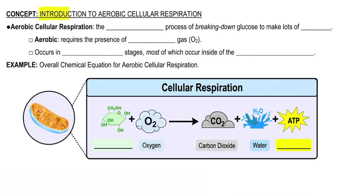
Introduction to Cellular Respiration

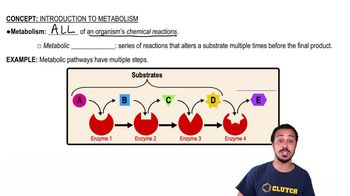
Metabolism

Metabolism encompasses all biochemical reactions occurring within a cell, including catabolism (breaking down molecules for energy) and anabolism (building up molecules for growth and repair). This ability to convert energy and matter is vital for sustaining cellular functions and supporting the organism's overall health.
Video consigliato:
Percorso guidato
02:17
Introduction to Metabolism

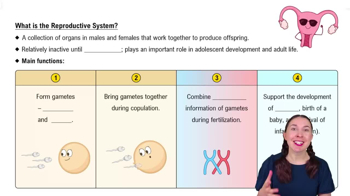
Reproduction

All cells possess the ability to reproduce, either through mitosis (for somatic cells) or meiosis (for gametes). This process is essential for growth, tissue repair, and the continuation of genetic information across generations. Reproduction ensures that cells can proliferate and maintain the organism's life cycle.
Video consigliato:
2:08
What is the Reproductive System?