Ch. 3 Cells and Tissues
Marieb - Essentials of Human Anatomy & Physiology 13th Edition
Marieb13th EditionEssentials of Human Anatomy & PhysiologyISBN: 9780135624340Non è quello che usi tu?Cambia libro di testo
Capitolo 3, Problema 15

Name the cellular organelles, and explain the function of each.

Guida verificata passo dopo passo
1
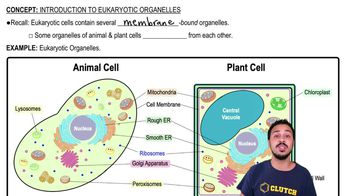
Identify the major cellular organelles found in eukaryotic cells, such as the nucleus, mitochondria, endoplasmic reticulum, Golgi apparatus, lysosomes, peroxisomes, and ribosomes.
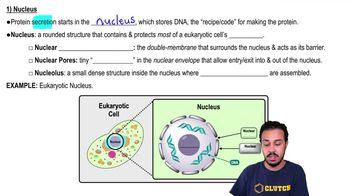
Describe the nucleus as the control center of the cell, containing DNA and regulating gene expression and cellular activities.
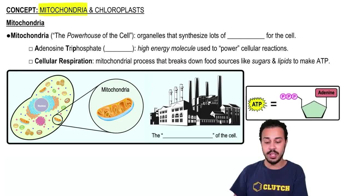
Explain the function of mitochondria as the powerhouse of the cell, responsible for producing ATP through cellular respiration.
Discuss the role of the endoplasmic reticulum (ER), differentiating between the rough ER (involved in protein synthesis due to ribosomes) and the smooth ER (involved in lipid synthesis and detoxification).
Describe the Golgi apparatus as the organelle responsible for modifying, sorting, and packaging proteins and lipids for transport within or outside the cell.

Risposta video verificata per un problema simile:

Questa soluzione video è stata consigliata dai nostri tutor come utile per risolvere questo problema.
Durata del video:
4m

Concetti chiave

Ecco i concetti essenziali che devi comprendere per rispondere correttamente alla domanda.

Cellular Organelles

Cellular organelles are specialized structures within a cell that perform distinct functions necessary for the cell's survival and operation. Examples include the nucleus, which houses genetic material, and mitochondria, known as the powerhouse of the cell for energy production. Understanding these organelles is crucial for grasping how cells maintain homeostasis and carry out metabolic processes.
Video consigliato:
Percorso guidato
03:45
Introduction to Eukaryotic Organelles

Nucleus

The nucleus is a membrane-bound organelle that contains the cell's genetic material (DNA) and is responsible for regulating gene expression and cell division. It acts as the control center of the cell, coordinating activities such as growth, metabolism, and reproduction. The presence of a nuclear envelope protects the DNA from damage and allows for the organization of genetic information.
Video consigliato:

Mitochondria

Mitochondria are double-membraned organelles often referred to as the 'powerhouses' of the cell because they generate adenosine triphosphate (ATP), the primary energy currency of the cell, through cellular respiration. They also play roles in regulating metabolism, apoptosis (programmed cell death), and maintaining cellular health. Their unique structure, including inner folds called cristae, increases surface area for energy production.
Video consigliato: