Ch. 12 Nervous Tissue
Martini - Fundamentals of Anatomy & Physiology 11th Edition
Martini, Nath, Bartholomew11th EditionFundamentals of Anatomy & PhysiologyISBN: 9780136874089Non è quello che usi tu?Cambia libro di testo
Capitolo 12, Problema 8

Receptors that bind acetylcholine at the postsynaptic membrane are:
(a) Chemically gated channels
(b) Voltage-gated channels
(c) Passive channels
(d) Mechanically gated channels

Guida verificata passo dopo passo
1
Understand that acetylcholine is a neurotransmitter that binds to specific receptors on the postsynaptic membrane to initiate a response.
Recall that receptors which respond directly to neurotransmitters by opening ion channels are known as chemically gated (or ligand-gated) channels.
Recognize that voltage-gated channels open in response to changes in membrane potential, not directly by neurotransmitter binding.
Note that passive channels are always open and not gated by any stimulus, so they do not specifically bind acetylcholine.
Mechanically gated channels open in response to physical deformation of the membrane, which is unrelated to acetylcholine binding.

Risposta video verificata per un problema simile:

Questa soluzione video è stata consigliata dai nostri tutor come utile per risolvere questo problema.
Durata del video:
3m

Concetti chiave

Ecco i concetti essenziali che devi comprendere per rispondere correttamente alla domanda.

Acetylcholine Receptors

Acetylcholine receptors are proteins located on the postsynaptic membrane that specifically bind the neurotransmitter acetylcholine. These receptors mediate synaptic transmission by triggering ion flow across the membrane, leading to changes in the postsynaptic cell's electrical state.
Video consigliato:
2:47
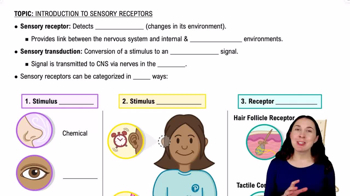
Sensory Receptors

Chemically Gated Channels

Chemically gated channels, also known as ligand-gated channels, open or close in response to the binding of a specific chemical messenger like a neurotransmitter. When acetylcholine binds to these receptors, the channel opens, allowing ions to pass and generating a postsynaptic potential.
Video consigliato:
Percorso guidato
01:56
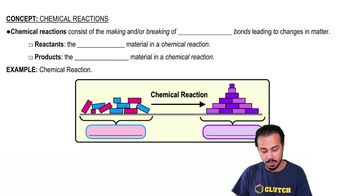
Chemical Reactions

Voltage-Gated vs. Other Ion Channels

Voltage-gated channels open in response to changes in membrane potential, unlike chemically gated channels that respond to ligands. Passive channels allow ions to move down their concentration gradient without gating, and mechanically gated channels respond to physical deformation, making them distinct from acetylcholine receptors.
Video consigliato:
Percorso guidato
04:34
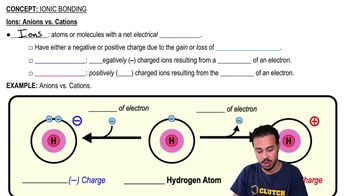
Ions: Anions vs. Cations