
Ch. 18 The Endocrine System
Martini - Fundamentals of Anatomy & Physiology 11th Edition
Martini, Nath, Bartholomew11th EditionFundamentals of Anatomy & PhysiologyISBN: 9780136874089Non è quello che usi tu?Cambia libro di testo
Capitolo 18, Problema 4

FSH production in males supports:
(a) The maturation of sperm by stimulating nurse cells
(b) The development of muscles and strength
(c) The production of male sex hormones
(d) An increased desire for sexual activity

Guida verificata passo dopo passo
1
Understand the role of Follicle Stimulating Hormone (FSH) in the male reproductive system. FSH is a hormone produced by the anterior pituitary gland that primarily targets the testes.
Recall that in males, FSH acts on Sertoli cells (also known as nurse cells) within the seminiferous tubules of the testes. These cells support and nourish developing sperm cells.
Recognize that FSH stimulates Sertoli cells to promote spermatogenesis, which is the process of sperm maturation and development.
Differentiate FSH's role from other functions such as muscle development, hormone production, or sexual desire, which are primarily influenced by other hormones like testosterone or luteinizing hormone (LH).
Conclude that the correct function of FSH in males is to support the maturation of sperm by stimulating nurse (Sertoli) cells, corresponding to option (a).

Risposta video verificata per un problema simile:

Questa soluzione video è stata consigliata dai nostri tutor come utile per risolvere questo problema.

Concetti chiave

Ecco i concetti essenziali che devi comprendere per rispondere correttamente alla domanda.

Follicle-Stimulating Hormone (FSH) in Males

FSH is a hormone produced by the anterior pituitary gland that plays a crucial role in male reproductive function. It primarily stimulates the Sertoli cells (nurse cells) in the testes, which support the process of spermatogenesis, or sperm maturation.
Video consigliato:
13:06
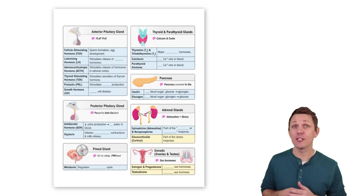
Review of Major Hormones

Role of Sertoli (Nurse) Cells

Sertoli cells are specialized cells in the seminiferous tubules of the testes that provide nourishment and structural support to developing sperm cells. They respond to FSH by promoting sperm maturation and maintaining the environment necessary for spermatogenesis.
Video consigliato:
Percorso guidato
07:02
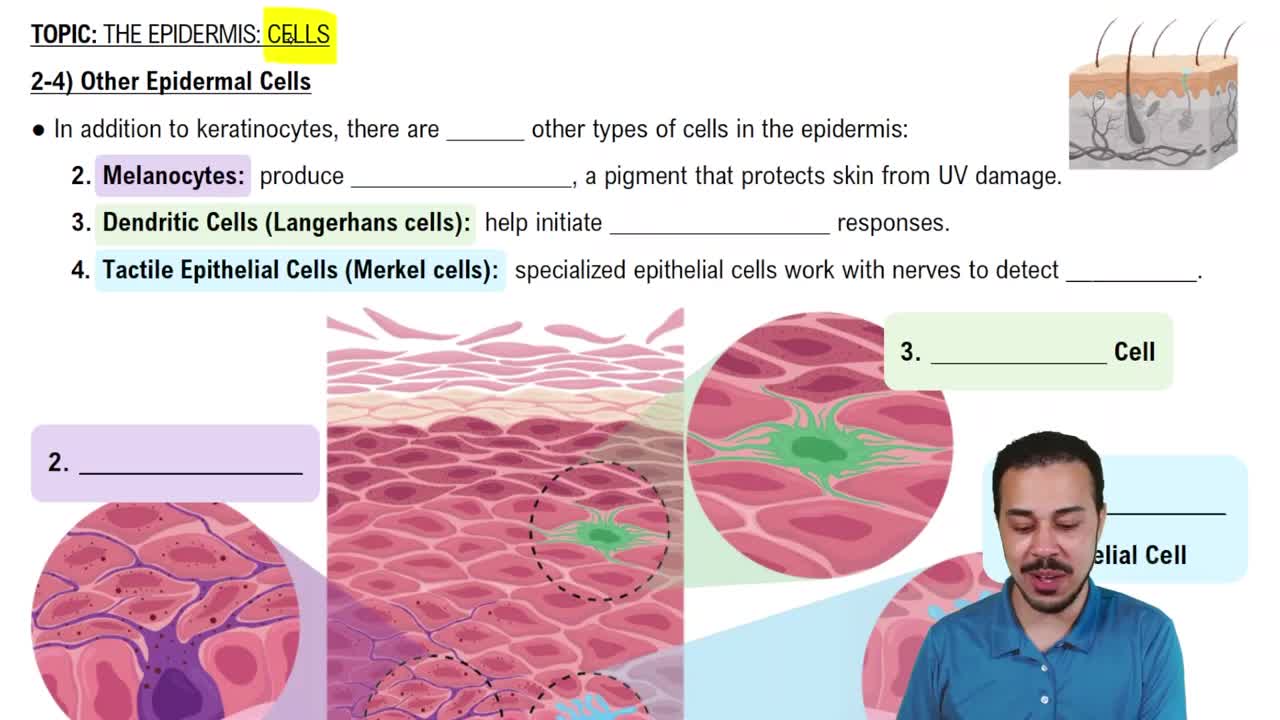
Other Epidermal Cells

Distinction Between FSH and Other Male Hormones

While FSH supports sperm maturation, testosterone, produced by Leydig cells, is responsible for male secondary sexual characteristics, muscle development, and libido. Understanding this distinction helps clarify that FSH does not directly influence muscle growth or sexual desire.
Video consigliato:
3:15
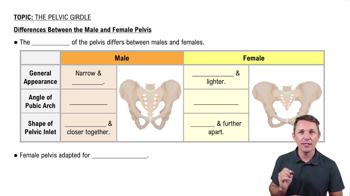
Differences Between the Male and Female Pelvis
Pratica correlata
Domanda del libro di testo

Adrenocorticotropic hormone (ACTH) stimulates the release of:

(a) Thyroid hormones by the hypothalamus

(b) Gonadotropins by the adrenal glands

(c) Growth hormones by the hypothalamus

(d) Steroid hormones by the adrenal glands

1244
views
Domanda del libro di testo

All of the following are true of the endocrine system, except that it:

(a) Releases chemicals into the bloodstream for distribution throughout the body

(b) Releases hormones that simultaneously alter the metabolic activities of many different tissues and organs

(c) Produces effects that can last for hours, days, and even longer

(d) Produces rapid, local, brief-duration responses to specific stimuli

(e) Functions to control ongoing metabolic processes.

1569
views
Domanda del libro di testo

The use of a chemical messenger to transfer information from cell to cell within a single tissue is referred to as _____ communication.

(a) Direct

(b) Paracrine

(c) Hormonal

(d) Endocrine

1505
views
Domanda del libro di testo

Identify the endocrine glands and tissues in the following diagram.

a. ___

b. ___

c. ___

d. ___

e. ___

f. ___

g. ___

h. ___

i. ___

j. ___

k. ___

l. ___

m. ___

1004
views
Domanda del libro di testo

A cell's hormonal sensitivities are determined by the:

(a) Chemical nature of the hormone

(b) Quantity of circulating hormone

(c) Shape of the hormone molecules

(d) Presence or absence of appropriate receptors

(e) Thickness of its plasma membrane

1101
views
Domanda del libro di testo

Cyclic AMP functions as a second messenger to:

(a) Build proteins and catalyze specific reactions

(b) Activate adenylate cyclase

(c) Open ion channels and activate key enzymes in the cytoplasm

(d) Bind the hormone–receptor complex to DNA segments

1389
views