Ch. 23 The Respiratory System
Martini - Fundamentals of Anatomy & Physiology 11th Edition
Martini, Nath, Bartholomew11th EditionFundamentals of Anatomy & PhysiologyISBN: 9780136874089Non è quello che usi tu?Cambia libro di testo
Capitolo 23, Problema 29

Why do individuals who are anemic generally not exhibit an increase in respiratory rate or tidal volume, even though their blood is not carrying enough oxygen?

Guida verificata passo dopo passo
1
Understand the concept of anemia: Anemia is a condition where the blood has a reduced capacity to carry oxygen, often due to a decrease in the number of red blood cells or hemoglobin levels. This leads to less oxygen being delivered to tissues.
Recognize the role of chemoreceptors: Chemoreceptors in the body, such as those in the carotid and aortic bodies, monitor levels of carbon dioxide (CO2), oxygen (O2), and pH in the blood. They primarily respond to changes in CO2 levels and pH rather than oxygen levels alone.
Explain why respiratory rate and tidal volume are regulated: The respiratory system adjusts breathing rate and tidal volume primarily in response to elevated CO2 levels (hypercapnia) or decreased pH (acidosis). In anemia, oxygen levels are reduced, but CO2 levels and pH may remain normal, so the respiratory system does not perceive a need to increase breathing.
Discuss oxygen delivery mechanisms: The body compensates for anemia by increasing cardiac output (heart rate and stroke volume) to deliver more oxygen to tissues, rather than relying on changes in respiratory rate or tidal volume.
Summarize the physiological response: Since the respiratory system is not directly triggered by low oxygen levels in anemia, individuals with anemia typically do not exhibit increased respiratory rate or tidal volume unless CO2 levels or pH are affected.

Risposta video verificata per un problema simile:

Questa soluzione video è stata consigliata dai nostri tutor come utile per risolvere questo problema.

Concetti chiave

Ecco i concetti essenziali che devi comprendere per rispondere correttamente alla domanda.

Anemia

Anemia is a condition characterized by a deficiency of red blood cells or hemoglobin, leading to reduced oxygen transport in the bloodstream. Individuals with anemia may experience fatigue and weakness due to insufficient oxygen delivery to tissues. However, the body often compensates for this deficiency through various mechanisms, which can influence respiratory responses.
Video consigliato:
Percorso guidato
7:11
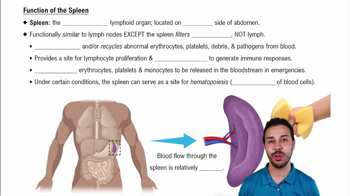
Function of the Spleen

Respiratory Rate and Tidal Volume

Respiratory rate refers to the number of breaths taken per minute, while tidal volume is the amount of air inhaled or exhaled in a single breath. In healthy individuals, an increase in carbon dioxide levels or a decrease in oxygen levels typically triggers an increase in both respiratory rate and tidal volume. However, in anemic individuals, the body may not respond in the same way due to altered chemoreceptor sensitivity or compensatory mechanisms.
Video consigliato:
6:28
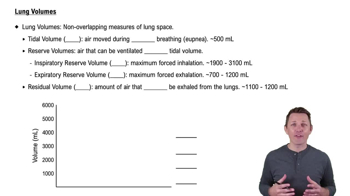
Lung Volumes

Chemoreceptor Response

Chemoreceptors are specialized cells that detect changes in blood chemistry, particularly levels of carbon dioxide and oxygen. In normal physiology, a drop in oxygen or a rise in carbon dioxide stimulates an increase in breathing rate. In anemic patients, the body may not exhibit the same respiratory response due to the chronic nature of anemia, which can lead to adaptations in chemoreceptor sensitivity and a reliance on other compensatory mechanisms.
Video consigliato:
Percorso guidato
9:59
Steps of the Interferon Response