Ch. 26 The Urinary System
Martini - Fundamentals of Anatomy & Physiology 11th Edition
Martini, Nath, Bartholomew11th EditionFundamentals of Anatomy & PhysiologyISBN: 9780136874089Non è quello che usi tu?Cambia libro di testo
Capitolo 25, Problema 21

How are proteins excluded from filtrate? Why is this important?

Guida verificata passo dopo passo
1
Understand that proteins are generally excluded from the filtrate in the kidneys primarily due to the structure and properties of the glomerular filtration barrier.
Recognize that the glomerular filtration barrier consists of three layers: the fenestrated endothelium, the basement membrane, and the podocyte slit diaphragm. Each layer contributes to selective filtration.
Note that the basement membrane and podocyte slit diaphragm have negatively charged components that repel negatively charged plasma proteins, such as albumin, preventing their passage into the filtrate.
Consider the size-selective nature of the filtration barrier, which physically restricts large molecules like most proteins from passing through, allowing mainly water, ions, and small solutes to filter.
Understand the importance: excluding proteins from filtrate prevents loss of essential plasma proteins, maintains oncotic pressure in blood vessels, and protects the nephron from damage that could be caused by protein accumulation in the filtrate.

Risposta video verificata per un problema simile:

Questa soluzione video è stata consigliata dai nostri tutor come utile per risolvere questo problema.

Concetti chiave

Ecco i concetti essenziali che devi comprendere per rispondere correttamente alla domanda.

Glomerular Filtration Barrier

The glomerular filtration barrier is a three-layered structure in the kidney that filters blood plasma. It consists of fenestrated endothelial cells, the basement membrane, and podocyte foot processes with slit diaphragms. This barrier selectively allows water and small solutes to pass while restricting larger molecules like proteins.
Video consigliato:
3:15
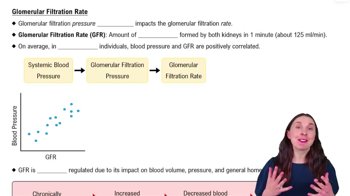
Glomerular Filtration Rate

Charge and Size Selectivity

Proteins are excluded from the filtrate primarily due to their size and negative charge. The basement membrane and slit diaphragms have negatively charged components that repel negatively charged proteins, preventing their passage. This size and charge selectivity ensures that essential proteins remain in the bloodstream.
Video consigliato:
Percorso guidato
6:43
Clonal Selection

Physiological Importance of Protein Retention

Preventing protein loss in urine is vital to maintain blood oncotic pressure and prevent edema. Proteins like albumin help retain fluid within blood vessels, supporting proper circulation and tissue hydration. Loss of proteins in urine (proteinuria) indicates kidney damage and can lead to serious health issues.
Video consigliato: