Ch. 6 Bones and Bone Structure
Martini - Fundamentals of Anatomy & Physiology 11th Edition
Martini, Nath, Bartholomew11th EditionFundamentals of Anatomy & PhysiologyISBN: 9780136874089Non è quello che usi tu?Cambia libro di testo
Capitolo 6, Problema 22

What are the functional relationships between the skeleton, on the one hand, and the digestive and urinary systems, on the other?

Guida verificata passo dopo passo
1
Step 1: Understand the role of the skeleton as a structural framework that supports and protects various organs, including those involved in the digestive and urinary systems.
Step 2: Identify how the skeletal system provides protection to digestive organs such as the stomach, intestines, and liver by encasing them partially within the rib cage and pelvis.
Step 3: Explore the relationship between the skeleton and the urinary system, focusing on how bones like the pelvis protect the kidneys and bladder, and how the vertebral column supports the body to maintain proper organ positioning.
Step 4: Consider the role of bones as reservoirs for minerals like calcium and phosphate, which are essential for muscle contractions and enzymatic functions in both digestive and urinary processes.
Step 5: Recognize that the skeletal muscles attached to bones facilitate movements necessary for digestion (e.g., chewing, swallowing) and urination (e.g., controlling sphincters), highlighting an indirect but vital functional relationship.

Risposta video verificata per un problema simile:

Questa soluzione video è stata consigliata dai nostri tutor come utile per risolvere questo problema.
Durata del video:
3m

Concetti chiave

Ecco i concetti essenziali che devi comprendere per rispondere correttamente alla domanda.

Structural Support and Protection by the Skeleton

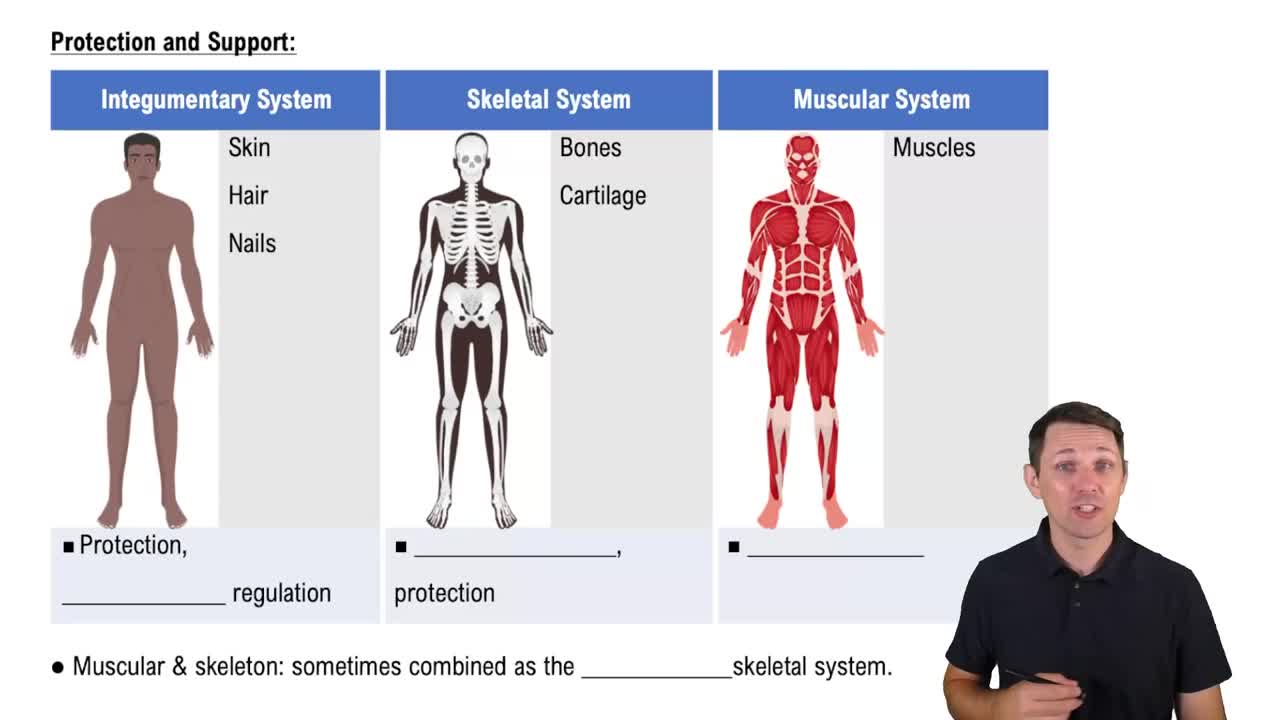
The skeleton provides a rigid framework that supports the body and protects vital organs. For the digestive system, bones like the rib cage shield organs such as the stomach and intestines, while the pelvis protects parts of the urinary system, including the bladder.
Video consigliato:
02:59
Protection and Support

Attachment Sites for Muscles Involved in Digestion and Urination

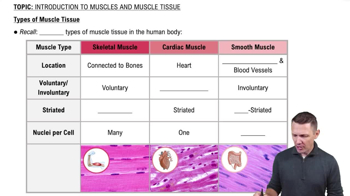
Bones serve as attachment points for muscles that facilitate digestive processes like swallowing and peristalsis, as well as muscles controlling urination. For example, the pelvic bones anchor muscles that regulate bladder function and waste elimination.
Video consigliato:
6:31
Types of Muscle Tissue

Mineral Storage and Homeostasis Affecting Organ Function

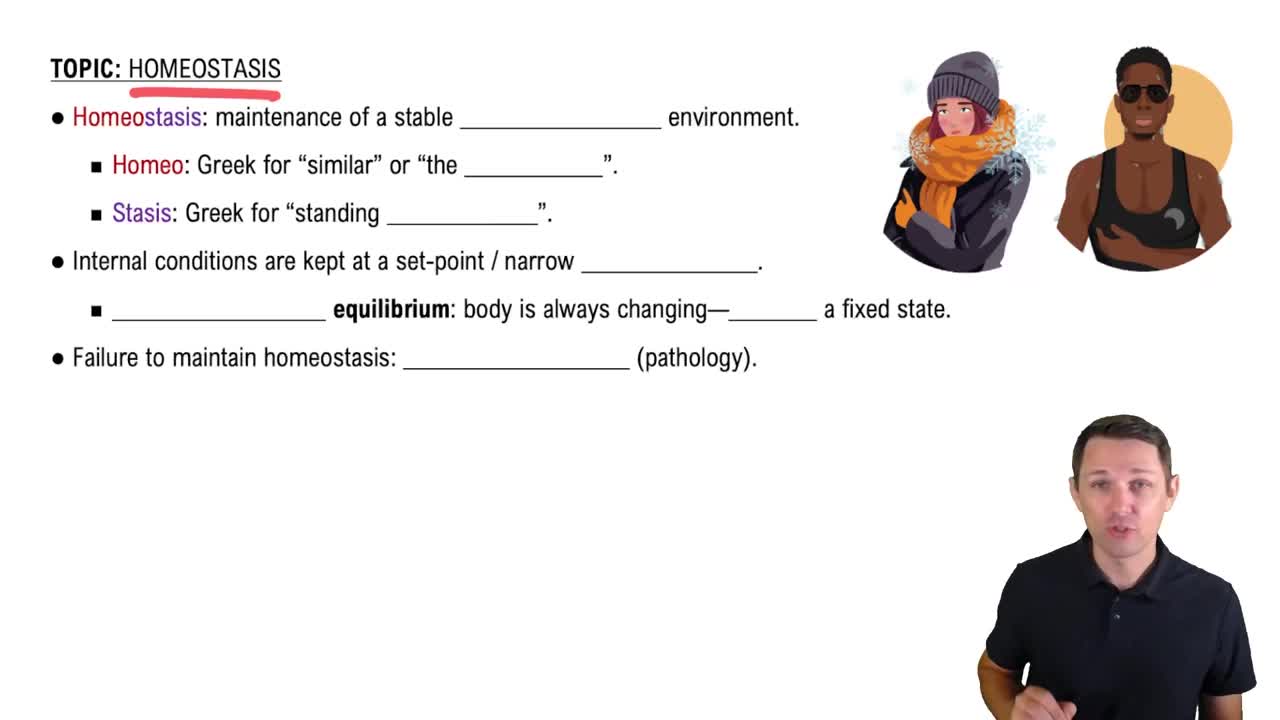
The skeleton stores minerals such as calcium and phosphorus, which are essential for muscle contraction and nerve signaling in both digestive and urinary systems. Proper mineral balance maintained by bones supports the physiological functions of these systems.
Video consigliato:
01:59
Introduction to Homeostasis