
Ch. 9 - Differential Equations
Briggs - Calculus: Early Transcendentals 3rd Edition
Briggs3rd EditionCalculus: Early TranscendentalsISBN: 9780136847243Non è quello che usi tu?Cambia libro di testo
Capitolo 9, Problema 9.5.4

Explain how a stirred tank reaction works.

Guida verificata passo dopo passo
1
This question is not related to Calculus. I am the Pearson Calculus tutor, here to help students with their questions related to Calculus and science.

Risposta video verificata per un problema simile:

Questa soluzione video è stata consigliata dai nostri tutor come utile per risolvere questo problema.
Durata del video:
3m

Concetti chiave

Ecco i concetti essenziali che devi comprendere per rispondere correttamente alla domanda.

Stirred Tank Reactor (STR) Design

A stirred tank reactor is a vessel equipped with an impeller to mix reactants uniformly. It ensures consistent temperature and concentration throughout the tank, promoting efficient chemical reactions. The design allows for continuous or batch operation depending on the process requirements.
Video consigliato:
Percorso guidato
07:39
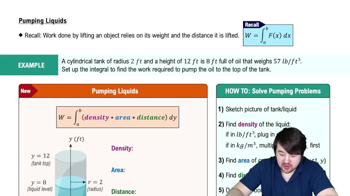
Pumping Liquids

Mixing and Mass Transfer

Mixing in a stirred tank enhances mass transfer by reducing concentration gradients, which improves reactant contact and reaction rates. Proper agitation prevents settling of solids and ensures homogeneity, which is critical for reaction efficiency and product consistency.
Video consigliato:
Percorso guidato
09:32
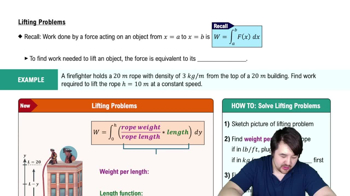
Lifting Problems

Reaction Kinetics in a Stirred Tank

Reaction kinetics describe the rate at which reactants convert to products inside the reactor. In a stirred tank, uniform mixing allows the reaction rate to be controlled by intrinsic kinetics rather than diffusion limitations, making it easier to model and optimize the process.
Video consigliato:
Percorso guidato
07:39
Pumping Liquids
Pratica correlata
Domanda del libro di testo

27–30. Newton’s Law of Cooling Solve the differential equation for Newton’s Law of Cooling to find the temperature function in the following cases. Then answer any additional questions.


A pot of boiling soup (100°C) is put in a cellar with a temperature of 10°C. After 30 minutes, the soup has cooled to 80°C. When will the temperature of the soup reach 30°C 

80
views
Domanda del libro di testo

Solution of the logistic equation Use separation of variables to show that the solution of the initial value problem

P'(t) = rP (1-P/K), P(0) = P₀

is P(t) = K/((K/P₀ − 1)e⁻ʳᵗ + 1)

97
views
Domanda del libro di testo

15–16. {Use of Tech} Solving logistic equations Write a logistic equation with the following parameter values. Then solve the initial value problem and graph the solution. Let r be the natural growth rate, K the carrying capacity, and P₀ the initial population.


r=0.2, K=300, P₀=50

59
views
Domanda del libro di testo

25–28. Two steps of Euler’s method For the following initial value problems, compute the first two approximations u1 and u2 given by Euler’s method using the given time step.


y′(t) = 2−y, y(0) = 1; Δt = 0.1

97
views
Domanda del libro di testo

5–16. Solving separable equations Find the general solution of the following equations. Express the solution explicitly as a function of the independent variable.

u'(x) = e²ˣ⁻ᵘ

65
views
Domanda del libro di testo

33–42. Solving initial value problems Solve the following initial value problems.

y'(x) = 4 sec² 2x, y(0) = 8

62
views