
Domanda del libro di testo
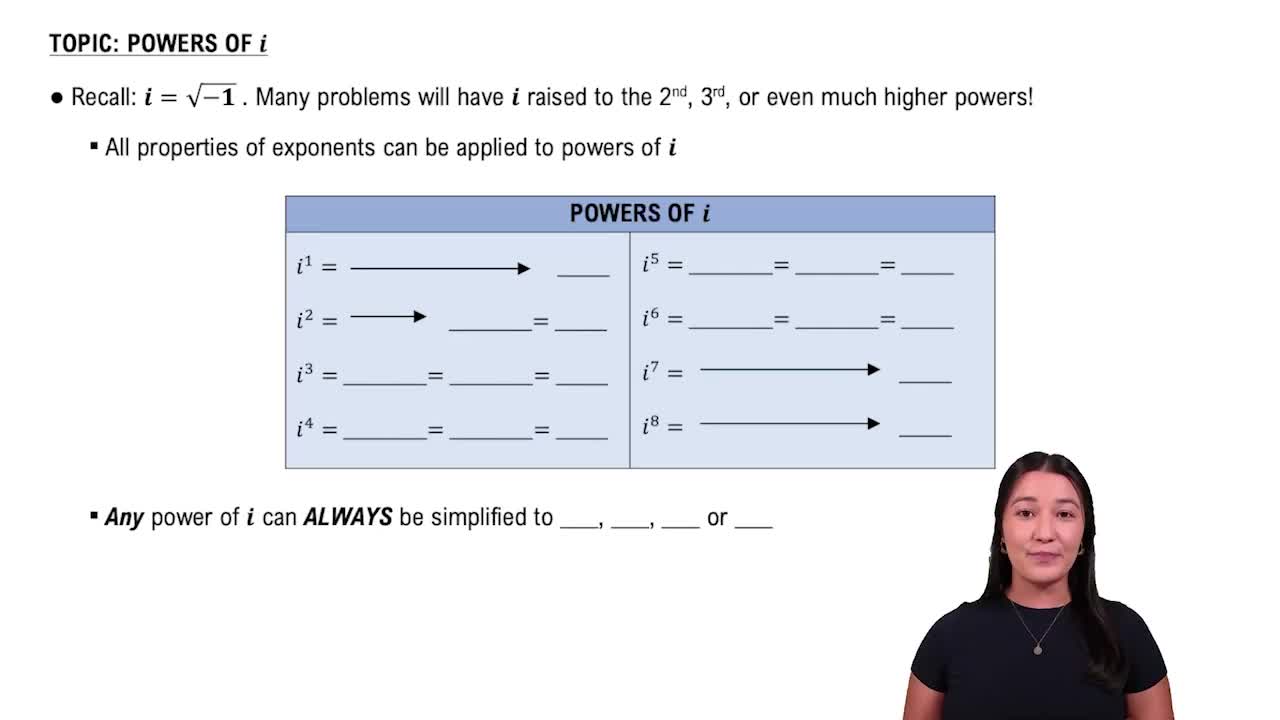
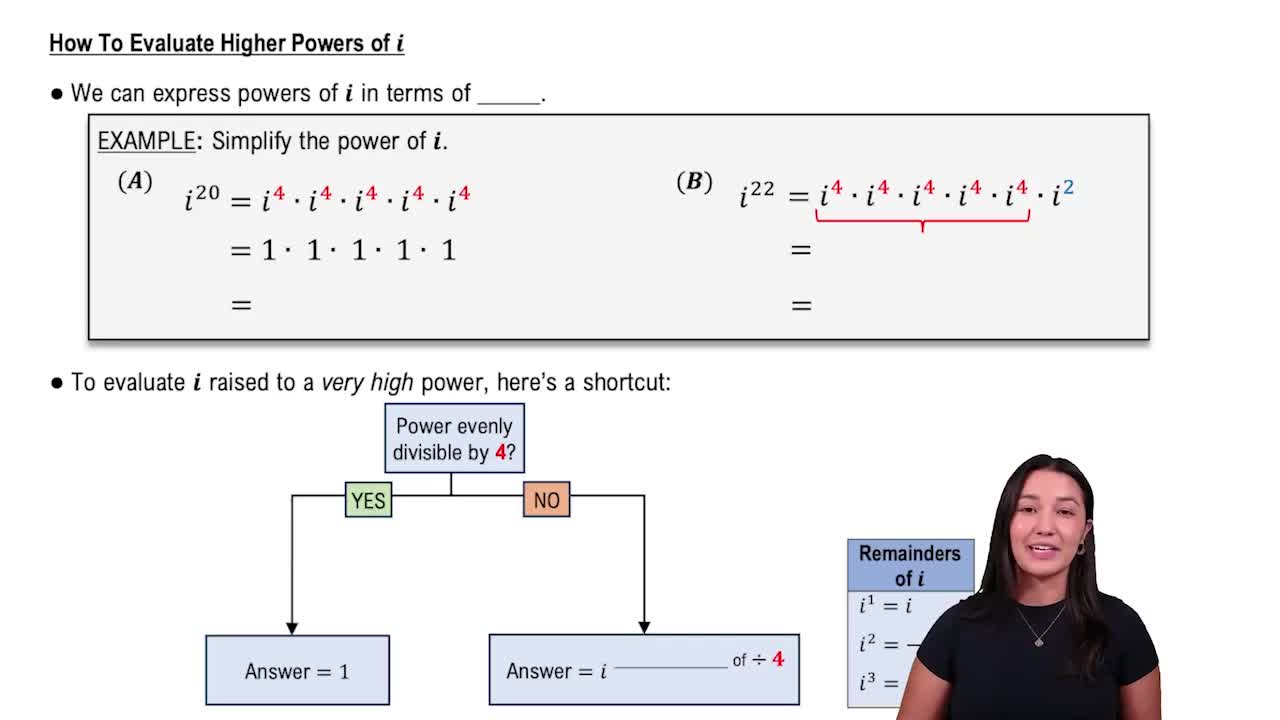
In Exercises 48–57, perform the indicated operations and write the result in standard form. 6/(5+i)
101
views

 Guida verificata passo dopo passo
 04:10
04:10
 05:10
05:10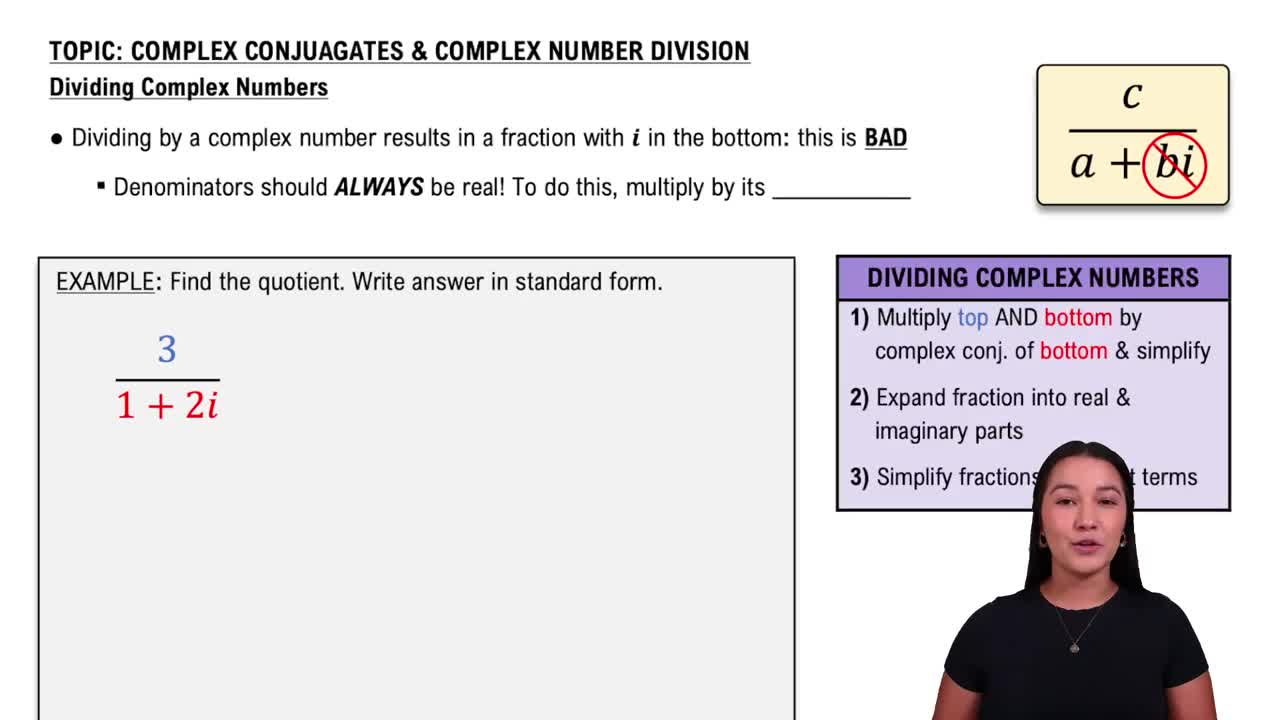 04:22
04:22In Exercises 48–57, perform the indicated operations and write the result in standard form. 6/(5+i)
Exercises 41–60 contain rational equations with variables in denominators. For each equation, a. write the value or values of the variable that make a denominator zero. These are the restrictions on the variable. b. Keeping the restrictions in mind, solve the equation. 3/(2x - 2) + 1/2 = 2/(x - 1)
Solve each equation in Exercises 47–64 by completing the square.
Solve each formula for the specified variable. Do you recognize the formula? If so, what does it describe? 1/R = 1/R1 + 1/R2 for R1
Exercises 41–60 contain rational equations with variables in denominators. For each equation, a. write the value or values of the variable that make a denominator zero. These are the restrictions on the variable. b. Keeping the restrictions in mind, solve the equation. 2/(x - 2) = x/(x - 2) - 2
In Exercises 51–58, solve each compound inequality. - 3 ≤ x - 2 < 1