Ch. 13 - Translation and Proteins
Klug - Essentials of Genetics 10th Edition
Klug10th EditionEssentials of GeneticsISBN: 9780135588789Non è quello che usi tu?Cambia libro di testo
Capitolo 13, Problema 10

Explain why the one-gene:one-enzyme concept is not considered totally accurate today.

Guida verificata passo dopo passo
1
Understand the original one-gene:one-enzyme hypothesis, which proposed that each gene encodes a single enzyme responsible for a specific step in a metabolic pathway.
Recognize that later research showed not all proteins are enzymes; some genes encode structural proteins, regulatory proteins, or RNA molecules, which do not function as enzymes.
Learn that some enzymes are made up of multiple polypeptide subunits, each encoded by different genes, meaning one gene does not always correspond to one enzyme.
Consider the discovery of alternative splicing, where a single gene can produce multiple different proteins, challenging the idea of a one-to-one relationship between gene and protein.
Acknowledge that the modern understanding is the one-gene:one-polypeptide concept, which is more accurate but still simplified, as gene expression and protein function are influenced by many factors beyond the gene sequence alone.

Risposta video verificata per un problema simile:

Questa soluzione video è stata consigliata dai nostri tutor come utile per risolvere questo problema.
Durata del video:
2m

Concetti chiave

Ecco i concetti essenziali che devi comprendere per rispondere correttamente alla domanda.

One-Gene:One-Enzyme Hypothesis

This hypothesis, proposed by Beadle and Tatum, states that each gene encodes a single enzyme that affects a specific step in a metabolic pathway. It was foundational in linking genes to biochemical functions but was based on early genetic studies with limited scope.
Video consigliato:
Percorso guidato
03:13
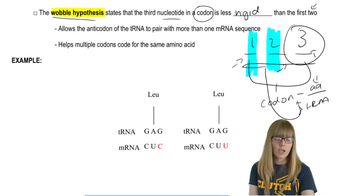
Translation:Wobble Hypothesis

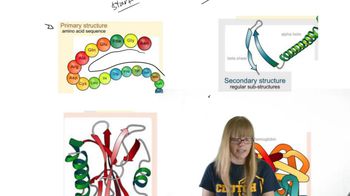
Gene Structure and Protein Complexity

Genes can produce multiple protein products through processes like alternative splicing and post-translational modifications. This means a single gene can give rise to different enzymes or proteins, challenging the idea that one gene corresponds to only one enzyme.
Video consigliato:

Non-Enzymatic Gene Products

Not all genes encode enzymes; many genes code for structural proteins, regulatory RNAs, or other functional molecules. This diversity in gene products shows that the one-gene:one-enzyme concept is an oversimplification of gene function.
Video consigliato:
Percorso guidato
05:28
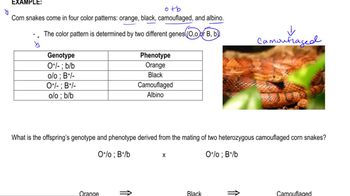
Non-Epistatic Genes