Domanda del libro di testo
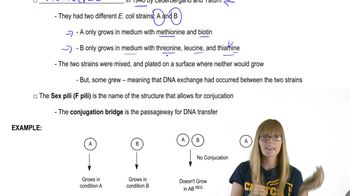
With respect to F⁺ and F⁻ bacterial matings, answer the following questions: How was it established that physical contact between cells was necessary?
419
views

 Klug 10th EditionCh. 8 - Genetic Analysis and Mapping in Bacteria and BacteriophagesProblema 3
 Guida verificata passo dopo passo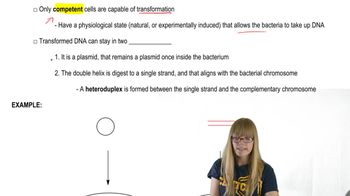
 05:48
05:48
 04:06
04:06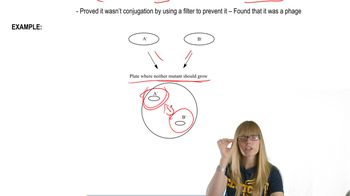 05:53
05:53With respect to F⁺ and F⁻ bacterial matings, answer the following questions: How was it established that physical contact between cells was necessary?
Write a short summary that contrasts how recombination occurs in bacteria and bacteriophages.
How do we know whether or not genetic recombination between bacteria involves cell-to-cell contact?
With respect to F⁺ and F⁻ bacterial matings, answer the following questions: How was it established that chromosome transfer was unidirectional?
With respect to F⁺ and F⁻ bacterial matings, answer the following questions: What is the genetic basis for a bacterium's being F⁺.