Ch. 18 - Post-transcriptional Regulation in Eukaryotes
Klug - Concepts of Genetics 12th Edition
Klug12th EditionConcepts of GeneticsISBN: 9780135564776Non è quello che usi tu?Cambia libro di testo
Capitolo 18, Problema 18

How are mRNAs stored within the cell in a translationally inactive state, and how can their translation be stimulated?

Guida verificata passo dopo passo
1
Understand that mRNAs can be stored in the cell in a translationally inactive state by being sequestered into specific cytoplasmic structures called processing bodies (P-bodies) or stress granules, where translation is temporarily repressed.
Recognize that in these storage sites, mRNAs are often bound by RNA-binding proteins and associated with factors that prevent the assembly of the translation initiation complex, thus keeping them inactive.
Learn that translation can be stimulated by signaling pathways that modify these RNA-binding proteins or translation factors, leading to the release of mRNAs from P-bodies or stress granules.
Know that once released, the mRNAs can recruit the translation initiation machinery, including the eukaryotic initiation factors (eIFs), to form the initiation complex and begin protein synthesis.
Appreciate that this regulation allows the cell to rapidly respond to environmental or developmental cues by controlling when and where specific proteins are produced from stored mRNAs.

Risposta video verificata per un problema simile:

Questa soluzione video è stata consigliata dai nostri tutor come utile per risolvere questo problema.
Durata del video:
2m

Concetti chiave

Ecco i concetti essenziali che devi comprendere per rispondere correttamente alla domanda.

mRNA Storage in Ribonucleoprotein Granules

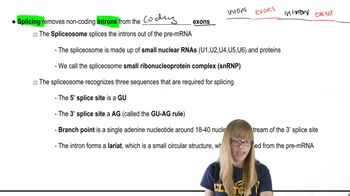
mRNAs can be stored in the cytoplasm within ribonucleoprotein (RNP) granules such as stress granules and processing bodies (P-bodies). These granules sequester mRNAs in a translationally inactive state, preventing their translation until conditions favor protein synthesis.
Video consigliato:
Percorso guidato
08:39
mRNA Processing

Translational Repression Mechanisms

Translational repression involves proteins and microRNAs binding to mRNAs to inhibit ribosome assembly or progression. This regulation ensures that mRNAs remain untranslated until specific signals relieve repression, allowing controlled protein production.
Video consigliato:
Percorso guidato
07:58
Translation initiation

Activation of Translation via Signaling Pathways

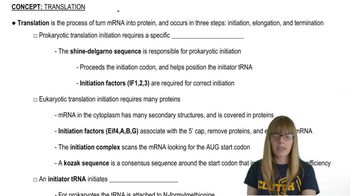
Translation can be stimulated by cellular signals that modify translation initiation factors or release mRNAs from inhibitory complexes. For example, phosphorylation events can activate initiation factors, promoting ribosome recruitment and initiating protein synthesis from stored mRNAs.
Video consigliato:
Percorso guidato
04:30
Post Translational Modifications