Ch. 14 - Analysis of Gene Function via Forward Genetics and Reverse Genetics
Sanders - Genetic Analysis: An Integrated Approach 3rd Edition
Sanders3rd EditionGenetic Analysis: An Integrated ApproachISBN: 9780135564172Non è quello che usi tu?Cambia libro di testo
Capitolo 14, Problema 10

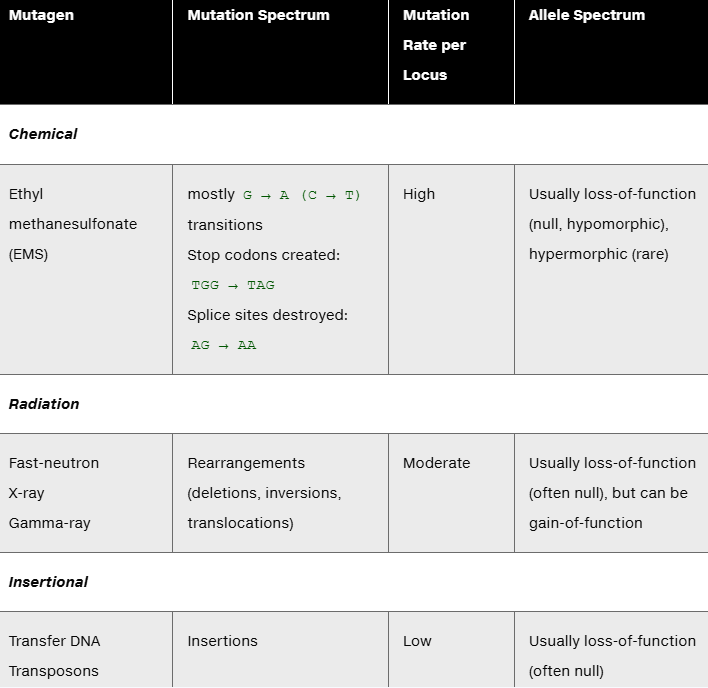
Discuss the advantages (and possible disadvantages) of the different mutagens in the following table:
Table comparing chemical, radiation, and insertional mutagens by mutation type, rate, and allele effects.

Guida verificata passo dopo passo
1
Step 1: Identify the types of mutagens listed in Table 14.1, which typically include physical mutagens (like X-rays and UV light), chemical mutagens (such as base analogs and alkylating agents), and biological mutagens (like transposons or viruses).
Step 2: For each mutagen type, describe the mechanism by which it induces mutations. For example, physical mutagens often cause DNA breaks or thymine dimers, chemical mutagens may cause base substitutions or frameshifts, and biological mutagens can insert themselves into the genome disrupting gene function.
Step 3: Discuss the advantages of each mutagen type, such as the ability of physical mutagens to induce large-scale chromosomal changes useful for genetic mapping, or chemical mutagens' capacity to create point mutations that help study gene function.
Step 4: Consider the possible disadvantages, including the potential for high lethality or non-specific damage caused by physical mutagens, the difficulty in controlling mutation rates with chemical mutagens, and the unpredictable insertion sites of biological mutagens.
Step 5: Summarize by comparing the mutagens in terms of their specificity, efficiency, and practical applications in genetics research, highlighting how the choice of mutagen depends on the experimental goals.

Risposta video verificata per un problema simile:

Questa soluzione video è stata consigliata dai nostri tutor come utile per risolvere questo problema.
Durata del video:
1m

Concetti chiave

Ecco i concetti essenziali che devi comprendere per rispondere correttamente alla domanda.

Types of Mutagens

Mutagens are agents that cause changes in the DNA sequence. They can be physical (like radiation), chemical (such as base analogs or alkylating agents), or biological (like transposons). Understanding the different types helps in evaluating their mechanisms and effects on genetic material.
Video consigliato:
Percorso guidato
00:36
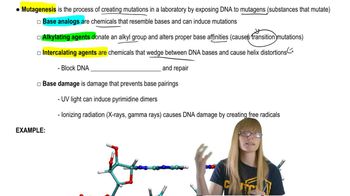
Types of Maternal Inheritance

Advantages of Mutagens

Mutagens can be useful in research and breeding by inducing genetic variation, which can lead to beneficial traits or help identify gene functions. They are tools in genetic engineering and evolutionary studies, enabling controlled mutation for scientific and practical applications.
Video consigliato:
Percorso guidato
04:29
Induced Mutations

Disadvantages and Risks of Mutagens

While mutagens can be beneficial, they also pose risks such as causing harmful mutations, genetic diseases, or cancer. Some mutagens are carcinogenic or teratogenic, and their use requires careful handling and ethical considerations to avoid unintended genetic damage.
Video consigliato:
Percorso guidato
06:59
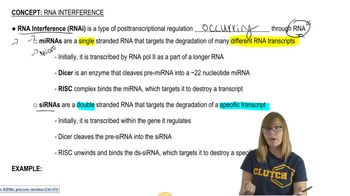
RNA Interference
Pratica correlata
Domanda del libro di testo

You have identified a gene encoding the protein involved in the rate-limiting step in vitamin E biosynthesis. How would you create a transgenic plant producing large quantities of vitamin E in its seeds?

574
views
Domanda del libro di testo

Go to the website http://www.cancer.gov and select 'Cancer Types' on the top menu bar. Scroll down to 'Breast Cancer' and click. Select 'Cases & Prevention' from the options. Click 'More information' and select 'BRCA Mutations: Cancer Risk and Genetic Testing'. Use the information on this page to answer the following questions. Are there measures a woman with a positive result can take to lessen her chances of developing cancer or to catch a cancer early in its development?

515
views
Domanda del libro di testo

What kind of information will be made available by The Cancer Genome Atlas (TCGA)? What sort of role do you think TCGA information will play in cancer diagnosis and cancer treatment in the future?

620
views
Domanda del libro di testo

Go to the website http://www.cancer.gov and select 'Cancer Types' on the top menu bar. Scroll down to 'Breast Cancer' and click. Select 'Cases & Prevention' from the options. Click 'More information' and select 'BRCA Mutations: Cancer Risk and Genetic Testing'. Use the information on this page to answer the following questions. What are the approximate percentage increases in risk of having breast cancer and of having ovarian cancer for women inheriting harmful mutations of BRCA1 and BRCA2 compared with the risks in the general population?

467
views
Domanda del libro di testo

Go to the website http://www.cancer.gov and select 'Cancer Types' on the top menu bar. Scroll down to 'Breast Cancer' and click. Select 'Cases & Prevention' from the options. Click 'More information' and select 'BRCA Mutations: Cancer Risk and Genetic Testing'. Use the information on this page to answer the following questions. As a special project, instead of selecting 'Breast Cancer' from the list of types of cancer, select another cancer you would like to know more about and produce a short summary of what you find.

488
views
Domanda del libro di testo

Go to the website http://www.ncbi.nlm.nih.gov/omim and enter 'Lynch syndrome' in the Search box at the top of the page. From the list of options given, select '#120435—Lynch Syndrome.' Use the information you retrieve to answer the following questions. What genes are most commonly mutated in Lynch syndrome?

502
views