Ch. 18 - Developmental Genetics
Sanders - Genetic Analysis: An Integrated Approach 3rd Edition
Sanders3rd EditionGenetic Analysis: An Integrated ApproachISBN: 9780135564172Non è quello che usi tu?Cambia libro di testo
Capitolo 18, Problema 12b

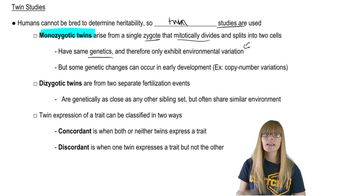
In mammals, identical twins arise when an embryo derived from a single fertilized egg splits into two independent embryos, producing two genetically identical individuals.
The converse phenotype, fusion of two genetically distinct embryos into a single individual, is also known. What are the genetic implications of such an event?

Guida verificata passo dopo passo
1
Understand the concept of identical twins: Identical twins arise from a single fertilized egg (zygote) that splits into two embryos. These embryos are genetically identical because they originate from the same zygote, which contains the same set of chromosomes from the sperm and egg.
Define the converse phenomenon: The fusion of two genetically distinct embryos into a single individual is known as chimerism. This occurs when two separate zygotes (each with its own unique genetic material) merge during early development to form one organism.
Analyze the genetic implications: A chimera will have cells with two distinct sets of DNA. Some cells will carry the genetic material from one zygote, while others will carry the genetic material from the second zygote. This results in a mosaic of two different genotypes within the same individual.
Consider phenotypic effects: Depending on the distribution of the two cell lineages, the individual may exhibit physical or physiological traits from both genetic lineages. For example, differences in skin pigmentation or blood type may arise if the two zygotes had distinct traits.
Explore potential complications: Chimerism can complicate genetic testing, organ transplantation, and parentage testing, as the individual may have different genetic profiles in different tissues. This phenomenon highlights the complexity of genetic identity in such cases.

Risposta video verificata per un problema simile:

Questa soluzione video è stata consigliata dai nostri tutor come utile per risolvere questo problema.
Durata del video:
1m

Concetti chiave

Ecco i concetti essenziali che devi comprendere per rispondere correttamente alla domanda.

Identical Twins Formation

Identical twins, or monozygotic twins, form when a single fertilized egg (zygote) undergoes cleavage and splits into two separate embryos. This process results in two individuals who share the same genetic material, leading to identical genotypes and phenotypes. Understanding this mechanism is crucial for exploring genetic similarities and the role of environment in development.
Video consigliato:

Genetic Distinctness in Fusion

The fusion of two genetically distinct embryos, known as chimerism, occurs when two separate zygotes merge into one individual. This can lead to a unique genetic makeup, where the individual possesses cells from both embryos, resulting in potential variations in traits and health. This phenomenon raises questions about genetic identity and the implications for inheritance and disease susceptibility.
Video consigliato:
Percorso guidato
03:45
Descriptive Genetics

Genetic Implications of Chimerism

Chimerism can have significant genetic implications, including the presence of different alleles in various tissues, which may affect phenotypic expression and immune responses. It challenges traditional notions of genetic inheritance and individuality, as chimeric individuals may exhibit traits from both genetic backgrounds. Understanding these implications is essential for fields like genetics, medicine, and evolutionary biology.
Video consigliato:
Percorso guidato
03:45
Descriptive Genetics
Pratica correlata
Domanda del libro di testo

The bicoid gene is a coordinate maternal–effect gene. A female that is homozygous for a loss-of-function bicoid allele is mated to a wild-type male. What are the phenotypes of their progeny?

1071
views
Domanda del libro di testo

In gain-of-function let-23 and let-60 C. elegans mutants, all of the vulval precursor cells differentiate with 1° or 2° fates. Do you expect adjacent cells to differentiate with 1° fates or with 2° fates? Explain.

445
views
Domanda del libro di testo

The bicoid gene is a coordinate maternal–effect gene. If loss of bicoid function in the egg leads to lethality during embryogenesis, how are females homozygous for bicoid produced? What is the phenotype of a male homozygous for bicoid loss-of-function alleles?

400
views
Domanda del libro di testo

Ablation of the anchor cell in wild-type C. elegans results in a vulva-less phenotype.

What about if the anchor cell is ablated in a let-23 gain-of-function mutant?

386
views
Domanda del libro di testo

The bicoid gene is a coordinate maternal-effect gene.

A female Drosophila heterozygous for a loss-of-function bicoid allele is mated to a male that is heterozygous for the same allele. What are the phenotypes of their progeny?

549
views
Domanda del libro di testo

In mammals, identical twins arise when an embryo derived from a single fertilized egg splits into two independent embryos, producing two genetically identical individuals.

What limits might there be, from a developmental genetic viewpoint, as to when this can occur?

410
views