Ch. 20 - Population Genetics and Evolution at the Population, Species, and Molecular Levels
Sanders - Genetic Analysis: An Integrated Approach 3rd Edition
Sanders3rd EditionGenetic Analysis: An Integrated ApproachISBN: 9780135564172Non è quello che usi tu?Cambia libro di testo
Capitolo 20, Problema 8

Catastrophic events such as loss of habitat, famine, or overhunting can push species to the brink of extinction and result in a genetic bottleneck. What happens to allele frequencies in a species that experiences a near-extinction event, and what is expected to happen to allele frequencies if the species recovers from near extinction?

Guida verificata passo dopo passo
1
Understand the concept of a genetic bottleneck: A genetic bottleneck occurs when a population's size is significantly reduced for at least one generation, leading to a loss of genetic diversity.
Consider the initial impact on allele frequencies: During a bottleneck, allele frequencies can change dramatically due to genetic drift, which is the change in the frequency of an allele due to random sampling of organisms.
Recognize the potential for reduced genetic variation: With fewer individuals, there is less genetic variation, which can lead to certain alleles becoming fixed (reaching a frequency of 1) or lost (reaching a frequency of 0).
Analyze the recovery phase: If the species recovers, the population size increases, but the genetic diversity may remain low because the gene pool is limited to the alleles present in the surviving individuals.
Consider long-term effects: Over time, mutations and gene flow from other populations can introduce new alleles, potentially increasing genetic diversity, but the initial loss of diversity can have lasting effects on the population's adaptability.

Risposta video verificata per un problema simile:

Questa soluzione video è stata consigliata dai nostri tutor come utile per risolvere questo problema.
Durata del video:
2m

Concetti chiave

Ecco i concetti essenziali che devi comprendere per rispondere correttamente alla domanda.

Genetic Bottleneck

A genetic bottleneck occurs when a population's size is significantly reduced for at least one generation, leading to a loss of genetic diversity. This reduction can result from catastrophic events like habitat loss or overhunting, which limit the number of individuals that contribute to the gene pool. Consequently, the allele frequencies in the surviving population may shift, often leading to increased prevalence of certain alleles while others may be lost entirely.
Video consigliato:
Percorso guidato
03:45
Descriptive Genetics

Allele Frequencies

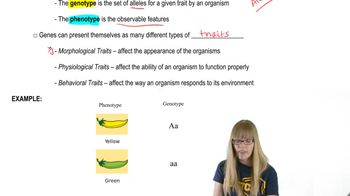
Allele frequencies refer to how often a particular allele appears in a population's gene pool. In the context of a genetic bottleneck, the frequencies can change dramatically due to the reduced genetic diversity. If a species recovers from near extinction, the allele frequencies may stabilize over time, but they may not return to their original state, potentially leading to a population that is less adaptable to environmental changes.
Video consigliato:
Percorso guidato
03:03
New Alleles and Migration

Population Recovery and Genetic Diversity

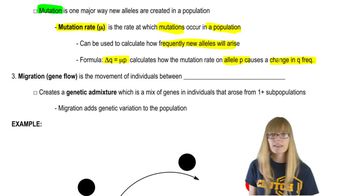
When a species recovers from a near-extinction event, the genetic diversity may remain low if the recovery is based on a small number of individuals. This limited genetic diversity can hinder the population's ability to adapt to new environmental challenges. Over time, if the population grows and individuals interbreed, allele frequencies may shift again, potentially restoring some genetic diversity, but the initial loss from the bottleneck can have long-lasting effects on the population's evolutionary trajectory.
Video consigliato:
Percorso guidato
03:45
Descriptive Genetics