Ch. 8 - Molecular Biology of Transcription and RNA Processing
Sanders - Genetic Analysis: An Integrated Approach 3rd Edition
Sanders3rd EditionGenetic Analysis: An Integrated ApproachISBN: 9780135564172Non è quello che usi tu?Cambia libro di testo
Capitolo 8, Problema 8

Bacterial and eukaryotic gene transcripts can differ—in the transcripts themselves, in whether the transcripts are modified before translation, and in how the transcripts are modified. For each of these three areas of contrast, describe what the differences are and why the differences exist.

Guida verificata passo dopo passo
1
Identify the differences in the structure of bacterial and eukaryotic gene transcripts: Bacterial transcripts are often polycistronic, meaning they can encode multiple proteins, whereas eukaryotic transcripts are typically monocistronic, encoding a single protein.
Discuss the modification of transcripts before translation: In bacteria, transcripts are usually not modified before translation, while in eukaryotes, transcripts undergo several modifications such as 5' capping, 3' polyadenylation, and splicing to remove introns.
Explain the purpose of these modifications: In eukaryotes, modifications like 5' capping and polyadenylation help stabilize the mRNA and facilitate its export from the nucleus, while splicing allows for the generation of multiple protein variants from a single gene.
Explore the reasons for these differences: The differences in transcript structure and modification between bacteria and eukaryotes are largely due to the complexity of eukaryotic cells, which have a nucleus and require more regulation and processing of mRNA.
Summarize the impact of these differences on gene expression: The modifications in eukaryotic transcripts allow for greater regulation and diversity in gene expression, which is necessary for the complex functions and development of multicellular organisms.

Risposta video verificata per un problema simile:

Questa soluzione video è stata consigliata dai nostri tutor come utile per risolvere questo problema.
Durata del video:
4m

Concetti chiave

Ecco i concetti essenziali che devi comprendere per rispondere correttamente alla domanda.

Gene Transcription

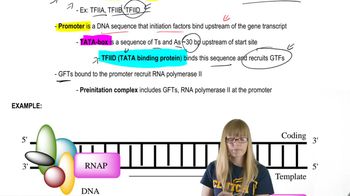
Gene transcription is the process by which the genetic information encoded in DNA is copied into messenger RNA (mRNA). In bacteria, transcription occurs in the cytoplasm and is often coupled with translation, while in eukaryotes, transcription takes place in the nucleus, allowing for more complex regulation and processing of the mRNA before it is translated into proteins.
Video consigliato:
Percorso guidato
09:16
Eukaryotic Transcription

RNA Processing

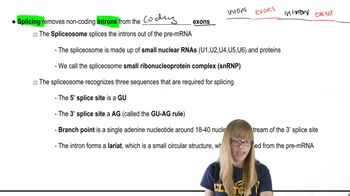
RNA processing refers to the modifications that eukaryotic pre-mRNA undergoes before it becomes mature mRNA. This includes capping, polyadenylation, and splicing, which are not present in bacterial transcripts. These modifications are essential for mRNA stability, export from the nucleus, and efficient translation, reflecting the more complex cellular organization of eukaryotes.
Video consigliato:
Percorso guidato
08:39
mRNA Processing

Post-Transcriptional Regulation

Post-transcriptional regulation involves the control of gene expression at the RNA level, influencing how much protein is produced from a given mRNA transcript. In eukaryotes, this regulation can occur through mechanisms such as alternative splicing and RNA interference, which are less common in bacteria. These differences arise from the need for eukaryotic cells to finely tune gene expression in response to various developmental and environmental signals.
Video consigliato:
Percorso guidato
04:30
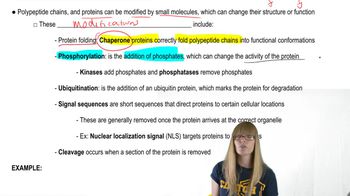
Post Translational Modifications