Ch. 9 - The Molecular Biology of Translation
Sanders - Genetic Analysis: An Integrated Approach 3rd Edition
Sanders3rd EditionGenetic Analysis: An Integrated ApproachISBN: 9780135564172Non è quello che usi tu?Cambia libro di testo
Capitolo 9, Problema 30a

A DNA sequence encoding a five-amino acid polypeptide is given below.
...ACGGCAAGATCCCACCCTAATCAGACCGTACCATTCACCTCCT...
...TGCCGTTCTAGGGTGGGATTAGTCTGGCATGGTAAGTGGAGGA...
Locate the sequence encoding the five amino acids of the polypeptide, and identify the template and coding strands of DNA.

Guida verificata passo dopo passo
1
Step 1: Understand the problem. The DNA sequence provided encodes a five-amino acid polypeptide. To locate the sequence encoding the polypeptide, you need to identify the coding strand and template strand, and then determine the mRNA sequence and corresponding amino acids.
Step 2: Identify the coding strand and template strand. The coding strand is the strand that matches the mRNA sequence (except thymine is replaced by uracil in mRNA). The template strand is complementary to the coding strand and is used by RNA polymerase to synthesize mRNA.
Step 3: Locate the start codon (AUG) in the coding strand. The start codon signals the beginning of translation. Scan the coding strand for the sequence 'ATG' (start codon in DNA) and identify the subsequent codons that encode the five amino acids.
Step 4: Transcribe the coding strand into mRNA. Replace thymine (T) with uracil (U) in the coding strand to generate the mRNA sequence. For example, if the coding strand contains 'ATG', the mRNA sequence will contain 'AUG'.
Step 5: Translate the mRNA sequence into amino acids. Use the genetic code table to match each codon in the mRNA sequence to its corresponding amino acid. Continue until you have identified the five amino acids encoded by the sequence.

Risposta video verificata per un problema simile:

Questa soluzione video è stata consigliata dai nostri tutor come utile per risolvere questo problema.
Durata del video:
3m

Concetti chiave

Ecco i concetti essenziali che devi comprendere per rispondere correttamente alla domanda.

DNA Structure and Function

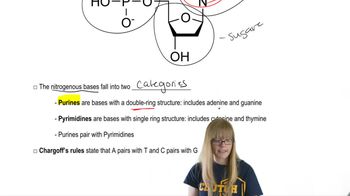
DNA is composed of two strands forming a double helix, with each strand made up of nucleotides. Each nucleotide consists of a sugar, a phosphate group, and a nitrogenous base (adenine, thymine, cytosine, or guanine). The sequence of these bases encodes genetic information, including the instructions for synthesizing proteins, which are made up of amino acids.
Video consigliato:

Transcription and Translation

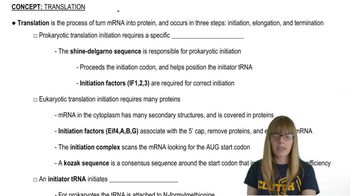
Transcription is the process by which the DNA sequence of a gene is copied into messenger RNA (mRNA). This mRNA then undergoes translation, where ribosomes read the mRNA sequence in sets of three nucleotides (codons) to assemble the corresponding amino acids into a polypeptide chain, ultimately forming a protein.
Video consigliato:
Percorso guidato
07:58
Translation initiation

Template and Coding Strands

In DNA, the template strand is the strand that is read by RNA polymerase during transcription to synthesize mRNA, while the coding strand has the same sequence as the mRNA (except for thymine being replaced by uracil). Identifying these strands is crucial for understanding how the genetic code is expressed in proteins.
Video consigliato:
Percorso guidato
11:43
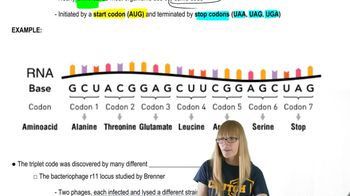
The Genetic Code
Pratica correlata
Domanda del libro di testo

Explain why it is not feasible to insert the entire human insulin gene into E. coli and anticipate the production of insulin.

405
views
Domanda del libro di testo

A DNA sequence encoding a five-amino acid polypeptide is given below.

...ACGGCAAGATCCCACCCTAATCAGACCGTACCATTCACCTCCT...

...TGCCGTTCTAGGGTGGGATTAGTCTGGCATGGTAAGTGGAGGA...

Give the sequence and polarity of the mRNA encoding the polypeptide.

703
views
Domanda del libro di testo

Recombinant human insulin (made by inserting human DNA encoding insulin into E. coli) is one of the most widely used recombinant pharmaceutical products in the world. What segments of the human insulin gene are used to create recombinant bacteria that produce human insulin?

569
views
Domanda del libro di testo

A DNA sequence encoding a five-amino acid polypeptide is given below.

...ACGGCAAGATCCCACCCTAATCAGACCGTACCATTCACCTCCT...

...TGCCGTTCTAGGGTGGGATTAGTCTGGCATGGTAAGTGGAGGA...

Give the polypeptide sequence, and identify the N terminus and C terminus.

626
views
Domanda del libro di testo

A DNA sequence encoding a five-amino acid polypeptide is given below.

...ACGGCAAGATCCCACCCTAATCAGACCGTACCATTCACCTCCT...

...TGCCGTTCTAGGGTGGGATTAGTCTGGCATGGTAAGTGGAGGA...

Assuming the sequence above is a bacterial gene, identify the region encoding the Shine–Dalgarno sequence.

561
views
Domanda del libro di testo

A research scientist is interested in producing human insulin in the bacterial species E. coli. Will the genetic code allow the production of human proteins from bacterial cells? Explain why or why not.


598
views