
Ch.25 Protein and Amino Acid Metabolism
McMurry - Fundamentals of General, Organic, and Biological Chemistry 8th Edition
McMurry8th EditionFundamentals of General, Organic, and Biological ChemistryISBN: 9780134015187Non è quello che usi tu?Cambia libro di testo
Capitolo 25, Problema 15

Define what an “essential” nutrient is and explain how it differs from a “nonessential” nutrient.

Guida verificata passo dopo passo
1
An 'essential' nutrient is a substance that the body cannot synthesize in sufficient quantities on its own and must be obtained through the diet. Examples include certain amino acids, fatty acids, vitamins, and minerals.
A 'nonessential' nutrient, on the other hand, is a substance that the body can produce on its own in adequate amounts, so it is not required to be consumed through the diet. For example, the body can synthesize cholesterol and some amino acids.
The key difference lies in the body's ability to produce the nutrient: essential nutrients must come from external sources (food or supplements), while nonessential nutrients do not require dietary intake because the body can produce them.
Essential nutrients are critical for maintaining normal physiological functions, such as energy production, growth, and repair of tissues, whereas nonessential nutrients may still play important roles but are not strictly required from the diet.
Understanding the distinction helps in designing a balanced diet to ensure all essential nutrients are consumed to prevent deficiencies and maintain overall health.

Risposta video verificata per un problema simile:

Questa soluzione video è stata consigliata dai nostri tutor come utile per risolvere questo problema.
Durata del video:
5m

Concetti chiave

Ecco i concetti essenziali che devi comprendere per rispondere correttamente alla domanda.

Essential Nutrients

Essential nutrients are substances that the body cannot synthesize on its own and must be obtained through diet. These nutrients are crucial for various physiological functions, including growth, metabolism, and overall health. Examples include vitamins, minerals, certain amino acids, and fatty acids, which play vital roles in maintaining bodily functions.
Video consigliato:
Percorso guidato
1:09
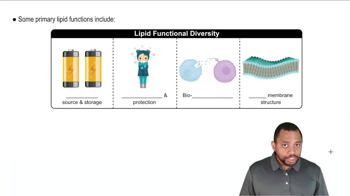
Intro to Lipids Concept 2

Nonessential Nutrients

Nonessential nutrients are compounds that the body can produce independently, meaning they do not need to be consumed through food. While they are still important for health, the body can synthesize them from other dietary components. Examples include certain amino acids and cholesterol, which can be made from other nutrients in the body.
Video consigliato:
Percorso guidato
1:09
Intro to Lipids Concept 2

Nutrient Classification

Nutrient classification distinguishes between essential and nonessential nutrients based on the body's ability to produce them. This classification is important for understanding dietary needs and ensuring adequate intake of essential nutrients to prevent deficiencies. It also helps in formulating dietary guidelines and nutritional recommendations for optimal health.
Video consigliato:
Percorso guidato
04:19
Classification of Matter