Ch.25 Protein and Amino Acid Metabolism
McMurry - Fundamentals of General, Organic, and Biological Chemistry 8th Edition
McMurry8th EditionFundamentals of General, Organic, and Biological ChemistryISBN: 9780134015187Non è quello che usi tu?Cambia libro di testo
Capitolo 25, Problema 14

Three metabolites that can result from the breakdown of the carbon skeleton of amino acids are ketone bodies, acetyl-CoA, and glucose. Briefly describe how each of these metabolites can be produced from amino acid catabolism.

Guida verificata passo dopo passo
1
Amino acids are first deaminated, meaning their amino group (-NH2) is removed, leaving behind a carbon skeleton. This carbon skeleton can then enter various metabolic pathways depending on its structure.
Ketone bodies are produced when the carbon skeletons of ketogenic amino acids are converted into intermediates like acetoacetate or beta-hydroxybutyrate. These intermediates are formed during ketogenesis, which occurs in the liver, especially under conditions of low carbohydrate availability (e.g., fasting).
Acetyl-CoA is formed when the carbon skeletons of certain amino acids (both ketogenic and glucogenic) are broken down into two-carbon units. These units are then combined with coenzyme A to form acetyl-CoA, which can enter the citric acid cycle or be used for fatty acid synthesis.
Glucose is produced from the carbon skeletons of glucogenic amino acids through gluconeogenesis. These amino acids are converted into intermediates of the citric acid cycle (e.g., oxaloacetate) or other gluconeogenic precursors, which are then used to synthesize glucose in the liver or kidneys.
The specific pathway (ketone body formation, acetyl-CoA production, or glucose synthesis) depends on the type of amino acid (ketogenic, glucogenic, or both) and the metabolic needs of the body at the time of catabolism.

Risposta video verificata per un problema simile:

Questa soluzione video è stata consigliata dai nostri tutor come utile per risolvere questo problema.
Durata del video:
2m

Concetti chiave

Ecco i concetti essenziali che devi comprendere per rispondere correttamente alla domanda.

Amino Acid Catabolism

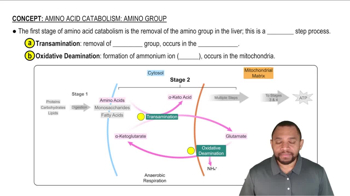
Amino acid catabolism refers to the metabolic process where amino acids are broken down to produce energy or convert into other compounds. This process involves deamination, where the amino group is removed, allowing the carbon skeleton to enter various metabolic pathways, ultimately leading to the production of key metabolites like glucose, acetyl-CoA, and ketone bodies.
Video consigliato:
Percorso guidato
2:21
Amino Acid Catabolism: Amino Group Concept 1

Acetyl-CoA Production

Acetyl-CoA is a central metabolite in energy production and biosynthesis. It can be produced from the breakdown of certain amino acids through a process called oxidative deamination, where the carbon skeleton is converted into acetyl-CoA, which then enters the citric acid cycle to generate ATP or serve as a building block for fatty acid synthesis.
Video consigliato:
Percorso guidato
01:37
Solubility Product Constant (Ksp) Concept 2

Ketone Bodies

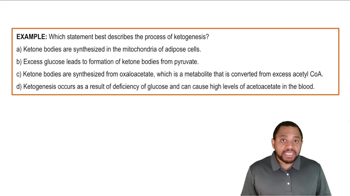
Ketone bodies are water-soluble molecules produced in the liver from fatty acids and, to a lesser extent, from the catabolism of certain amino acids. During periods of low carbohydrate availability, such as fasting or prolonged exercise, amino acids can be converted into acetoacetate and beta-hydroxybutyrate, which serve as alternative energy sources for tissues, particularly the brain.
Video consigliato:
Percorso guidato
1:41
Ketone Bodies Example 1