Ch.12 Alcohols, Thiols, Ethers, Aldehydes, and Ketones
Timberlake - Chemistry: An Introduction to General, Organic, and Biological Chemistry 13th Edition
Timberlake13th EditionChemistry: An Introduction to General, Organic, and Biological ChemistryISBN: 9780134421353Non è quello che usi tu?Cambia libro di testo
Capitolo 12, Problema 16d

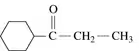
Identify each of the following compounds as an aldehyde or a ketone:
d. Chemical structure of a compound showing a carbonyl group attached to a benzene ring and a propyl chain, indicating an aldehyde.

Guida verificata passo dopo passo
1
Examine the structure of the compound provided in the image. Look for the presence of a carbonyl group (C=O), which is a characteristic feature of both aldehydes and ketones.
Determine the position of the carbonyl group within the molecule. If the carbonyl group is attached to a terminal carbon (at the end of the carbon chain), the compound is an aldehyde. If it is attached to a non-terminal carbon (within the chain), the compound is a ketone.
Check for any additional groups or substituents attached to the carbonyl carbon. This can help confirm whether the compound is an aldehyde or a ketone.
Recall that aldehydes typically have the general formula R-CHO, where R is a hydrocarbon group or hydrogen, and ketones have the general formula R-CO-R', where R and R' are hydrocarbon groups.
Based on the analysis of the structure and the position of the carbonyl group, classify the compound as either an aldehyde or a ketone.

Risposta video verificata per un problema simile:

Questa soluzione video è stata consigliata dai nostri tutor come utile per risolvere questo problema.

Concetti chiave

Ecco i concetti essenziali che devi comprendere per rispondere correttamente alla domanda.

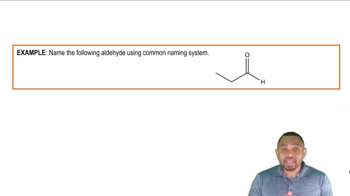
Aldehyde

An aldehyde is an organic compound characterized by the presence of a carbonyl group (C=O) at the end of a carbon chain. The general formula for aldehydes is RCHO, where R represents a hydrocarbon group. Aldehydes are typically more reactive than ketones due to the accessibility of the carbonyl group, making them important in various chemical reactions and synthesis.
Video consigliato:
Percorso guidato
0:34
Naming Aldehydes Example 2

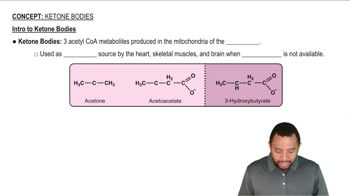
Ketone

A ketone is an organic compound that contains a carbonyl group (C=O) situated between two carbon atoms, making it distinct from aldehydes. The general formula for ketones is RC(=O)R', where R and R' are hydrocarbon groups. Ketones are generally less reactive than aldehydes and are commonly found in solvents and as intermediates in organic synthesis.
Video consigliato:
Percorso guidato
1:29
Ketone Bodies Concept 1

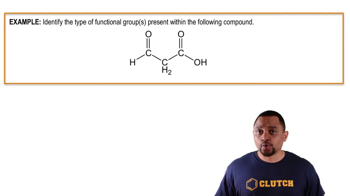
Carbonyl Group

The carbonyl group is a functional group consisting of a carbon atom double-bonded to an oxygen atom (C=O). It is a key feature in both aldehydes and ketones, influencing their chemical properties and reactivity. The position of the carbonyl group within a molecule determines whether it is classified as an aldehyde (terminal) or a ketone (internal), which is crucial for identifying these compounds.
Video consigliato:
Percorso guidato
1:00
Functional Groups with Carbonyls Example 3