Ch.12 Alcohols, Thiols, Ethers, Aldehydes, and Ketones
Timberlake - Chemistry: An Introduction to General, Organic, and Biological Chemistry 13th Edition
Timberlake13th EditionChemistry: An Introduction to General, Organic, and Biological ChemistryISBN: 9780134421353Non è quello che usi tu?Cambia libro di testo
Capitolo 12, Problema 15c

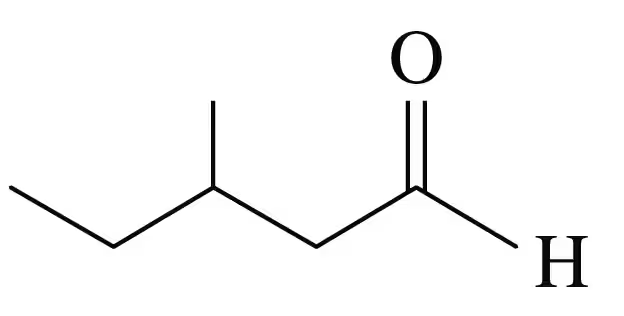
Identify each of the following compounds as an aldehyde or a ketone:
c.

Guida verificata passo dopo passo
1
Step 1: Understand the structural difference between aldehydes and ketones. Aldehydes have a carbonyl group (C=O) bonded to at least one hydrogen atom, while ketones have a carbonyl group bonded to two carbon atoms.
Step 2: Examine the structure of the compound in the provided image. Locate the carbonyl group (C=O) in the molecule.
Step 3: Determine the atoms directly bonded to the carbonyl carbon. Check if one of the bonds is to a hydrogen atom (indicating an aldehyde) or if both bonds are to carbon atoms (indicating a ketone).
Step 4: If the carbonyl carbon is bonded to a hydrogen atom, classify the compound as an aldehyde. If it is bonded to two carbon atoms, classify it as a ketone.
Step 5: Based on the analysis, identify the compound as either an aldehyde or a ketone and ensure the classification aligns with the structural features observed.

Risposta video verificata per un problema simile:

Questa soluzione video è stata consigliata dai nostri tutor come utile per risolvere questo problema.

Concetti chiave

Ecco i concetti essenziali che devi comprendere per rispondere correttamente alla domanda.

Aldehydes

Aldehydes are organic compounds characterized by the presence of a carbonyl group (C=O) at the end of a carbon chain. This functional group is bonded to at least one hydrogen atom, which distinguishes aldehydes from ketones. Common examples include formaldehyde and acetaldehyde, and they typically have distinctive odors and are used in various chemical reactions.
Video consigliato:
Percorso guidato
0:34
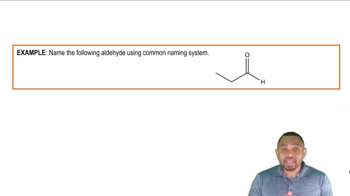
Naming Aldehydes Example 2

Ketones

Ketones are organic compounds that contain a carbonyl group (C=O) located within the carbon chain, meaning it is flanked by two carbon atoms. This structural feature differentiates ketones from aldehydes. Acetone and butanone are common examples of ketones, and they are often used as solvents and in the production of various chemicals.
Video consigliato:
Percorso guidato
1:29
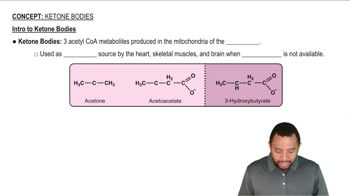
Ketone Bodies Concept 1

Functional Groups

Functional groups are specific groups of atoms within molecules that are responsible for the characteristic chemical reactions of those molecules. In the context of aldehydes and ketones, the carbonyl group is the key functional group that defines their chemical behavior and properties. Understanding functional groups is essential for identifying and classifying organic compounds.
Video consigliato:
Percorso guidato
1:11
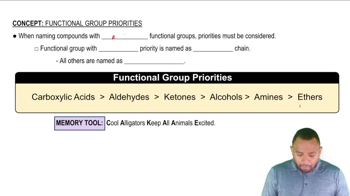
Functional Group Priorities Concept 1