Ch.7 Chemical Quantities and Reactions
Timberlake - Chemistry: An Introduction to General, Organic, and Biological Chemistry 13th Edition
Timberlake13th EditionChemistry: An Introduction to General, Organic, and Biological ChemistryISBN: 9780134421353Non è quello che usi tu?Cambia libro di testo
Capitolo 7, Problema 71a

Classify each of the following as exothermic or endothermic:
a. CH4(g) + 2O2(g) →∆\(\xrightarrow{∆}\) CO2(g) + 2H2O(g) + 802kJ

Guida verificata passo dopo passo
1
Step 1: Understand the terms 'exothermic' and 'endothermic'. An exothermic reaction releases energy (usually in the form of heat), while an endothermic reaction absorbs energy from its surroundings.
Step 2: Analyze the chemical equation provided: CH₄(g) + 2O₂(g) → CO₂(g) + 2H₂O(g) + 802kJ. Notice that 802 kJ of energy is explicitly mentioned as being released.
Step 3: Recognize that the release of energy (802 kJ) indicates that the reaction is exothermic. In exothermic reactions, energy is a product of the reaction.
Step 4: Confirm the classification by recalling that combustion reactions, such as the burning of methane (CH₄), are typically exothermic because they release heat and energy.
Step 5: Conclude that the given reaction is exothermic based on the energy release and the nature of combustion reactions.

Risposta video verificata per un problema simile:

Questa soluzione video è stata consigliata dai nostri tutor come utile per risolvere questo problema.
Durata del video:
3m

Concetti chiave

Ecco i concetti essenziali che devi comprendere per rispondere correttamente alla domanda.

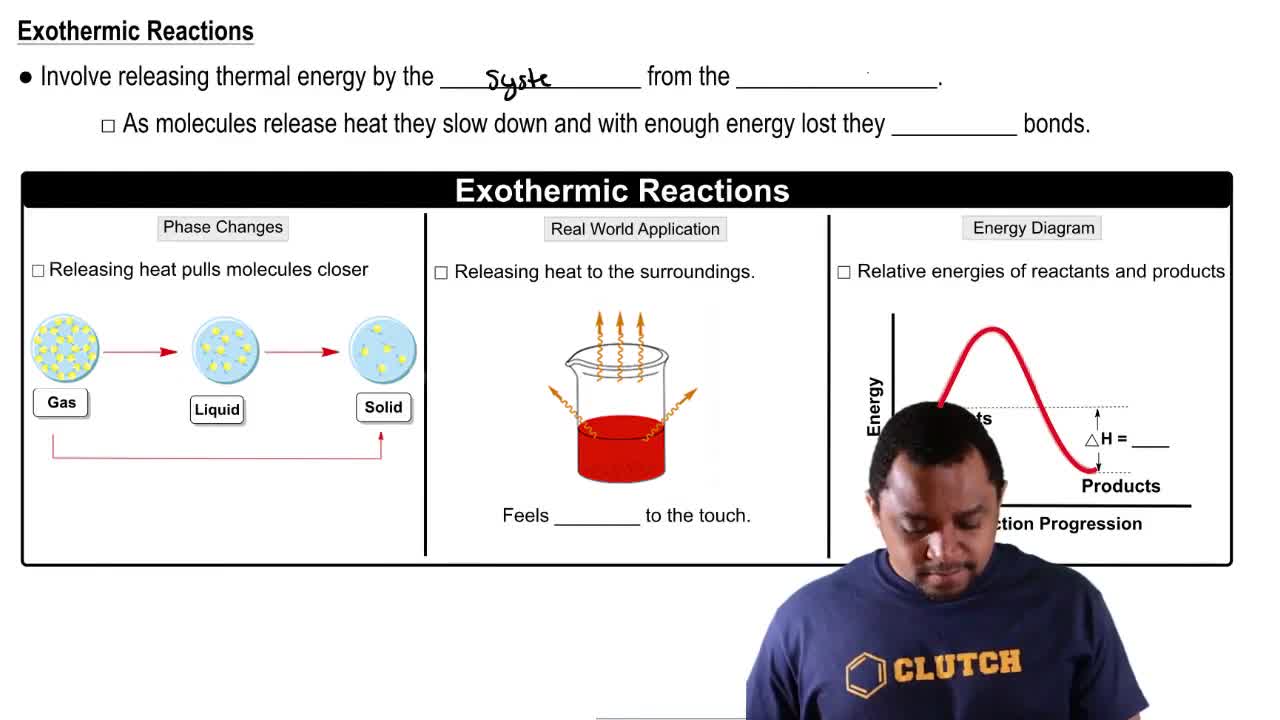
Exothermic Reactions

Exothermic reactions are chemical processes that release energy, usually in the form of heat, to their surroundings. This release of energy often results in an increase in temperature of the surrounding environment. In the given reaction, the formation of products from reactants releases 802 kJ of energy, indicating that it is exothermic.
Video consigliato:
Percorso guidato
02:38
Endothermic & Exothermic Reactions

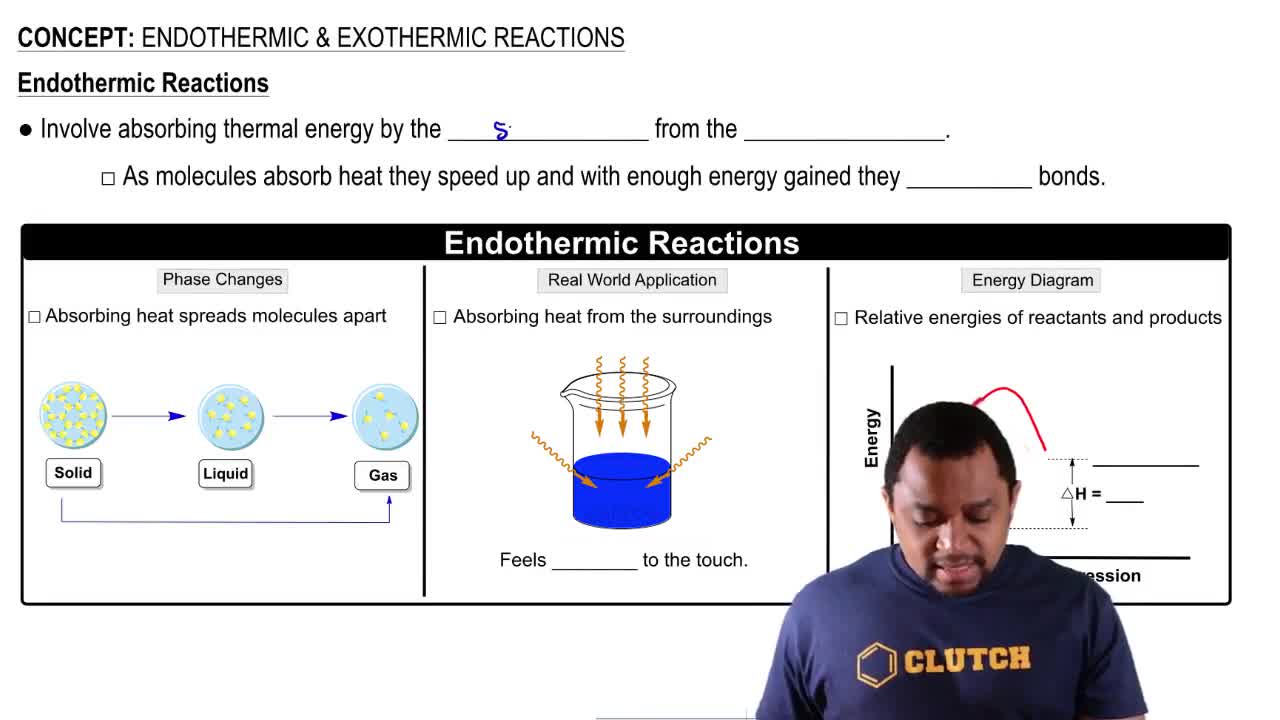
Endothermic Reactions

Endothermic reactions, in contrast, absorb energy from their surroundings, leading to a decrease in temperature of the environment. These reactions require an input of energy to proceed, which can be in the form of heat. Understanding the distinction between exothermic and endothermic reactions is crucial for classifying chemical processes accurately.
Video consigliato:
Percorso guidato
02:30
Endothermic & Exothermic Reactions

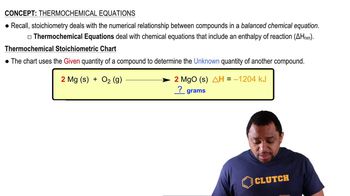
Thermochemical Equations

Thermochemical equations are balanced chemical equations that include the enthalpy change associated with the reaction. They provide information about the energy changes that occur during the reaction, allowing for the classification of the reaction as either exothermic or endothermic. The notation '∆' indicates the change in enthalpy, which is essential for understanding the energy dynamics of the reaction.
Video consigliato:
Percorso guidato
01:13
Thermochemical Equations