Ch. 13 - Characterizing and Classifying Viruses, Viroids, and Prions
Bauman - Microbiology with Diseases by Taxonomy 6th Edition
Bauman6th EditionMicrobiology with Diseases by TaxonomyISBN: 9780134832302Non è quello che usi tu?Cambia libro di testo
Capitolo 13, Problema 9

Which of the following is not a criterion for specific family classification of viruses?
a. The type of nucleic acid
b. Envelope structure
c. Capsid type present
d. Lipid composition

Guida verificata passo dopo passo
1
Step 1: Understand that virus classification into families is primarily based on structural and genetic characteristics that are consistent and distinctive among viruses within a family.
Step 2: Review the common criteria used for virus family classification, which typically include the type of nucleic acid (DNA or RNA), the capsid symmetry (shape and structure of the protein coat), and the presence or absence of an envelope.
Step 3: Recognize that the envelope structure refers to whether the virus has an outer lipid membrane and the nature of its proteins, which is important for classification.
Step 4: Consider the lipid composition; while viruses may have lipid envelopes derived from host cells, the specific lipid composition is not a standard criterion for family classification because it can vary depending on the host cell membrane source.
Step 5: Conclude that among the options, 'lipid composition' is not a criterion used for specific family classification of viruses, unlike the other options which are fundamental classification features.

Risposta video verificata per un problema simile:

Questa soluzione video è stata consigliata dai nostri tutor come utile per risolvere questo problema.
Durata del video:
1m

Concetti chiave

Ecco i concetti essenziali che devi comprendere per rispondere correttamente alla domanda.

Viral Nucleic Acid Type

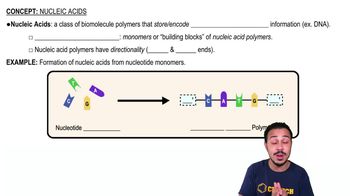
Viruses are classified based on the type of nucleic acid they contain, either DNA or RNA, which can be single-stranded or double-stranded. This characteristic is fundamental because it influences viral replication and taxonomy.
Video consigliato:
03:22
Nucleic Acids

Viral Envelope and Capsid Structure

The presence and structure of a viral envelope, as well as the capsid type (such as icosahedral or helical), are key morphological features used in virus classification. These structures affect virus stability and host interaction.
Video consigliato:
05:12
Persistent Viral Infections

Lipid Composition in Viruses

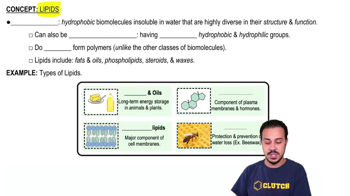
While some viruses have lipid envelopes derived from host membranes, the specific lipid composition is not a standard criterion for virus family classification. Lipid content varies and is less reliable for taxonomic purposes.
Video consigliato:
04:19
Lipids