Ch. 13 - Characterizing and Classifying Viruses, Viroids, and Prions
Bauman - Microbiology with Diseases by Taxonomy 6th Edition
Bauman6th EditionMicrobiology with Diseases by TaxonomyISBN: 9780134832302Non è quello che usi tu?Cambia libro di testo
Capitolo 13, Problema 8

Which of the following viruses can be latent?
a. HIV
b. Chicken pox virus
c. Herpesviruses
d. All of the above

Guida verificata passo dopo passo
1
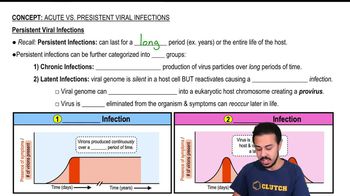
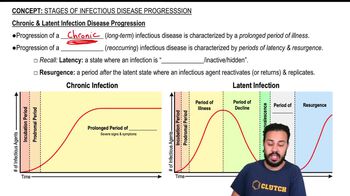
Understand the concept of viral latency: Latency is a state in which a virus remains dormant within a host cell without producing new virus particles, but can reactivate later to cause infection.
Review the characteristics of HIV: HIV can integrate its genome into the host DNA and establish a latent infection in certain immune cells, such as resting CD4+ T cells.
Examine the chicken pox virus (varicella-zoster virus): After the initial infection, this virus can remain latent in nerve ganglia and reactivate later to cause shingles.
Consider herpesviruses in general: Many herpesviruses, including herpes simplex virus types 1 and 2, establish latency in nerve cells and can reactivate periodically.
Conclude that since HIV, chicken pox virus, and herpesviruses all have the ability to become latent, the correct answer is that all of the above viruses can be latent.

Risposta video verificata per un problema simile:

Questa soluzione video è stata consigliata dai nostri tutor come utile per risolvere questo problema.
Durata del video:
3m

Concetti chiave

Ecco i concetti essenziali che devi comprendere per rispondere correttamente alla domanda.

Viral Latency

Viral latency is a state in which a virus remains dormant within host cells without producing active infection or symptoms. During latency, the viral genome persists in the host, often integrated into the host DNA or as an episome, and can reactivate later, causing recurrent disease.
Video consigliato:
05:12
Persistent Viral Infections

Herpesviruses and Latency

Herpesviruses are well-known for their ability to establish lifelong latency in host nerve cells. After initial infection, they remain dormant and can reactivate periodically, causing symptoms such as cold sores or shingles, making them classic examples of latent viruses.
Video consigliato:
05:14
Chronic & Latent Infection Disease Progression

Latency in HIV and Chickenpox Virus

HIV can establish a latent infection by integrating its genome into host DNA, evading immune detection and antiretroviral drugs. The chickenpox virus (varicella-zoster virus) also becomes latent in nerve ganglia and can reactivate later as shingles, demonstrating latency beyond herpesviruses.
Video consigliato:
02:33
Introduction to Animal Virus Infections