

Ch. 16 - Adaptive Immunity
Bauman - Microbiology with Diseases by Taxonomy 6th Edition
Bauman6th EditionMicrobiology with Diseases by TaxonomyISBN: 9780134832302Non è quello che usi tu?Cambia libro di testo
Capitolo 16, Problema 3

Rejection of a foreign skin graft is an example of:
a. Destruction of virus-infected cells
b. Tolerance
c. Antibody-mediated immunity
d. A secondary immune response
e. A cell-mediated immune response

Guida verificata passo dopo passo
1
Understand the context of the problem: rejection of a foreign skin graft involves the immune system recognizing and attacking non-self tissue.
Recall that antibody-mediated immunity primarily involves B cells producing antibodies to neutralize pathogens, which is less relevant in graft rejection.
Consider that tolerance refers to the immune system's acceptance of antigens without attacking them, which is the opposite of graft rejection.
Recognize that destruction of virus-infected cells is typically carried out by cytotoxic T cells targeting infected host cells, but graft rejection involves a broader immune response to foreign tissue.
Identify that graft rejection is mainly driven by a cell-mediated immune response, where T cells recognize foreign antigens on the graft and initiate an immune attack, leading to rejection.

Risposta video verificata per un problema simile:

Questa soluzione video è stata consigliata dai nostri tutor come utile per risolvere questo problema.
Durata del video:
2m

Concetti chiave

Ecco i concetti essenziali che devi comprendere per rispondere correttamente alla domanda.

Cell-mediated immune response

This immune response involves T cells recognizing and destroying infected or foreign cells, such as transplanted tissue. It does not rely on antibodies but on direct cell-to-cell interactions, making it crucial for rejecting foreign grafts.
Video consigliato:
02:57
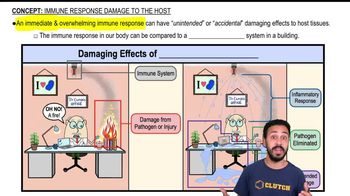
Intro to Immune Response Damage

Graft rejection

Graft rejection occurs when the recipient's immune system identifies transplanted tissue as foreign and attacks it. This process primarily involves T cells recognizing non-self antigens on the graft, leading to inflammation and tissue destruction.
Video consigliato:
06:29
Scientific Method

Tolerance

Tolerance is the immune system's ability to avoid attacking the body's own cells or harmless foreign substances. Failure of tolerance mechanisms can result in graft rejection, as the immune system treats the graft as a threat.
Video consigliato:
03:19
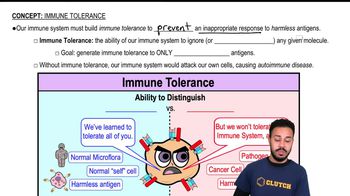
Immune Tolerance